
China: An Ally Waiting for Russia’s Defeat?
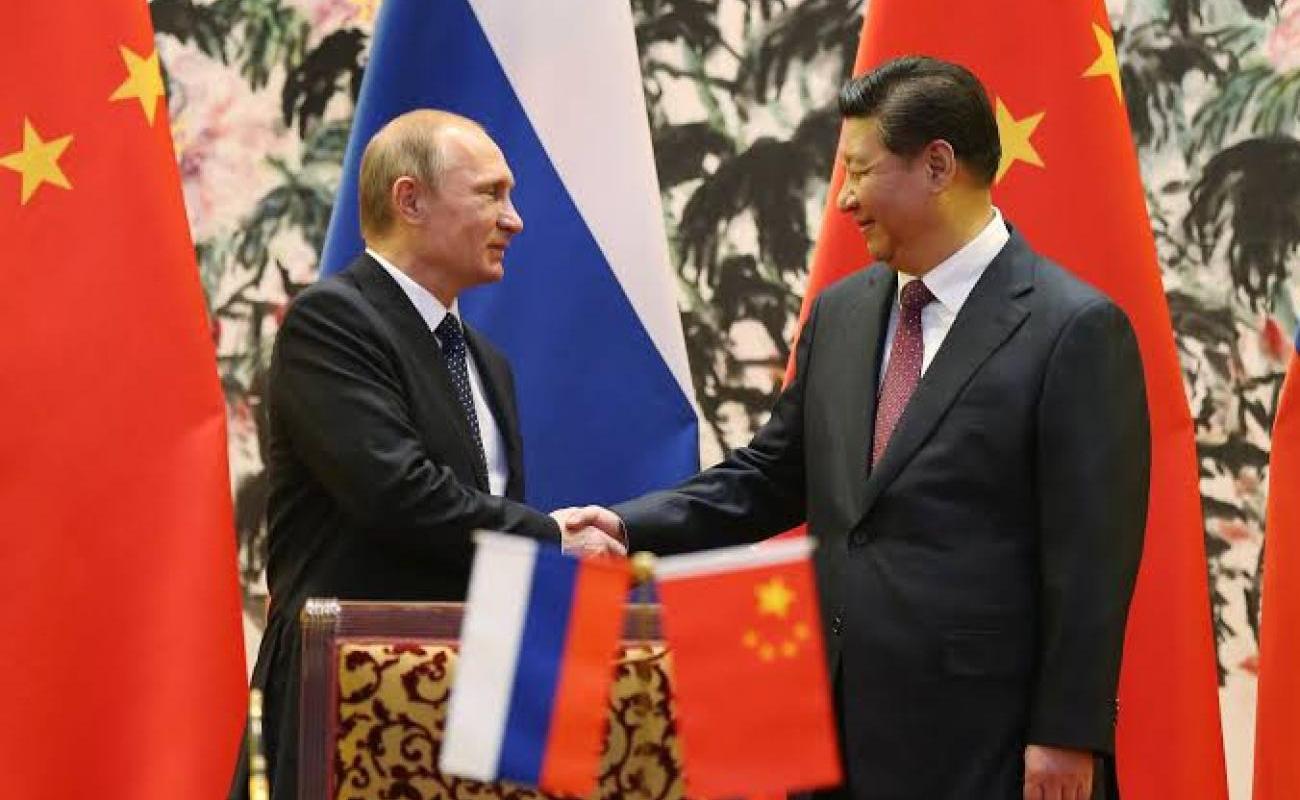
From the first months of the full-scale invasion of Ukraine, Russia tried to present China as a strategic partner, capable of supporting it on the international arena. However, Beijing chose a more cautious line of behavior. Chinese statements about the necessity of negotiations and peaceful settlement sound regularly, but they remain declarative. Beijing is careful to avoid concrete steps that could turn it into a full-fledged mediator.
The reasons for such caution are obvious. First, China strives to preserve the image of a global power, capable of influencing conflicts, but does not want to take upon itself responsibility for their outcome. Second, direct interference in the negotiation process would put Beijing in an uncomfortable position: it would have to openly designate whose side it stands on and take upon itself quite concrete, and not declarative, commitments. In conditions when China simultaneously develops economic ties with Russia and supports trade relations with the West, such clarity is disadvantageous.
Thus, China positions itself as a “voice of reason,” but in fact remains on the sidelines. Its role in the peace process is limited to rhetoric and diplomatic gestures, which create the appearance of activity, but do not lead to real results.
China’s Support for Russia’s War Economy
Despite statements about neutrality, China plays an important role in maintaining the Russian economy and military machine. After the introduction of Western sanctions, Moscow found itself dependent on Chinese supplies. It is not only about consumer goods, but also about critically important technologies.
Through Chinese companies, Russia receives access to electronics, components for drones, industrial equipment, and other dual-use goods. These deliveries often pass through third countries or through barely noticeable “grey” trade schemes, which Moscow calls “parallel import.” This allows Beijing formally to distance itself from Russia as from the aggressor country, but at the same time Russia receives the possibility to compensate part of the sanctions pressure and perpetuate the Ukraine war.
Economic support is also manifested in energy. China increased purchases of Russian oil and gas, taking advantage of discounts which Moscow is now forced to provide. This provides Russia with currency inflows and reduces the effect of Western restrictions. For China, however, this is strategically advantageous — it receives uninterrupted cheap resources, thereby strengthening its own energy security.
In this way, China acts as a hidden donor, whose actions to some extent soften the blow to the Russian economy, caused by colossal expenditures on military spending, decline of production, and catastrophic shortage of human resources. These actions on the part of China are not publicized, but they go far in allowing Moscow to prolong the conflict.
Balancing Peace Rhetoric and War Reality
The role of China in the Ukraine war is reflected in its international image. On the one hand, Beijing tries to present itself as a peacemaker, offering a “settlement plan” and speaking in favor of negotiations. On the other hand, its factual support of Russia leads to criticism from the West and strengthens suspicions about Beijing’s true motives.
For China this is a dual situation. On the global level it strives to strengthen the image of an alternative center of power, capable of challenging the United States and its allies. Support of Russia in this context looks like part of a strategy for creating a multipolar world. However, the position has its costs: China risks losing the trust of European countries, which see in its actions as complicity in Russia’s aggression.
In addition, participation in the conflict indirectly influences the economic prospects of China. Western companies and investors more and more often consider Beijing as an unreliable partner, which may lead to reduction of investments and technological cooperation. In the long-term perspective this limits the possibilities of China for modernization and growth.
Nevertheless, China continues to strike a balance. It does not want openly to become an ally of Russia, but also will not join Western sanctions. Such a strategy allows it to preserve flexibility and to use the war as an instrument for strengthening its own position in global geopolitics.
An Ally Awaiting Defeat?
Russia faces growing dissatisfaction at home. Colossal human losses at the front, the ongoing, though hidden, mobilization of that part of the population which is still able to hold weapons, and rapidly growing inflation, including food products — all this is that detonator which may lead to a social explosion. But even such an outcome would not be the worst-case scenario. In separate republics of the Federation, separatism is ripening. This is especially evident in the Caucasus republics, as well as in Tatarstan and Bashkortostan, in Yakutia, in the Far East and in Siberia, while in a special position remains the Kaliningrad enclave.
For the United States and Europe, the perspective of the disintegration of Russia looks like a catastrophe: chaos, the threat of uncontrolled use of nuclear weapons, ecological risks for the whole world. But for China this scenario opens a “window of opportunities.” Specifically, there’s a chance at a long-awaited prize — the return of “historic territories,” which in Chinese historiography are interpreted as “lost heritage”: the Far East and Siberia. On Chinese official maps these territories are colored in the colors of Chinese territory. Access to the Arctic Ocean, for the sake of which Beijing actively builds an icebreaker fleet, becomes part of this strategy.
“Return of historical justice” for China means not only territorial acquisitions. Importantly, it represents full access to the richest resources of these regions: oil, gas, rare earth metals, diamonds, platinum, forest and fresh water. These resources are capable of ensuring economic growth of China for generations ahead and of consolidating its status as a global power.