
How Russia is turning housing policy into a tool for forcing cooperation in the occupied territories
Why this topic matters
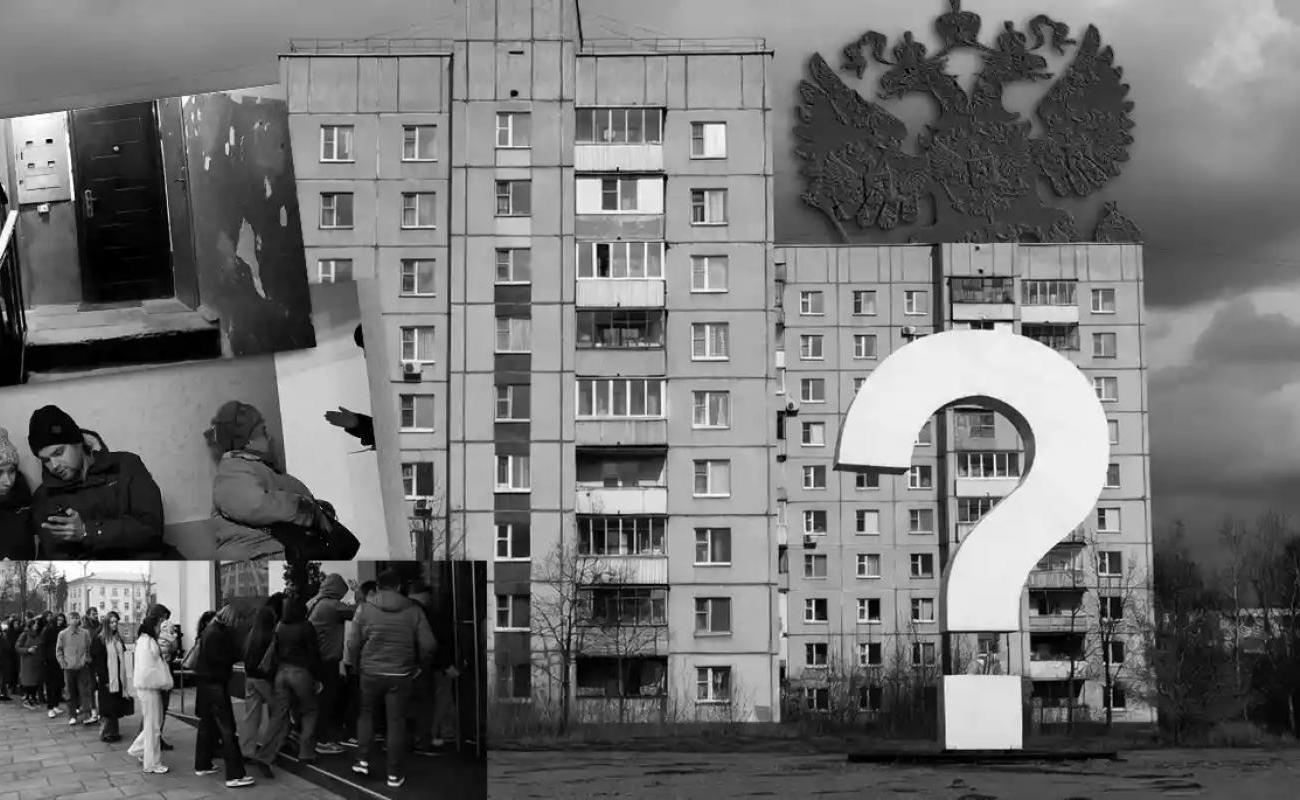
Residents of the temporarily occupied territories (TOT), internally displaced persons (IDPs) and refugees have found themselves in a trap where the occupation authorities combine forced Russification with economic exploitation, creating an atmosphere of constant fear and uncertainty. One of the most acute problems is the threat of property confiscation, which manifests itself through the creation of registers of "ownerless" apartments. In addition, the confiscation of private real estate by the occupation authorities in the temporarily occupied territories is one of the practices aimed at changing the demographic and economic structure of the regions and legitimizing the Russian presence in the occupied territories.
A study by Novaya Gazeta Evropa showed that during the three years of occupation in the territories under Russian control, Lugansk, Donetsk, Zaporizhia and Kherson regions, 13,300 private houses and apartments were recognized as "ownerless property". Of these, more than 77.5 percent are located in settlements occupied after the start of the full-scale invasion in 2022, such as Mariupol, Melitopol, and Svatovo. These are mostly apartments and houses located in central and attractive areas of cities. This indicates Russia’s selective approach to property inventory.
According to the Institute for the Study of War (ISW), as of May 2025, 251,750 properties from the occupied territories of Ukraine appear in the Unified State Register of Real Estate of the Russian Federation (USRR). However, as early as August 2025, Russian officials, and in particular the head of the Federal Service for State Registration, Cadastre and Cartography of the Russian Federation (Rosregister) Oleg Skufinsky, reported that his agency had “discovered 550,000 ownerless objects” in the annexed territories of Ukraine. These properties are subject to mass nationalization, which facilitates the resettlement of Russian citizens to the occupied territories.
The practice of forced re-registration and the expansion of the grounds for confiscation of private property in temporarily occupied territories violates fundamental norms of international humanitarian law, in particular Article 46 of the 1907 Hague Regulations, which prohibits the confiscation of private property, and Article 49 of the Fourth Geneva Convention of 1949, which prohibits the transfer of the civilian population of an occupying power to occupied territory. As the West Point-based Lieber Institute analysis states, such a policy not only contradicts
customary law recognized by the International Court of Justice and the Nuremberg Tribunal, but also qualifies as a war crime under Article 8(2)(b)(xiii) of the Rome Statute. The Office of the United Nations High Commissioner for Human Rights (OHCHR) classified these actions in its 2024 report as a systemic violation aimed at Russification and economic exploitation.
Research on this topic is important for several reasons. First, it captures the scale of the humanitarian crisis: property owners, including refugees, mobilized people, and emigrants since 2014, face obstacles such as the inability to pay utility bills online until 2023, the requirement to register in the Unified State Register of Property Owners with a Russian passport (with waiting lists of up to five months), and extrajudicial arrests and confiscation of property, including apartments, under Resolution No. 341 of the “State Defense Committee” of the occupation authorities of the Donetsk region of September 29, 2022, which contradicts even Russian norms. In June 2024, the head of the occupation administration, Denis Pushilin, called this resolution a “technical error.” How much property was confiscated under this decree is not known for certain. Second, the practice of re-registration and alienation of housing has strategic implications: confiscation facilitates colonization, making de-occupation and property restitution more difficult. Third, the analysis contributes to the formulation of policies - from sanctions to lawsuits in the International Criminal Court - to combat such practices.
Legal aspects of re-registration of real estate in the temporarily occupied territories of Ukraine
Consolidated legislative initiatives aimed at re-registration of real estate in the temporarily occupied territories of Ukraine according to Russian rules appeared in late 2022 - early 2023. Since then, the regulation of the rules for the disposal of real estate in the TOT has undergone changes. The procedure for re-registration of property rights under Russian law from optional, and then mandatory upon sale, has turned into an obligation for owners of any real estate in the temporarily occupied territories of Ukraine, except for Crimea. And failure to complete the procedure for re-registration of housing may lead to the loss of the ability to use and dispose of one's own property.
The issue of re-registration of residential premises in the temporarily occupied territories of Ukraine is regulated by a law adopted by the State Duma on June 24 and signed by Vladimir Putin on July 7, 2025. The first and second articles of this law state that documents issued by state bodies or local governments of Ukraine, certified by Ukrainian notaries before the Russian authorities legally consolidated the occupation of these territories and "incorporated" them into Russia, are eligible for re-registration.
“Documents issued by the Ukrainian authorities after the regions were incorporated into Russia (i.e. after the fake “referendums” and “legislative decisions” of the Russian parliament and
president on the incorporation of these territories into Russia in the fall of 2022) will not be considered valid,” — the press release on the discussion of the bill in the Federation Council, the upper house of the Russian parliament, is quoted by propaganda publications.
Russia also recognizes documents confirming the right to real estate issued by the occupation administrations in the temporarily occupied territories. As reported by Russian media, the development of criteria for which documents will be recognized when re-registering real estate was submitted to the State Duma only at the end of January 2025. Representatives of the Russian ruling party “United Russia” present the approval of these criteria as a success.
The verification of documents confirming the right to real estate will be carried out by commissions. They are formed by the occupation administrations, based on Russian legislation and resolutions of the occupation administrations. The mandate of the commissions: until January 1, 2028. This date was mentioned as the deadline for re-registration of real estate on the TOT according to Russian rules in the Russian State Duma and the occupation administrations as early as early October 2022. If the real estate is not re-registered within the established period, the property documents may be declared invalid, and the rights to it may be canceled by the occupier.
Responses to individual requests for recognition of documents by the commission can be sent by e-mail. And decisions regarding “groups (aggregates) of real estate”, such as apartments in apartment buildings, will be published on the websites of the regional occupation administrations.
“Problems may arise for those who registered their real estate ownership rights under Ukrainian law after the regions joined Russia. Such documents are not recognized as valid,” concluded Moskovsky Komsomolets, reporting on the vote for a new law on re-registration of housing under the rules of occupation, titled “Residents of the Zaporizhia Region Will Be Able to Re-register Their Housing Easier.”
Those who do not have a Russian passport or are citizens of countries “hostile” to Russia will not be able to re-register their housing. This includes citizens of Ukraine and 22 other countries and territories. This rule has been in effect since 2022 and has been repeated or updated from time to time in legal documents, such as Putin’s decrees. One of the most recent decrees with references to a ban on registering real estate for foreigners was signed by Putin in March 2025.
After the State Duma adopted the aforementioned law in July 2025, which determines the algorithm for re-registration of property in the temporarily occupied territories of Ukraine in accordance with Russian legislation, Russian information platforms began to promote its advantages specifically for Russian citizens. In particular, on the Dzen.ru platform, created by Yandex and well indexed in the Russian search engine of the same name, they say that "the administrative barrier for Russian citizens has been reduced to the maximum. The main condition is the presence of at least one document confirming ownership." And then they talked about the property registration procedure, which requires residents of the occupied territories of Ukraine after 2022: to undergo a technical inventory of property, obtain a technical plan of the premises, register with the Russian Register and receive a cadastral number from it. It is noted that various Ukrainian documents, "certificates of ownership, notarial contracts, court decisions - can be presented in paper or electronic form, but must be translated and certified".
Residents of the territories "annexed" to Russia after 2022, as the Russian portal of state and municipal services reported in August 2025, will have the opportunity to submit documents for re-registration of real estate under Russian law anywhere in Russia only in 2024. Specifically, at the end of May 2024, the municipal authorities announced the opening of this possibility in 14 administrative service centers in Moscow, and in February 2025, the number of centers for reissuing documents for residents of the occupied territories increased to 26, which is less than 10 percent of all similar administrative service centers in Moscow.
Back in August 2023, residents of the occupied territories could only submit documents for re-registration of real estate at their place of residence, given that Russia was only gradually expanding the unified system of providing administrative services to the temporarily occupied territories of Ukraine.
“To register real estate, say, in Donetsk or Genichesk, it is necessary to submit documents on the spot. This decision is temporary and is dictated, among other things, by the specifics of the work of registration authorities in the new regions. Therefore, even if citizens manage to submit such documents through the MFC on the territory of the Russian Federation, a decision will be made to reject these applications, since they technically cannot yet be transferred for processing to other regions,” Yulia Zhiganova, deputy head of the occupied “State Committee for State Registration and Cadastre of Crimea,” responded to the complaints in August 2023.
Due to the non-universal nature of real estate re-registration services in administrative service centers outside the temporarily occupied territories of Ukraine, it was not always possible to provide applicants with comprehensive explanations of how the procedure works. In particular, this is illustrated by the comments under the post of the Moscow center "My Documents" on the opening of the possibility of real estate re-registration in Moscow from May 7, 2024 on the VK page. There were 154 comments under this post. Half of them were left by VK users who
were interested in the details of real estate re-registration and instructions on how this procedure works in other places in Russia. The other half of the comments were responses from the site administrators. Of these 77 comments, the administrators replied that the questions they were asked about were not within their jurisdiction and 46 times referred the commenters to the Rosregistra Helpline.
There is no clear mechanism for administrative procedures for re-registration of real estate in the temporarily occupied territories of Ukraine even in 2025. On July 29, the propaganda publication “KP” informed readers about the procedure for re-registration of housing through Russian administrative service centers. They reported that it is necessary to bring originals or certified copies of documents. To re-register real estate, you must have: a passport of a citizen of the Russian Federation; legal documents such as a contract of sale of housing, a gift, etc.; as well as a power of attorney if the applicant is acting in the interests of another person. However, there are differences in the procedure for contacting an official with documents, depending on the settlement.
"To register for Rosregistr services, you must call the MFC hotline: 8 800 301-99-99. Attention! Registration is mandatory at MFC branches in Genichesk, Skadovsk, Novotroitsky, Chaplinka, Kalanchak, Kahovka and Novaya Kahovka. In other MFC offices - on a first-come, first-served basis," the KP statement said.
In November 2025, the State Duma of the Russian Federation changed the deadlines for reissuing Ukrainian housing documents, which were originally set by the law adopted in June of this year until 2028, reducing them to July 1, 2026. That is, on the one hand, federal officials recognize the low capacity and corruption of local occupation administrations, and on the other hand, they are trying to stimulate the process by making it “voluntary-mandatory”. Such an acceleration of the deadlines caused discontent and resentment among local residents.
Communication about re-registration of housing on Telegram channels in the temporarily occupied territories of Ukraine
On Russian Telegram channels, communication about re-registration of housing in the temporarily occupied territories of Ukraine according to Russian rules focused more on regular calls for the actual re-registration procedure, than on the legal nuances of the process and their periodic changes. In particular, in early 2024, re-registration of housing in the temporarily occupied territory of Ukraine was discussed as one of the services that could be obtained in the newly opened Russian multifunctional centers for the provision of administrative services. As well as as part of the activities of local occupation administrations responsible for property and land relations. For example, on the Telegram channel of the occupation administration of the city of Novaya Kakhovka, in November 2024, it was announced that re-registration of real estate according to Russian rules was one of the most popular services provided by the multifunctional center operating in the city.
In February 2025, the Telegram channel of the so-called "MFC of the Kherson region", a body established by the occupation administration to provide administrative services, explained that all land plots and real estate built on foundations are subject to registration under Russian rules. This makes it difficult to estimate the number of households registered under Russian rules. After all, in rural areas and on land plots in one commune, a cottage, a summer kitchen, and utility and utility rooms can be built on separate foundations.
In parallel with multifunctional administrative centers, there is also the possibility of electronic registration of real estate through the "Gosuslugi" portal. However, this still requires obtaining documents. Which includes the need to contact occupation officials.
In March 2025, the Telegram channel of the occupation administration of Novaya Kakhovka reported on holding consultations with citizens on the re-registration of real estate under Russian rules.
Judging by the messages of the Novokakhovka occupation administration in the telegram, the peak of activity in the consultations on the re-registration of real estate according to Russian rules fell on March 2025.
The question of the effectiveness of such consultations remains open, because at that time amendments to the rules for re-registration of real estate were being developed in Moscow, which, however, did not change the main thing: the need to have a Russian passport, as well as translation into Russian and notarization of existing Ukrainian documents on ownership in order to start the procedure for registering real estate. And also passing through an “audience” in commissions consisting of officials of the local occupation administration before entering the federal system of providing administrative services.
Judging by the messages of the occupation administrations, there is only one category of the population that is entitled to facilitated re-registration of real estate. These are residents of the temporarily occupied territories of Ukraine who agreed to fight for Russia. They are included in the “Together with Heroes” program, which simplifies the re-registration of exclusively private non-commercial real estate if they have a Russian passport and a “certificate of a fighter or veteran of the SVO”. The messages of the occupation administrations make it possible to estimate the number of real estate that has been re-registered in the temporarily occupied territories of Ukraine. On April 10, 2025, the Rosregister Department of the temporarily occupied part of the Kherson region reported that in the first quarter of 2025, the institution filed 57,000 applications for re-registration of more than 62,000 real estate properties (of which 59,000 are privately owned) under Russian rules in the zone of responsibility. On May 29, 2025,
Rosregister reported that since 2023, 230,000 applications for re-registration of real estate properties under Russian laws have been filed in the temporarily occupied territories of the Kherson region.
While the real estate re-registration procedure applies to all temporarily occupied territories of Ukraine, the annexation of which was announced by Russia in the fall of 2022, a number of discriminatory practices are particularly noticeable in some settlements, while in others they may not be mentioned. For example, in Mariupol, the practice of restricting the ability of local residents to settle in the area restored after the fighting is widespread. This practice is applied to settlements that have been destroyed by fighting, so it is not typical of areas where there was no significant fighting.