
Losses mount for Russia as 400,000 troops killed or wounded in a year
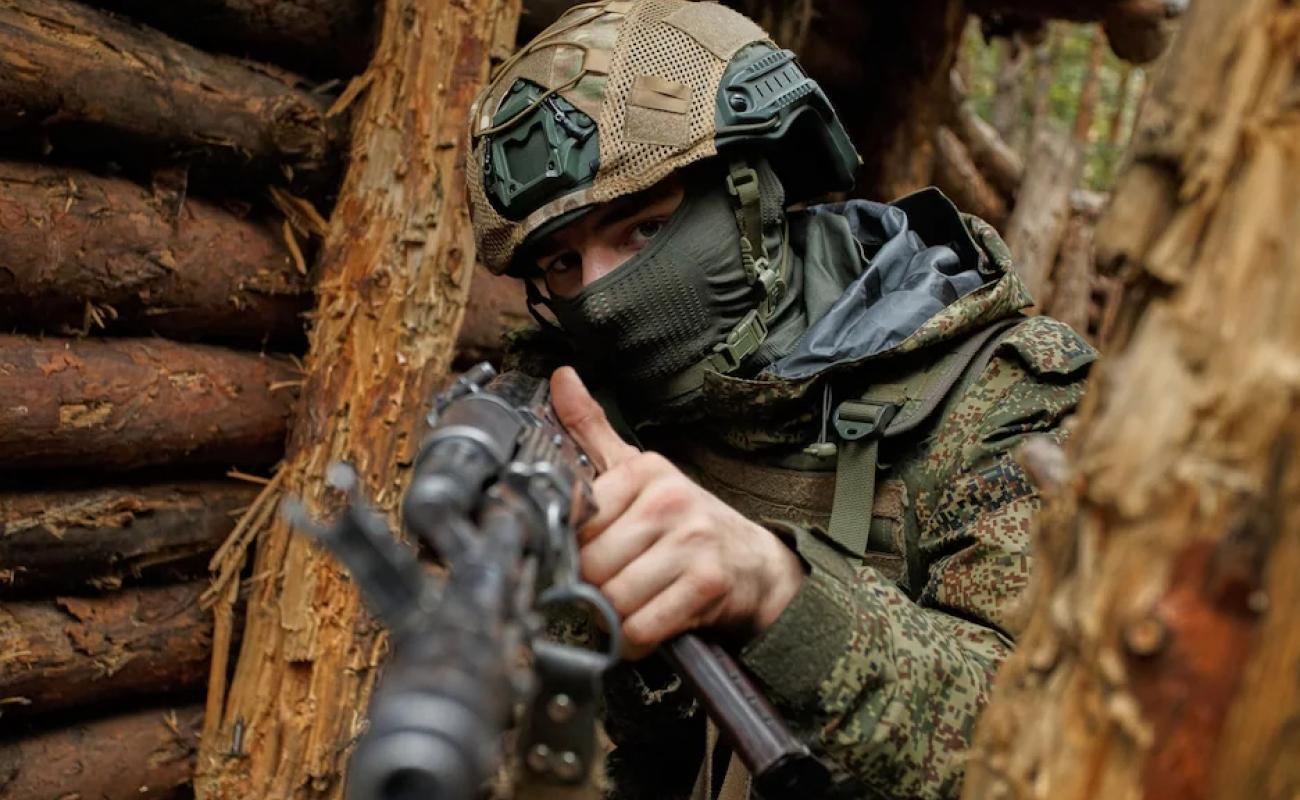
Moscow pays heavy price for meat grinder assaults, as Ukraine rocked by drone attacks in revenge for assassination.
More than 400,000 Russian soldiers are estimated to have been killed or wounded in 2025, according to a British defence intelligence update on Ukraine.
In October 2025, defence intelligence put the overall number of Russian casualties throughout the full-scale war at 1,118,000, higher than the entire size of its army before the full-scale invasion.
Russia has thrown men into “meat-grinder” assaults to seize land in eastern Ukraine inch by inch.
The casualty rate has been particularly high in this year’s effort to take the key hub of Pokrovsk, which has still not entirely fallen.
Meanwhile, Russia has continued firing long-range weapons on Kyiv and other cities.
On Tuesday morning, Russia bombarded Ukraine with a large-scale drone and missile attack following the assassination of one of its generals in Moscow. At least three people have been killed.
This month, The Economist estimated that Russia could have lost 1 per cent of its pre-war male population of fighting age in Ukraine since fighting broke out.
Russia has kept specific figures of its military losses closely guarded. By summer 2025, they were thought to be around 15 times greater than those sustained in the Soviet Union’s decade-long war in Afghanistan.
Moscow is accused of using inflated financial incentives, including one-time signing-on bonuses which can amount to several times the average annual salary, to draw men from poorer regions and republics to sign on as contract soldiers in order to distance the war from the urban elite.
At least three people were killed in a large-scale missile and drone attack on Ukraine early on Tuesday, the day after Lt Gen Fanil Sarvarov, the head of the operational training directorate of the Russian armed forces’ general staff, was killed in a car bomb in Moscow, and amid the latest round of peace talks.
A huge Russian strike involving more than 650 drones and three dozen missiles targeted energy infrastructure in Ukraine’s western regions, causing widespread power outages.
Since October, Moscow has intensified its attacks on Ukraine’s energy grid, reportedly pushing it to the brink of collapse.
A four-year-old was among the dead after a drone struck a residential building in the Zhytomyr region, Volodymyr Zelensky, Ukraine’s president, said on Tuesday.
Another person was killed in Khmelnytskyi, in western Ukraine, and a third outside Kyiv, where local officials said at least five others were wounded.
Poland said it mobilised aircraft as a “preventative” measure during the attacks, which took place near its border. Its operational command said on X: “Fighter jets were scrambled, and ground-based air defence and radar reconnaissance systems were put on heightened readiness.”
Mr Zelensky said Russia had targeted at least 13 regions as Ukrainians prepared to celebrate Christmas with their families, adding that the attack showed Vladimir Putin was not serious about peace talks.
“Putin still cannot accept that he must stop killing,” Mr Zelensky wrote on X. “And that means that the world is not putting enough pressure on Russia. Now is the time to respond.”As negotiators from Kyiv and Moscow flew home after three days of meetings in Miami trying to resolve the war, Mr Zelensky said Ukraine and the US had agreed to “quite decent” security guarantees.
He said “everything possible” had been done to resolve outstanding issues and his country was “very close to a real result”. He also confirmed that a separate bilateral document on security guarantees between Ukraine and the US had been drafted by his and Donald Trump’s negotiators.
The Ukrainian leader said: “And all this looks quite decent today. But this is still the work of our military. It is important that this is the work of both ours and the United States of America.”
The talks in Miami, hosted by Steve Witkoff, Mr Trump’s special envoy, formed part of a broader diplomatic push. Senior representatives from Ukraine and Russia, alongside Kyiv’s European allies, took part in parallel discussions over several days.
Mr Zelensky added: “Everything possible that we should have done for the first drafts is already there. There are 20 points of the plan. Not everything is perfect there, but this plan is there.”
Mr Trump offered a more cautious assessment of the negotiations late on Monday, saying they were “going okay”.
The talks followed Washington’s presentation last month of a 28-point peace proposal that was widely criticised in Kyiv and European capitals as favouring Moscow. That document has since been revised after Ukrainian and European input, although officials have declined to publish its contents.
In statements posted on X, Mr Witkoff and Rustem Umerov, Ukraine’s chief negotiator, said the Ukrainian delegation had held a series of “productive and constructive” meetings with American and European counterparts.
According to the statements, a bilateral US-Ukraine session focused on aligning positions on four documents: a “20-point plan”, a multilateral security guarantee framework, a US-specific security guarantee for Ukraine, and an economic and prosperity plan.
“Particular attention was given to discussing timelines and the sequencing of next steps,” the statements said, without confirming whether further meetings had been scheduled.
National security advisers from several of Ukraine’s European allies joined the talks, with the aim of coordinating a “shared strategic approach” between Kyiv, Washington and Europe.
Russia was represented separately by Kirill Dmitriev, who met members of the US delegation, including Mr Witkoff and Jared Kushner. Using very similar wording, Mr Witkoff said his discussions with Mr Dmitriev had been “productive and constructive”.
The Kremlin has already signalled opposition to revisions of the American-led plan, describing them as unacceptable. Mr Dmitriev was expected to brief Moscow on the updated proposals, Dmitry Peskov, the Kremlin spokesman, said.
Responding to remarks by JD Vance in an interview on Monday that there had been a “breakthrough” because talks were now being held openly, Mr Peskov hit back late on Monday that he did not understand what the vice-president meant.
He said: “It is unlikely that such a complex problem can be addressed in a public format. On the other hand, perhaps with time we will receive some clarification.”
On the front line of the conflict, Ukraine’s 7th Air Assault Corps said the situation around the town of Siversk was “extremely difficult” as Russian forces intensified attempts to cross the Donets river.
The corps said units of the 81st Airmobile Brigade were holding their positions and destroying Russian boats attempting river crossings from nearby woodland.
Overnight on Monday, Ukrainian drones hit the Stavrolen petrochemical plant in Russia’s Stavropol Krai, according to reports.
Photographs and footage posted on social media showed flames at the plant, which is linked to drone production and components for Russian military equipment.