
Torture and blackmail with children: Ukrainian women on Russian captivity
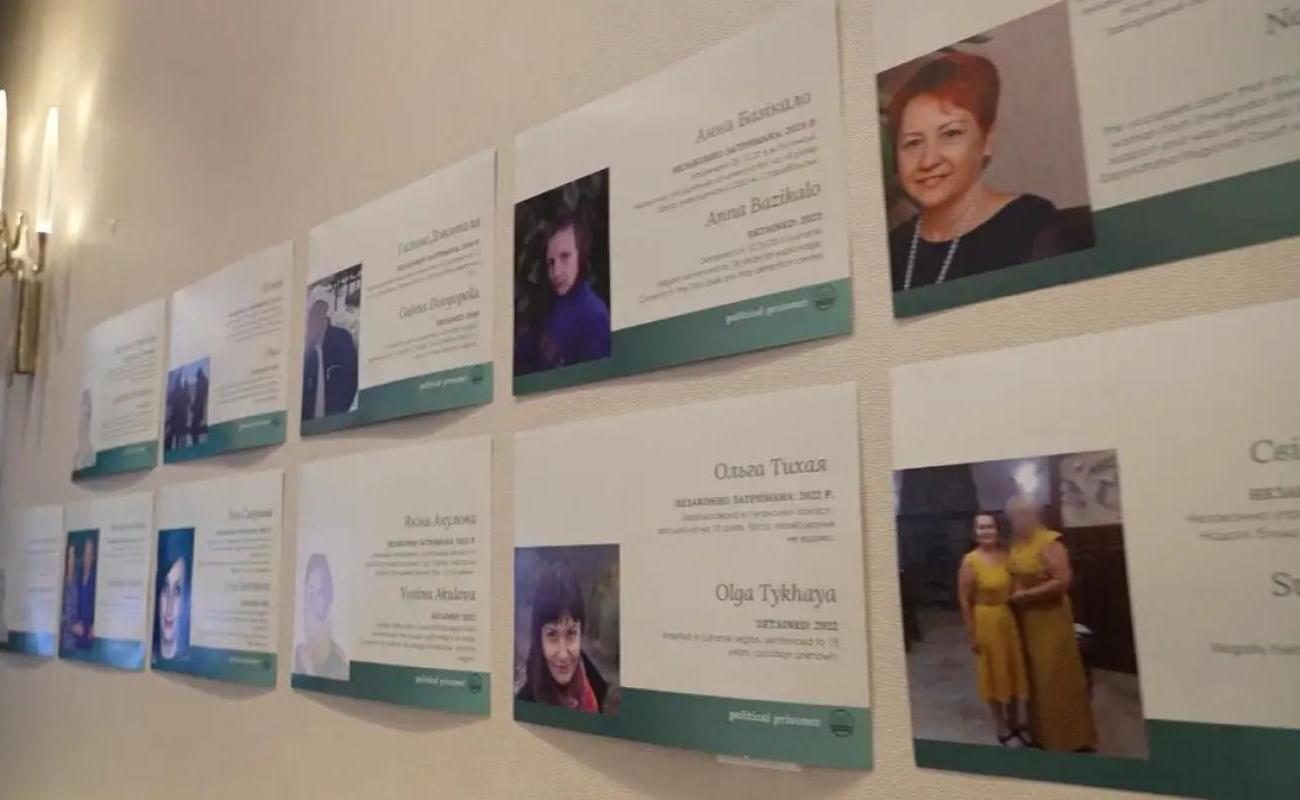
About 20,000 Ukrainian civilians are still in Russian captivity, including, according to human rights activists, more than 2,000 women. Ukrainian women who managed to be released told DW about their experiences behind bars in Russia.
"You can endure anything. But separation from your children is a special pain. And you hold on for the sake of your children," recalls Yulia Dvornichenko, her motivation for surviving Russian captivity.
The woman originally from Donetsk spent a year and a half in the prisons of the self-proclaimed "DNR" without the opportunity to see her sons Mark and Danil at least once. She notes that in the "Isolation" torture center and in the "detention center" in Donetsk there were many women with minor children, waiting for them to return from captivity. Like Yulia, all of them - in their previous lives doctors, teachers, florists, saleswomen - were accused by the Russian authorities of "espionage". And each of them, Yulia says, was tortured in captivity to "confess".
"The methods were the same for both men and women: they tortured them with electric shocks. They stripped me naked, beat me, poured water on me," Yulia says of her experiences.
Russian occupation and arrest in front of her son
Russian aggression first took away Yulia Dvornichenko's usual peaceful life in 2014 - then her hometown of Chistyakove (formerly Torez) was occupied, and she and her family went to Mariupol. However, her husband died soon after, and she and her children had to return home. To earn a living for her family, Yulia worked as a transporter - she transported Ukrainians from occupied Chistyakove to Ukrainian-controlled territories and back. Sometimes she went to the free parts of Ukraine with her children.
"I often went with the little ones just to breathe and see the difference between when we were occupied and when we were not," Yulia explains.
In 2021, the checkpoints between the territories temporarily occupied by Russia and Ukraine stopped working. So Yulia no longer left the city.
One night in March, representatives of the so-called "Ministry of State Security of the DNR" came to her house where she lived with her children. They took Julia away, accusing her of "espionage". Her then nine-year-old son Mark was sleeping, and seventeen-year-old Danilo witnessed the search and arrest of his mother.
"The unit that captured me received 500,000 rubles for me. For catching Ukrainian "spies", that was their bonus," says Julija.
According to her, the children were left to live alone at home, the older son took care of the younger brother. The occupying authorities forbade the neighbors to visit the boys and give them food.
"My children survived on their own," says Julija.
Blackmailing and Detention of Children
In the spring of 2021, Yulia was detained in the infamous "Isolation" prison in Donetsk. The woman still finds it difficult to recall the torture and interrogations she endured there. At that time, in addition to physical violence, she was also subjected to enormous psychological pressure: they threatened to send the children to an orphanage.
"Even then, I already said that I would sign everything I needed, just so that the children would not go to the orphanage. I agreed that I was a "Ukrainian spy," the woman admits.
Yulia's children were officially taken into custody by her close friend.
Yulia herself was taken to a "detention center" in Donetsk to await trial. Her sons Mark and Danilo could not see or hear her on the phone, the family was only allowed to correspond. They recorded the memories of the entire period of separation from their mother in the boys' lives in a photo album that Yulia still keeps today. These are pictures her sons sent her while she was behind bars, along with letters. “Here’s a photo of Mark writing me a letter in the “detention center.” A letter to his mother in captivity. “A terrible photo,” says Yulia.
With the start of Russia’s full-scale war against Ukraine, the woman recalls, her concern for her children intensified, and her own situation in the “detention center” along with other prisoners worsened. Ukrainian women in their cells were not allowed to use things sent to them by relatives, and during interrogations, they tried to break the prisoners’ morale.
“They told us that Ukraine did not exist. They immediately told us that there would be no exchanges,” Yulia recalls.
Nevertheless, prisoner exchanges between Ukraine and Russia were taking place, and Yulia and the other detainees followed the news as best they could in the hope that they would return home themselves. One day in October 2022, Yulia and two other women were taken out of her cell with their belongings. After a day spent traveling through the Russian-occupied Crimean peninsula, on October 17 they entered territory controlled by the Ukrainian government. According to the woman, her biggest concern after returning was how to contact her children and bring them back.
"I cried so much. Russia stole my time"
"When I found out that my mother was exchanged, it was my second birthday. We managed to communicate via video calls, we cried a little," recalls Julia's younger son Mark.
At that time, the boy remained in the occupied Donetsk region with a guardian, and Danilo, who was already an adult, lived with relatives who took him to Russia. There he waited for news of his mother's release and began helping her take her brother to Ukraine. The option of Julija personally going to the occupied territories of Ukraine to pick up Marko was immediately dismissed, says Danilo.
After all, the woman was still wanted on the territory of the "DNR". Another option was to exchange Marks with prisoners of war.
"A package on my head, my hands tied, tied with a ribbon, I will go with the army to the exchange. And I remember my mother telling me not to be afraid, this is the way to her. I already knew everything by heart, and nothing happened," says Mark.
In the end, the family chose a different path - Danilo went to the occupation to follow his brother and took him to Ukraine. They both finally saw their mother in December 2022 in Kiev.
"They have grown a lot. I cried so much because I lost that time of their growing up. Russia stole that time. Children have their own childhood, I have to take care of the children," says Yulia, barely holding back her emotions.
Now the Dvornichenkos live in the Kiev region, where benefactors have provided them with free accommodation. Fourteen-year-old Mark goes to school, and 21-year-old Danilo already works. Yulia has a part-time job - she became a manicurist. The woman devotes the rest of her time to testifying publicly about Russian crimes against civilians, talking about her imprisonment.
"My mission is not to remain silent, but to speak about all the terrible things that "Russia" is doing," the woman explains.
The fight for civilian women continues
Yulia Dvornichenko, along with other Ukrainian women who have also returned from Russian captivity, joined the public organization "Come on, Sisters!". Their goal is not only to share their dramatic experience, but also to fight for the rescue of other Ukrainian women from captivity. The organization states that, according to human rights activists, among the approximately 20,000 Ukrainian civilians currently in Russian captivity, there are more than two thousand women.
Last year, three civilian women were returned to Ukraine from Russian captivity. Among them are Svitlana and Yulia, originally from the Donetsk region. Both were captured in 2019 on charges of "espionage". Like Yulia Dvornichenko, they have finally met their children.
"I haven't seen my children for six years. When you don't know what's happening to them, it's very difficult," says Svitlana.
After what she experienced, the most important thing, according to Yulia, who returned from captivity with Svetlana in August, is adaptation and how her loved ones treat those who have been released from captivity.
"It seems to me that the whole of Ukraine was waiting for us. People came out into the streets and greeted us with flags. It was very emotional," the woman says.
"Come on, Sisters!" helps women renew their documents after captivity, find work and housing, and also provides support from Ukrainian women who have had the same experience. The organization is also headed by one of the former civilian prisoners of the Kremlin, who returned from captivity to Ukraine in 2022. Lyudmila Huseynova says that it is currently extremely difficult to return civilian prisoners of war from the Russian Federation and the territories it occupies, because under international law the concept of a civilian prisoner does not even exist. Currently, according to the organization, the identity of more than 40 Ukrainian civilians who are prisoners in the occupied territories or in Russian colonies has been accurately identified. Some of them have already received prison sentences lasting decades. "The most terrible thing for many women who have small children is being separated from them for years. This is a horror that cannot exist in the world of the 21st century," Huseynova is convinced.