
Human rights violations in Russia: Council lists ten individuals over the barring of Yabloko from the State Duma elections
The Council adopted today restrictive measures against ten individuals for supporting the repression of democratic opposition and seriously undermining democracy and the rule of law in Russia.
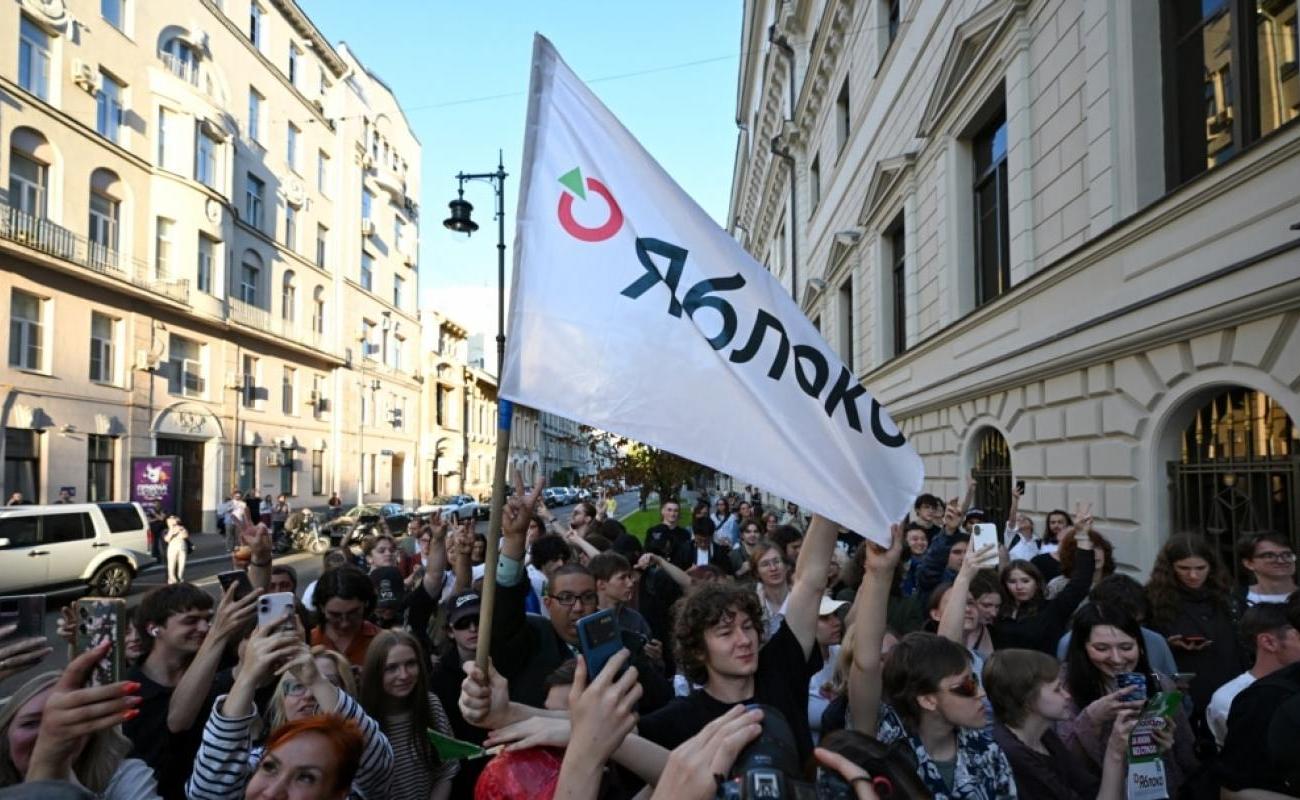
The Council listed three judges of the Supreme Court of the Russian Federation and an official in the Prosecutor General’s Office involved in the decision barring the Yabloko political party from participating in the September 2026 elections to the State Duma, because of alleged breaches of copyright, extremism and other misconduct. Yabloko was the only political party that openly opposed Russia’s war of aggression against Ukraine.
Today’s listings also include the judge that sentenced Lev Shlosberg, an opposition politician from the Yabloko political party, to 11 years and one month of imprisonment for discrediting the Russian army and “fake news” regarding Russia’s war of aggression against Ukraine, as well as the state prosecutor that requested such stern sentence.
Lastly, the Council listed the judges involved in the trials of Maxim Kruglov and Nikolai Rybakov, other prominent leaders of the Yabloko political party.
With today’s decision, restrictive measures in view of the situation in Russia now apply to a total of 108 individuals and 7 entities. Those listed today are subject to an asset freeze, and EU citizens and companies are forbidden from making funds, financial assets or economic resources available to them.
The relevant legal acts have been published in the Official Journal of the European Union.
Background
The Council established a framework for restrictive measures against those responsible for serious human rights violations or abuses, repression of civil society and democratic opposition, and undermining democracy and the rule of law in Russia in March 2024, as the EU’s response to the accelerating and systematic repression in Russia. The new framework was established following the death of Alexei Navalny.
On 19 August 2026, the UN High Commissioner for Human Rights, Volker Türk, issued a statement in which he expressed his alarm at the barring of the Yabloko political party from the September 2026 parliamentary elections in Russia and the sentencing of its deputy chair, Lev Shlosberg, to more than 11 years in prison over anti-war speech. The High Commissioner called on authorities to respect freedom of expression and citizens’ right to fully and freely participate in electoral processes.
In a EU statement on the Russian State Duma elections held on 18-20 September 2026 and their non-applicability on Ukrainian territory dated 21 September, the High Representative stressed that Russian authorities have continued to increase the systematic and institutionalised internal and transnational repression to exclude any democratic opposition forces from contesting the status quo. The decision to exclude candidates from the Yabloko party from running on the federal list further limited the choice for Russian voters, debarring from the electoral process one of the last remaining opposition forces and the only party with an anti-war platform.
The EU remains unwavering in its condemnation of human rights violations and repressions in Russia, and is deeply concerned about the continuing deterioration of the human rights situation in the country, especially in the context of Russia’s war of aggression against Ukraine.