
OPINION: Why Putin Isn’t Interested in Ending the War
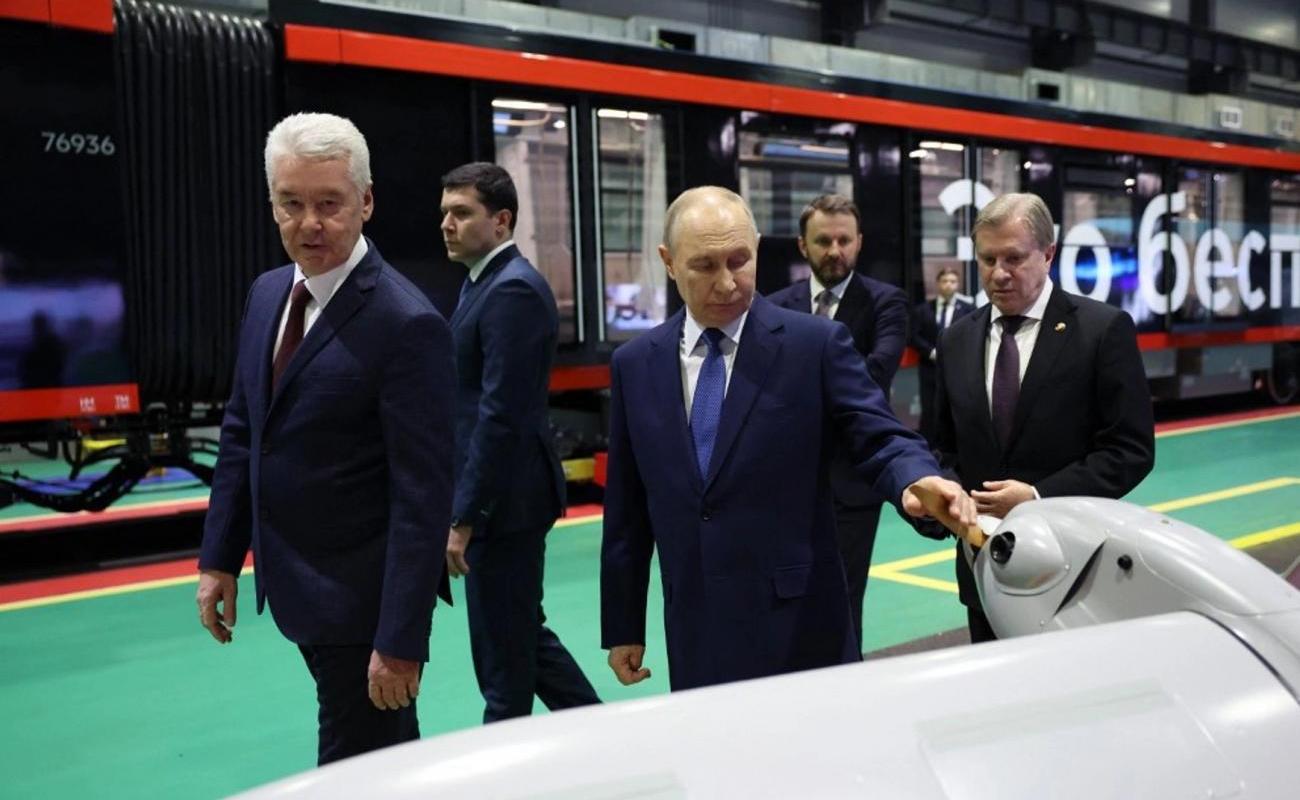
Putin’s war has become a system for managing Russia itself – manpower, prisons, loyalty, and a potentially dangerous new elite forged in a war of aggression.
Russia’s war in Ukraine is usually explained in terms of ideology, territory, and regime survival. But there is another driver that becomes more important the closer any “endgame” looks: domestic security.
For the Kremlin, a post-war Russia is not automatically “peace.” It is a country that may have to absorb a huge, heavily militarized population, including men socialized into extreme violence, some recruited directly from prisons, and many returning into an economy that cannot offer them comparable status, money, or meaning. That prospect is a threat not only to public order, but to the regime’s monopoly on coercion – the core currency of Putinism.
For Ukrainians, participants of the so-called “special military operation” (SVO) are widely perceived as agents of an aggressive war; individual criminal responsibility, however, is established by investigation and courts. But even for the Kremlin’s own internal calculus, the issue is simpler: not every returning serviceman becomes a criminal – yet even a small fraction can become a large problem at scale.
The scale problem
As of September 2025, Russian President Vladimir Putin himself spoke of “over 700,000” in the combat zone. That is not a total headcount of everyone who has served since 2022 – it is a snapshot of active manpower. The actual flow is larger.
Russia also carried out a “partial mobilization” of 300,000 reservists in September 2022. Since then, the Kremlin has tried to avoid a second mass mobilization by leaning on contracts and “volunteers.” In February 2024, Russian Defense Minister Sergei Shoigu said almost 540,000 signed contracts in 2023 – enough, he claimed, to form new reserve armies and divisions.
For 2024, official messaging is inconsistent, but it still signals huge intake. In December 2024, Russian Defense Minister Andrei Belousov said “more than 427,000” had been recruited on contract that year – an assertion that iStories argued may be overstated and not transparently verifiable.⁴ Another iStories estimate based on federal budget expenditures puts the 2024 figure at up to 407,200 contract signings. In January 2025, Reuters separately quoted Russian Security Council Deputy Chair Dmitry Medvedev claiming around 450,000 contract recruits in 2024. For the following yest (2025) he claimed about 417,000 signed contracts (plus over 36,000 “volunteers”).
Add these together – even cautiously and even allowing for double counting, re-signing, casualties, and men who remain in service – and the conclusion is unavoidable:
- Hundreds of thousands are already on the line at any given moment
- Well over a million men may have cycled through the armed forces via mobilization and contracts since 2022
And one way or another, the state will eventually have to manage their “return” – socially, economically, psychologically, and politically.
The prison pipeline
The war has also functioned as a domestic “pressure valve” for the penal system – one with predictable blowback.
Reuters reported that Russia’s prison population fell sharply in 2023 and noted that around 105,000 prisoners were released in 2022–2023, partly linked to recruitment for the war. It also cited reports that the Wagner Paramilitary Group recruited about 50,000 prisoners. Le Monde described the scale as broader and increasingly formalized: it reported estimates of around 150,000 prisoners recruited, and highlighted legislative changes that allow suspects and defendants to suspend prosecution by going to the front.
But the real risk is not only how many were recruited; it is the logic created by the state: violence becomes a path to amnesty, money, and status – while accountability is postponed, diluted, or politically inconvenient.
By early 2024, multiple outlets such as The Moscow Times reported that Russia began phasing out pardons for some convict recruits and changing the terms under which they can return home – suggesting the Kremlin already understands the destabilizing potential of releasing large numbers of violent offenders back into society.
“Ukraine syndrome” will dwarf the Afghan precedent
Russia has seen this movie before – on a smaller scale.
During the Soviet war in Afghanistan, a total of 620,000 Soviet personnel served over nearly a decade. Yet the Afghanistan deployment rarely approached today’s scale in Ukraine at any single moment. The war generated a recognized “Afghan syndrome”: trauma, alienation, networks of violence, and, in the late Soviet and early post-Soviet period, veterans drifting into coercive roles across weak state environments.
Recent scholarship shows how Afghan war veterans could become “violent specialists” amid state disintegration – offering security and coercion, then aligning with non-state armed actors once authority crumbled.
But the war in Ukraine creates conditions for a more severe syndrome:
- Scale and intensity: Russia’s active combat zone manpower in Ukraine has been described by Putin as over 700,000 – already comparable to (or exceeding) the total Afghanistan cohort in a much shorter time span
- Prisoner recruitment: the Afghanistan cohort was not built around a systematic prison-to-frontline pipeline, unlike the flow into the war in Ukraine
- Normalization of brutality at home: independent reporting increasingly documents severe violence linked to returnees and wartime socialization
A UN-backed expert, Mariana Katzarova, warned of violence in Russia committed by former convicts whose sentences were commuted for fighting, citing an estimate of around 170,000 violent criminals recruited and describing serious crimes by returnees. Reuters has described the Kremlin’s concern about the destabilizing effects of veterans returning – citing cases of serious crimes and internal debates about the scale of the problem.
Meanwhile, investigative outlet Verstka reported in December 2025 that returning “SVO veterans” have killed and maimed more than 1,000 people inside Russia since the full-scale invasion began – an attempt to quantify what is otherwise fragmented across regional court records and local news.
Even if any single estimate is debated, the pattern is consistent: the post-war violence problem is already present before the war has ended.
The Kremlin’s answer
Here the logic becomes explicitly political. The Kremlin is not simply trying to “integrate” veterans; it is trying to recode the elite.
This scenario carries a built-in contradiction: The Kremlin wants veterans close (as a controlled political class and a legitimizing symbol), but it fears veterans as uncontrolled (as armed networks, angry men, criminal entrepreneurs, or political rivals).
Ending the war forces that contradiction into the open. Continuing the war delays it, and allows the state to keep channeling violence outward while selecting and grooming “acceptable” veterans inward.
What this means for Europe and Ukraine
A Russia shaped by this scenario is not just a wounded state; it is a state that has institutionalized wartime identity and expanded the social base of coercion.
For Europe and Ukraine, the key risks are not abstract.
First, cross-border criminality and violence tend to grow when large numbers of men return from high-intensity war with limited civilian prospects and extensive informal ties. In Russia’s case, those ties may connect veterans, private military remnants, prison-recruit networks, and local patronage systems – fertile ground for smuggling, weapons circulation, violent enforcement services, and corruption-based business models.
Second, the export of coercion becomes easier when the state has produced a pool of men whose skills and status are tied to force. This does not require an official policy of exporting veterans; it can emerge through semi-formal structures, private “security” markets, and deniable networks – especially in grey zones near Europe’s eastern frontier.
Third, political radicalization and militarized legitimacy can spill outward. A Kremlin that publicly crowns war participants as “the real elite” is not incentivized to cool the temperature after the war; it is incentivized to sustain a worldview in which violence is honorable, compromise is betrayal, and the West is an existential enemy. That posture can harden Russia’s long-term hostility and sustain hybrid pressure even when active fighting pauses.
Finally, for Ukraine specifically, the challenge is that post-war Russia may become more – not less – dangerous in social terms, precisely because a large stratum of men will have been forged in a war of aggression and then reinserted into domestic structures of power, security, and ideology. The post-war environment may therefore combine internal volatility with continued external threat.
The bottom line
Putin’s war is not only about Ukraine. It has become a domestic system for managing Russia itself: manpower, prisons, loyalty, and elite formation.
A real end to the war risks releasing a wave of men for whom violence has become a job, an identity, or a ladder – while the state’s promises of status cannot be delivered at scale. That is a classic recipe for crime, coercion markets, and political instability.
So the Kremlin’s incentive is clear: delay the moment of return, and use time to build a controlled “new elite” from the war – because the alternative is a society where the state no longer fully controls the violence it has unleashed.
The views expressed are the author’s and not necessarily of Kyiv Post.