
Russia’s Wartime Duma Election: What the Result Reveals — and What It Cannot Prove
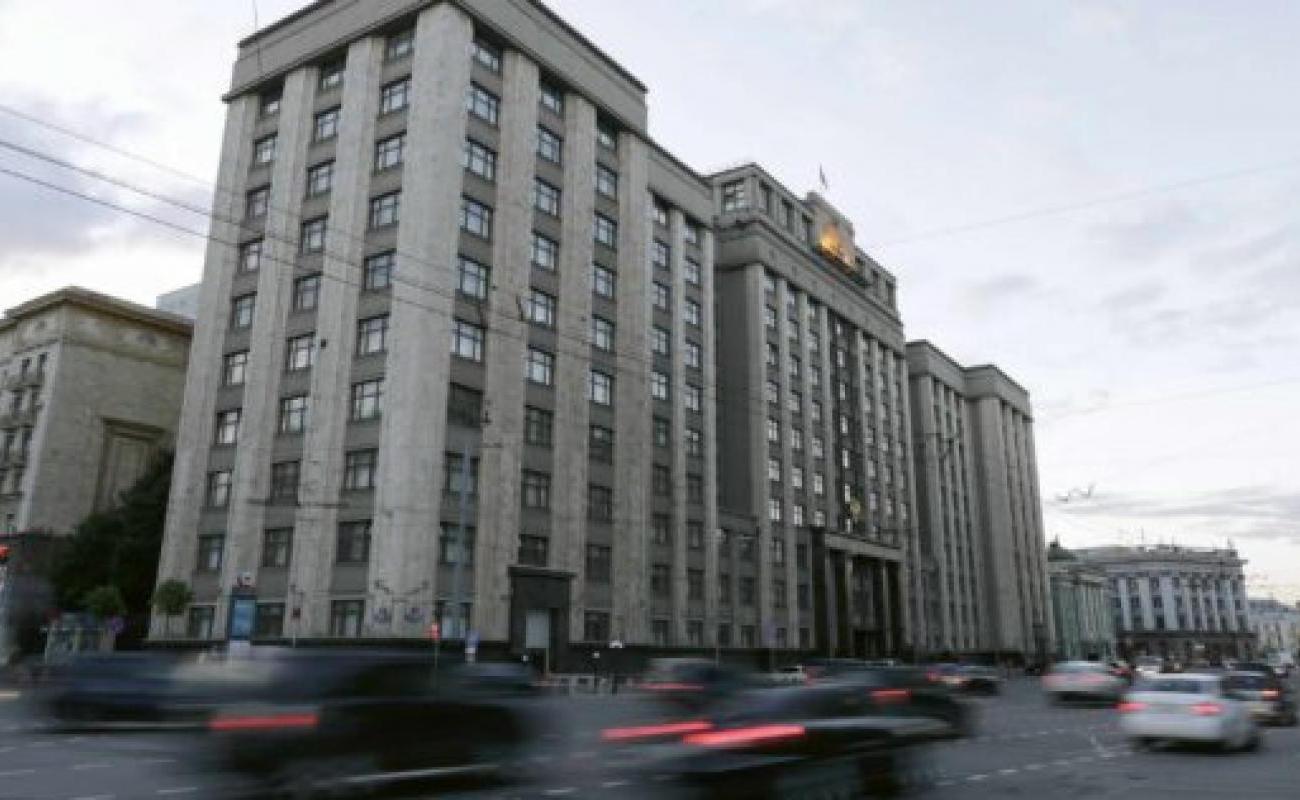
United Russia has emerged from Russia’s first parliamentary election since the full-scale invasion of Ukraine with an enlarged majority.
Yet the importance of the vote lies less in the headline percentage than in the system that produced it — and in the Kremlin’s attempt to turn a tightly controlled wartime election into evidence of national consent.
Russia’s ruling United Russia party secured 57.83 per cent of the party-list vote in the 18–20 September State Duma election, according to preliminary figures from the Central Election Commission after more than 95 per cent of ballots had been counted. That compares with 49.8 per cent in 2021 and is expected to give the party 355 of the 450 seats in the lower house, preserving its constitutional majority.
The numbers suggest continuity, but this election differed from its predecessors. It was the first State Duma vote since Russia’s full-scale invasion of Ukraine in February 2022; it was held as the effects of the war increasingly reached Russian cities; and it followed a sustained narrowing of the political space available to opponents of the Kremlin’s war policy.
That means the result establishes who controls the Duma. It does not, by itself, establish how many Russians support continuing the war.
A vote without a competitive anti-war alternative
The Communist Party remained the largest opposition force, while the Liberal Democratic Party and New People also cleared the parliamentary threshold. None represents a fundamental challenge to the Kremlin’s conduct of the war.
The most consequential exclusion was Yabloko’s federal list. The party had campaigned on a platform centred on peace and political liberalisation and remained one of the few registered political organisations advocating an explicitly anti-war position. Its federal list was initially registered by the Central Election Commission in July, but Russia’s Supreme Court later cancelled that registration.
Yabloko continued to contest some single-member constituencies, but its removal from the federal ballot substantially limited the ability of voters to register an anti-war choice at party level. The European Union said the exclusion had further restricted political competition, describing Yabloko as “the only party with an anti-war platform”.
As EU Today reported in August, Yabloko deputy chairman Lev Shlosberg was sentenced to 11 years in prison over anti-war social-media posts.
This does not tell us what the result would have been in a fully competitive election. It does mean that voters were not offered an equivalent nationwide choice between continuation of the war and a clearly articulated anti-war alternative.
A 57.83 per cent vote for United Russia therefore cannot simply be treated as a 57.83 per cent endorsement of the Kremlin’s Ukraine policy.
The missing external benchmark
Russia did not invite observers from the Organisation for Security and Co-operation in Europe. In August, the OSCE Office for Democratic Institutions and Human Rights said that this continued a pattern of Russia failing to meet commitments made under the 1990 Copenhagen Document and deprived voters and the wider international community of an independent assessment of the electoral process.
The 2026 vote was the third consecutive nationwide Russian election that the OSCE was unable to observe. Restrictions prevented deployment in the 2021 parliamentary election, while Russia also declined to invite the organisation for the 2024 presidential election.
This matters particularly because remote electronic voting has become increasingly important in Russia’s electoral system. A June decision by the Central Election Commission authorised remote electronic voting across 32 Russian regions as well as Moscow.
Electronic voting is not inherently incompatible with democratic elections. The difficulty arises when electronic systems operate in an environment where independent observers have limited ability to scrutinise registration, campaign conditions, access to voting, counting and verification.
The issue is therefore larger than allegations about individual ballot boxes or electronic totals. It concerns whether the overall process permits the published result to be treated as an independently verifiable measure of political opinion.
When the war reached election day
On 20 September, the final day of voting, Ukraine launched a large-scale drone operation against Moscow and other targets inside Russia. Russian officials claimed that more than 1,600 drones had been intercepted across several defensive lines, including about 450 approaching Moscow.
The attack struck the Moscow Oil Refinery at Kapotnya and caused wider disruption around the capital. As EU Today reported during the attack, Moscow Mayor Sergei Sobyanin described it as the largest drone assault yet directed at the Russian capital and claimed that it had been intended to disrupt the election. No evidence was presented establishing that electoral disruption was Ukraine’s objective.
The political symbolism nevertheless mattered.
For much of the period since February 2022, the Kremlin has sought to preserve a distinction between the fighting in Ukraine and normal daily life in Russia’s largest cities. Mobilisation, attacks on border regions and increasingly long-range Ukrainian strikes have progressively narrowed that separation.
An election held while air-defence systems were operating around Moscow, airports were disrupted and a major refinery in the capital was burning demonstrated how far that separation has eroded.
The attack does not tell us how Russian citizens voted or what they think about the war. But it altered the political setting in which the Kremlin was asking them to demonstrate unity.
Voting beyond Russia’s internationally recognised borders
Russia organised voting in Crimea and Sevastopol, annexed by Moscow in 2014 but internationally recognised as Ukrainian territory, as well as in Russian-occupied parts of Donetsk, Luhansk, Zaporizhzhia and Kherson regions.
The EU said it would never recognise either the holding of the election in those territories or its results there, arguing that Russian electoral activity on occupied Ukrainian territory has no validity under international law.
The issue extends beyond Ukraine. EU Today reported on Sunday that Russian State Duma voting was also organised at 15 polling stations across Moldova’s breakaway Transnistrian region despite objections from Chişinău, which said Moscow had not received permission to operate polling stations outside the Russian embassy.
Taken together, these cases show Russia using elections not only as a domestic political mechanism, but also as an instrument for reinforcing claims of jurisdiction beyond its internationally recognised borders.
What the 355 seats actually provide
United Russia’s projected 355 seats matter in practical terms.
A constitutional majority allows the Kremlin-aligned parliamentary bloc to pass legislation, budgets, taxation measures and institutional changes without depending on opposition parties. It also ensures that the legislature is unlikely to become an independent constraint on decisions concerning military expenditure, mobilisation rules or the wider wartime economy.
What the result does not independently demonstrate is public approval for any specific future policy.
Speculation has already centred on whether the government might use the post-election period for another mobilisation or new economic measures connected with the war. Such measures may or may not follow. The election itself is not proof that decisions have already been made.
Its more immediate political value lies elsewhere.
President Vladimir Putin presented participation in the election as part of national unity during wartime. The resulting parliamentary majority can therefore be used to portray subsequent government decisions as resting on a renewed democratic mandate, even though the competitive and observational conditions under which that mandate was produced remain disputed.
As EU Today noted ahead of the result in its examination of the choices available to Russian voters, the central question was never whether United Russia would remain the dominant force in the State Duma. It was what conclusions could legitimately be drawn from the size of its victory.
The election has confirmed the political architecture through which Russia will continue to govern during the war: a strengthened United Russia majority, a marginalised anti-war opposition, increasing reliance on controlled and electronic voting mechanisms, and a parliament structurally aligned with the presidency.
For Europe, the more consequential question is not who controls the State Duma. That was never seriously in doubt. It is how the Kremlin will use its renewed parliamentary majority as the military, economic and social costs of the war become increasingly difficult to keep outside everyday Russian life.