
Who and how organizes terrorist attacks and can they be prevented?
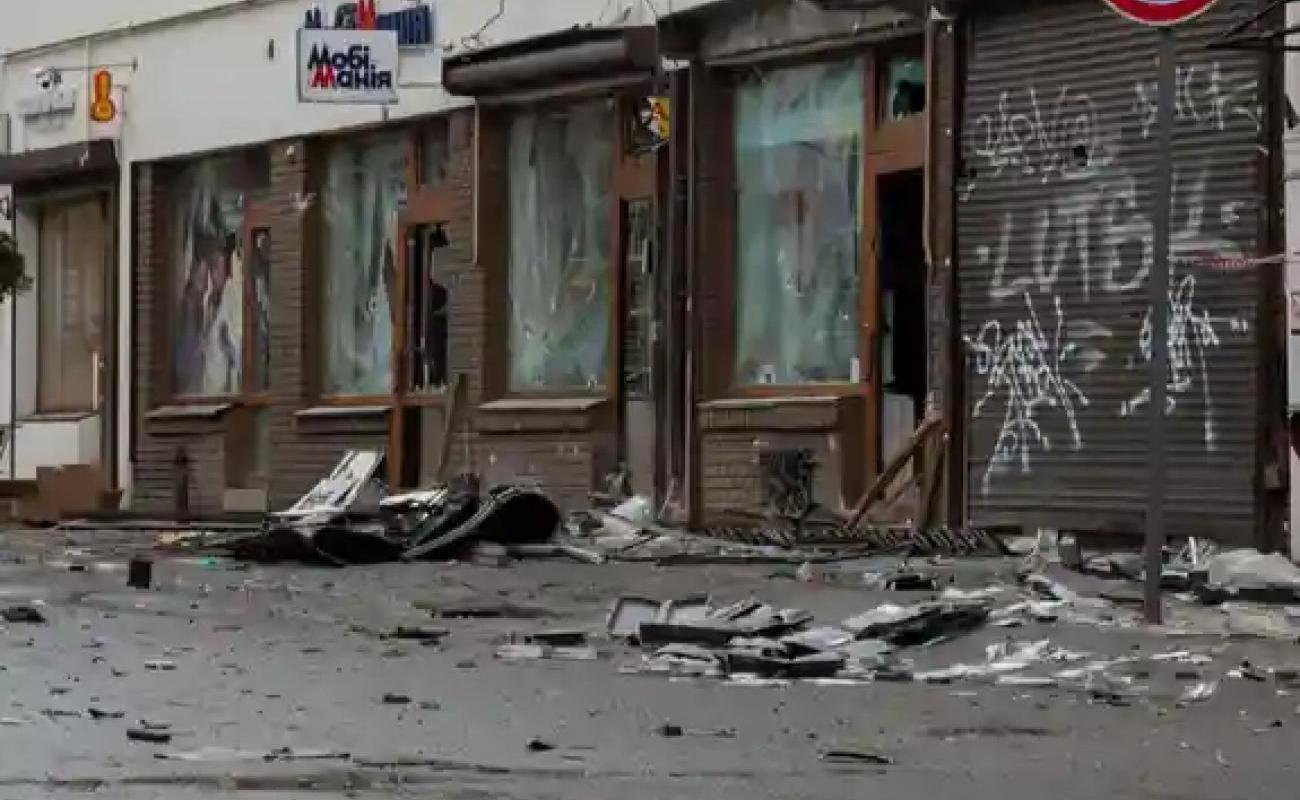
Recently, several explosive attacks have occurred in Ukraine. The victims are mostly police officers. The authorities call these explosions terrorist attacks and accuse Russia of recruiting the perpetrators. How are attacks organized and can they be prevented?
In fact, every month reports of attacks come from different regions of Ukraine - from explosions in crowded places to targeted attacks on specific individuals. The last high-profile incident occurred on March 23 in Bucha, Kyiv region, near an apartment building. According to police officers, one improvised explosive device exploded at about 5:34, and two hours after the arrival of emergency services and police officers at the scene - the second. As a result, two police officers were injured.
OPU and SBU: the attacker in Bucha was recruited by Russians
Ukrainian security authorities qualify the event as a terrorist attack. Later that day, the suspect, a 21-year-old Ukrainian citizen who lived near the crime scene, was taken into custody. According to the findings of the investigation, in March 2026, he was recruited by representatives of the Russian special services through an online game.
"Subsequently, he maintained contact with the leader via messenger, from whom he received instructions and means for preparing explosions," the State Prosecutor's Office of Ukraine announced.
According to the Security Service of Ukraine (SBU), the Russians gave the young man instructions on how to make two homemade explosive devices, each of which he equipped with a mobile phone for remote activation.
"He hid one bomb under a bench near the entrance to a residential building, and the other near a garbage container," the SBU said.
Initially, according to the findings of the investigation, the suspect claimed that he committed the crime due to blackmail. Allegedly, "a new acquaintance started blackmailing the young man, saying that he knows where his mother is and that he is allegedly following her with a drone, so in order for her to stay alive, he has to plant an explosive device," the police said.
However, the investigation later determined that the motive for the crime was a financial reward - the suspect aimed to earn 25,000 hryvnia for each explosion, said Andriy Kravchuk, head of the criminal investigation department of the Kyiv region police.
Police officers have opened a criminal case under Part 2 of Article 258 of the Criminal Code of Ukraine (terrorist act). The penalty is seven to 12 years in prison.
Police officers under surveillance
Similar attacks or attempted attacks have been recorded in Lviv, Kyiv, Dnipro, Mykolaiv and Odessa in recent months. For example, on February 22, Lviv police received a report that someone had broken into a store. When a police patrol arrived at the scene, an explosion was heard. A policewoman was killed in the attack, and a wounded National Guardsman later died in hospital. At the time, police officers also declared the case a terrorist attack.
Prosecutor General of Ukraine Ruslan Kravchenko points to a common pattern of these crimes: homemade explosive devices, remote detonation, coordination through messengers and recruitment of perpetrators.
"The prosecutor's office believes that this is a systematic subversive activity of Russian special services aimed at attacking members of the police, the army and civil security within the country," Kravchenko said.
Currently, the attacks are mainly directed against police officers, notes Ivan Stupak, a former employee of the Security Service of Ukraine.
"There are attempts to plant explosives near crowded places, especially in shopping malls in large cities. But as a separate trace, police officers can be singled out. It is clear that the Russians would like to get employees of all law enforcement agencies. But, for example, the SBU and NABU and the State Bureau of Investigation do not wear uniforms and are therefore more difficult to recognize. The State Security Service and military personnel are mainly in guarded facilities," he told DW.
Meanwhile, police officers, especially in police patrols, are easier to lure into a trap, because they always come when called, Stupak notes.
"You can predict when they will arrive, in what quantity, and choose the location where they will arrive. Theoretically, doctors, firefighters, anyone could be in danger. It all depends on the master plan that the Russians have," Stupak warns.
According to him, the main goal of these attacks, which he also calls terrorist attacks, is to sow panic among the security forces.
"We are all people, we are all afraid, the army is afraid, the security forces are afraid. Therefore, the task is to demoralize and demotivate them so that they avoid going to duty, so that the crime rate increases. On the other hand, the Russians will send messages through social networks that everything is bad. As a result, people will become dissatisfied. Who is to blame? The deputy, the president," the expert claims.
How Russia recruits attackers
The SBU, when asked by DW, assures that they use all the tools available in the counterintelligence service to prevent such attacks.
"Specifically, in 2025 alone, the SBU prevented 163 crimes involving explosives. The enemy's goal is to destabilize our society from within," law enforcement officials say.
According to the SBU, the perpetrators of the attacks are sought by Russian special services through online communities and messengers (mainly Telegram), offering quick money.
"They include minors, people with drug or alcohol addiction, and other vulnerable people who are easier to manipulate into illegal activities. Recruiters often hide their connection to Russian special services. Usually they are gradually drawn into illegal activities. After completing the first task, they are forced to commit larger crimes by blackmail," the SBU press service said.
To counter Russian attempts to recruit Ukrainian youth, the SBU and the National Police launched an information campaign called "Put the FSB Officer to Sleep," which, in particular, includes holding online and offline classes among schoolchildren and students. As part of this information campaign, the SBU has developed a chatbot of the same name, through which the phone number or nickname of the person trying to recruit can be transmitted.
"Since December 2024, when the chatbot was put into operation, the Service has received more than 20,000 reports, a significant part of which came from minors," the SBU states.
Can terrorist attacks be prevented?
Stupak believes that the attackers will still be able to find the perpetrators of the attack - despite the efforts of the police.
"There is always some loophole in the law. In the future, there will be terrorist attacks. They will regularly detain (attackers. - Editorial), but the Russians will still try," says Stupak.
In addition, according to experts, the targets of attacks can change over time.
"Now there are terrorist attacks on police officers, and over time the Russians will want something else. It can be a subway, a public transport station, a cemetery during a soldier's funeral. It is clear that our politicians are protected, but it is impossible to provide 100 percent protection, for example, on the Maidan (Independence Square in Kyiv. - Editor). Therefore, everything depends on the imagination of the Russians," noted Stupak.
The expert advises the application of the American approach to security in Ukraine.
"There is a rule that if you find something suspicious, you have to report it. What does that mean? For example, while walking through Shevchenko Park, you saw a TV remote control. This thing is illogical in that place," says Stupak.
In addition, according to him, it is worth looking carefully at the people around you.
"If you see that someone is very worried, you should contact the police. And, of course, it's important to follow the rule: if you didn't drop something, don't pick it up. Because, just like on the front line, they can detonate household items, wallets. Everyone should understand that preventing terrorist attacks is not just the job of police officers or SBU employees. We are all interested in that," summarizes Stupak.