
Over 430 Public Buildings Upgraded
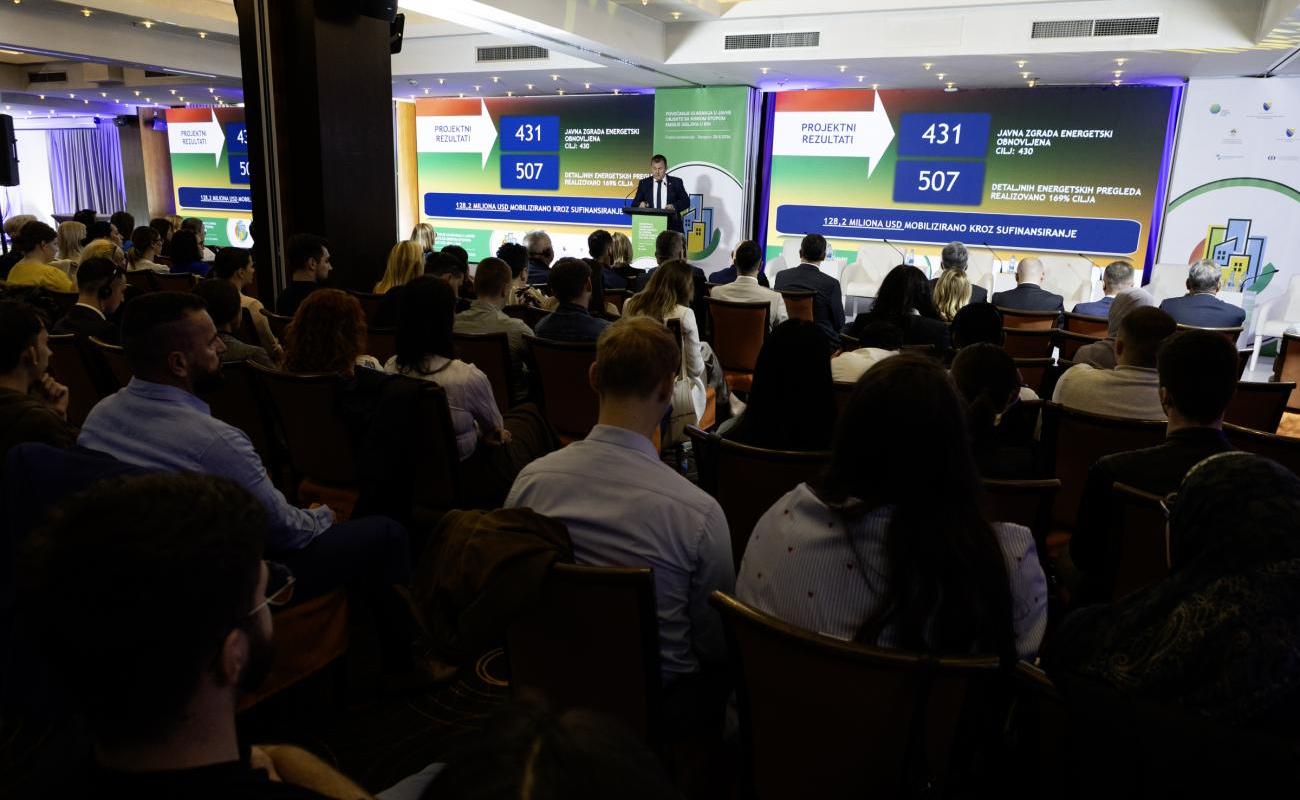
With the completion of the project to scale up investments in low-carbon public buildings, Bosnia and Herzegovina has taken a significant step forward towards more sustainable, resilient, and inclusive development.
Over the past eight years, the project - funded by the Green Climate Fund (GCF) and implemented with the support of the United Nations Development Programme (UNDP) in partnership with the Ministry of Foreign Trade and Economic Relations of Bosnia and Herzegovina, the Federal Ministry of Spatial Planning, the Ministry of Spatial Planning, Construction and Ecology of Republika Srpska, Environmental Protection Fund of the FBiH and Environmental Protection and Energy Efficiency Fund of RS, has resulted in tangible and measurable changes across the country.
A total of 431 public buildings have been upgraded, exceeding the original target, while 507 detailed energy audits have been completed - reaching 169% of the planned scope. The project has mobilized over USD 128 million in co-financing and achieved annual emission reductions of more than 221,000 tonnes of CO₂, representing 119% of the target.
At the same time, institutional and strategic frameworks have been strengthened. A total of 46 Sustainable Energy and Climate Action Plans (SECAPs) have been developed, of which 41 have already been adopted, alongside the establishment of a national framework for investments in low-carbon buildings. The Energy Management Information System (EMIS) now covers 7,149 public buildings, supported by more than 3,100 trained professionals across different levels of government.
The project has also generated strong socio-economic benefits. More than 10,900 green jobs have been created or retained, while nearly one million citizens now benefit from improved, more energy-efficient and comfortable public spaces.
These results demonstrate that investments in energy efficiency not only reduce energy consumption and emissions but also directly improve quality of life, strengthen local economies, and contribute to the long-term resilience of communities.
Admir Softić, Secretary of the General Committee of the WEC BiH and Assistant Minister for Energy at the Ministry of Foreign Trade and Economic Relations of Bosnia and Herzegovina, stated:
“This project represents an important step forward in strengthening a systemic approach to energy efficiency in Bosnia and Herzegovina. The achieved results confirm that, with the right policies and a strong partnership approach, we can successfully mobilize investments and improve energy management in the public sector. This experience provides a solid foundation for further alignment with European energy and climate frameworks."
Renaud Meyer, Resident Representative at UNDP, said:
“These results show that the green transition is not an abstract goal, but a tangible change that citizens benefit from every day. Nearly one million people now benefit from improved public spaces, with lower operating costs and better conditions. At the same time, we have laid the foundations for the next phase - accelerating investments, strengthening institutions, and ensuring that this transition is just and inclusive, while addressing key challenges such as air pollution and energy security.”
While the project is formally completed, its impact will continue through further investment mobilization, strengthening national capacities, and the development of new initiatives within the Green Transition Portfolio.
The results achieved confirm that coordinated action by institutions, international partners, and financial mechanisms can generate sustainable, long-term change - for the benefit of citizens and future generations.