
The Governor Slaveski and Bassani from the World Bank have signed a technical assistance agreement to introduce instant payments in the country
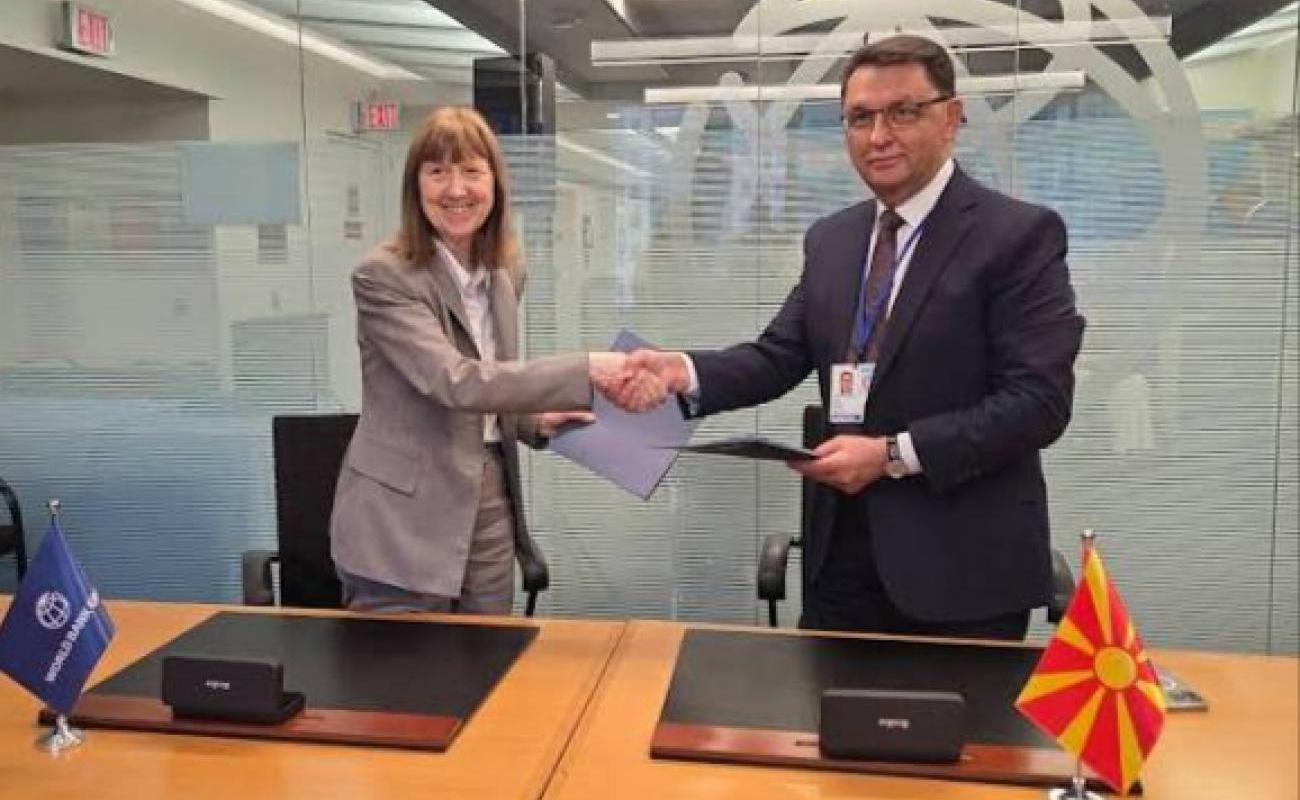
The National Bank’s efforts, supported by the World Bank, for the country’s membership in the Single Euro Payments Area (SEPA), as well as the successful integration of the banking sector into the SEPA credit transfer scheme have already produced tangible results through cheaper and improved speed and transparency of cross-border euro payments for citizens and companies. The World Bank will further support the National Bank activities for integration of our financial system into the European payment systems, especially by establishing instant payment system and its regional interconnectedness with payment systems of the Western Balkan countries and integration with the ECB’s TIPS. This was pointed out at the meetings between the Governor Trajko Slaveski and the Vice president of the World Bank Antonella Bassani and the World Bank Division Director for Western Balkans at the World Bank Xiaoqing Yu, during the spring meetings of the World Bank Group and the International Monetary Fund (IMF) in Washington, US.
The National Bank is currently focused on implementing the target instant payment system (TIPS) clone, which is being developed by the Banca d’Italia for five Western Balkan countries in accordance with the decision of the ECB’s Governing Council. To this end, the National Bank and the World Bank have signed a technical assistance agreement to provide expert assistance in designing and introducing the system, as well as its harmonization with the contemporary European practices.
The Agreement was signed by the Governor of the National Bank, Trajko Slaveski, and the Vice President of the World Bank Antonella Bassani.
The meeting with the World Bank senior officials in Washington highlighted the importance of the partnership within multiple National Bank projects which are technically supported by the World Bank. The constant cooperation contributes to improved mechanisms to enhance the financial stability, promote the regulatory and supervisory framework, develop macro-prudential policies, payment system modernization, enhanced risk management, as well as to support the digitalization processes, financial inclusion and harmonization with international standards and best practices.
The National Bank delegation in Washington also participated in a roundtable with representatives of the World Bank, Banca d’Italia and central banks of Albania, Bosnia and Herzegovina, Kosovo and Montenegro, to discuss the current activities and following steps to introduce the TIPS clone.