
BIO-TAC solution between heavy manual labor and expensive agricultural robots
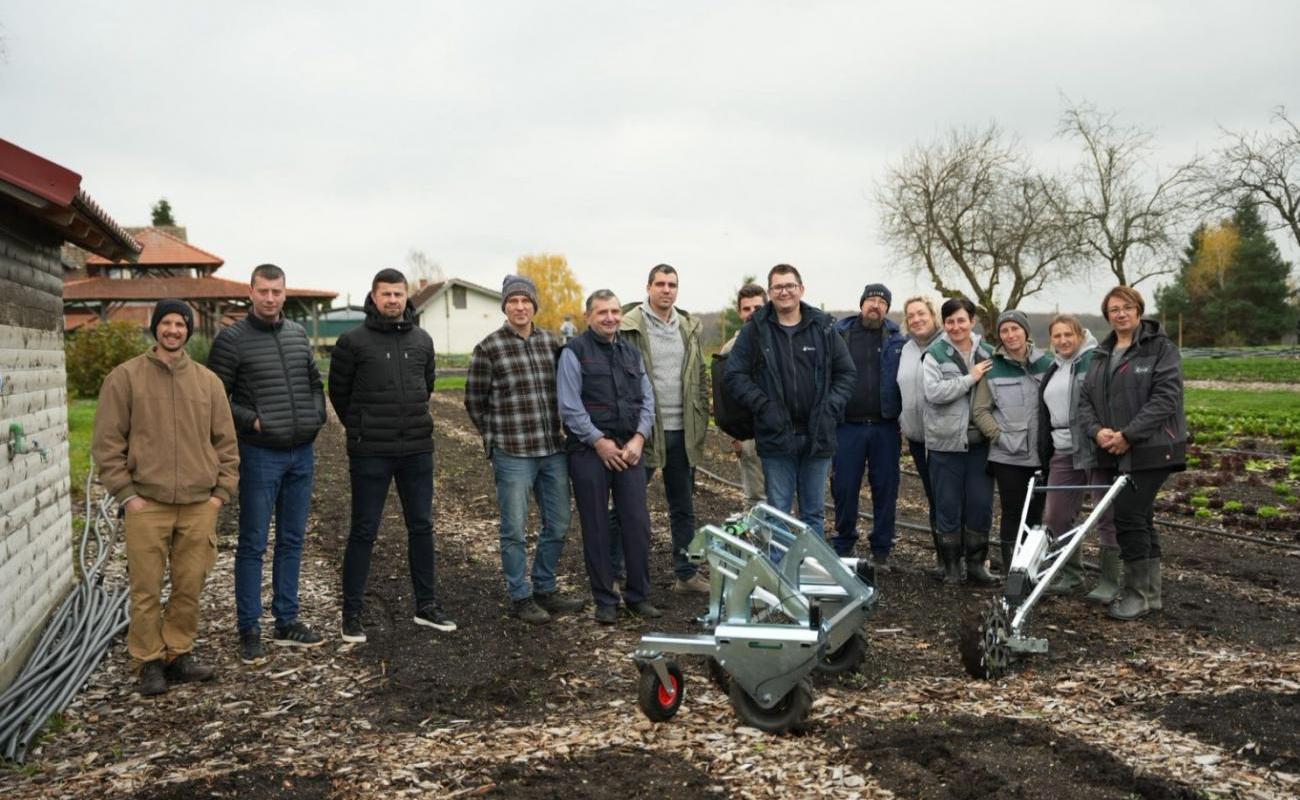
Work on a farm can be demanding and exhausting, especially on smaller holdings where there is often a lack of labor, making any kind of assistance highly valuable. It is precisely from this need that solutions emerge to ease everyday work, and one such solution is BIO-TAC: an autonomous, modular electric tool carrier designed for regenerative and biointensive agriculture – an agricultural tool with autonomous guidance.
BIO-TAC represents a regional solution developed through the EmBRACE project within the Interreg VI-A IPA Programme Croatia – Bosnia and Herzegovina – Montenegro 2021–2027, funded by the European Union. Partners involved in the development of BIO-TAC include Upbeat Hub from Montenegro, PZ Agronova from Bosnia and Herzegovina, and Green Tools Tech from Croatia.
“BIO-TAC was conceived because small and medium-sized farms lack an affordable solution between heavy manual labor and expensive agricultural robots. We needed something smaller, simpler, and financially accessible, that could help farms become more efficient, especially those applying ecological and sustainable methods,” explains Vukašin Rakočević from Upbeat Hub.
Such solutions respond to the needs of modern agriculture, particularly small and medium-sized farms, which form the backbone of production in Montenegro. The advantage of BIO-TAC is that a single machine enables multiple operations, reducing costs and increasing production efficiency.
“In practice, it uses electric drive, a guidance system, and sensors, and thanks to interchangeable attachments, it can perform multiple tasks in production, from soil preparation to inter-row cultivation,” Rakočević states.
As Rakočević explains, developing this kind of technology in Montenegro involves a complex process, from technical development and testing to certification and market preparation. This is precisely why he emphasizes that support from the European Union plays a key role.
“EU support has been very important—essential, in fact—because the entire concept aligns with European priorities of green transition, digitalization, and sustainable agriculture. Such support has provided both a development framework and a real opportunity for the idea to evolve into a market-ready solution,” says Rakočević.
Additionally, cooperation with partners from Croatia and Bosnia and Herzegovina has enabled BIO-TAC to grow beyond the scope of a local innovation and develop into a solution with broader applicability.
“We developed the project not only for the local market, but as a solution with potential for the entire Western Balkans and beyond. BIO-TAC reduces the need for heavy physical labor, automates part of the work, and makes agricultural production more accessible and efficient, which is especially important in conditions of labor shortages on farms,” Rakočević explains.
The project is currently in the phase of technical preparation and validation, while the next steps include further testing and preparation for wider market application. The example of BIO-TAC clearly demonstrates how important EU funds are for the development of innovation in Montenegro, especially in the fields of agriculture, green technologies, and digitalization.
“They not only reduce development and procurement costs, but also help domestic ideas gain a real chance to become competitive products on the market,” Rakočević concludes.
In the context of European integration, such projects confirm that alignment with EU standards is not only an obligation, but also an opportunity for developing new technologies, strengthening the economy, and improving life in rural areas. Additionally, such solutions give people the opportunity to work smarter, protect the land, and build a sustainable future for their farms.