
Internet blackout in Ukraine: is Russia capable of "shutting down" communications by striking data centers?
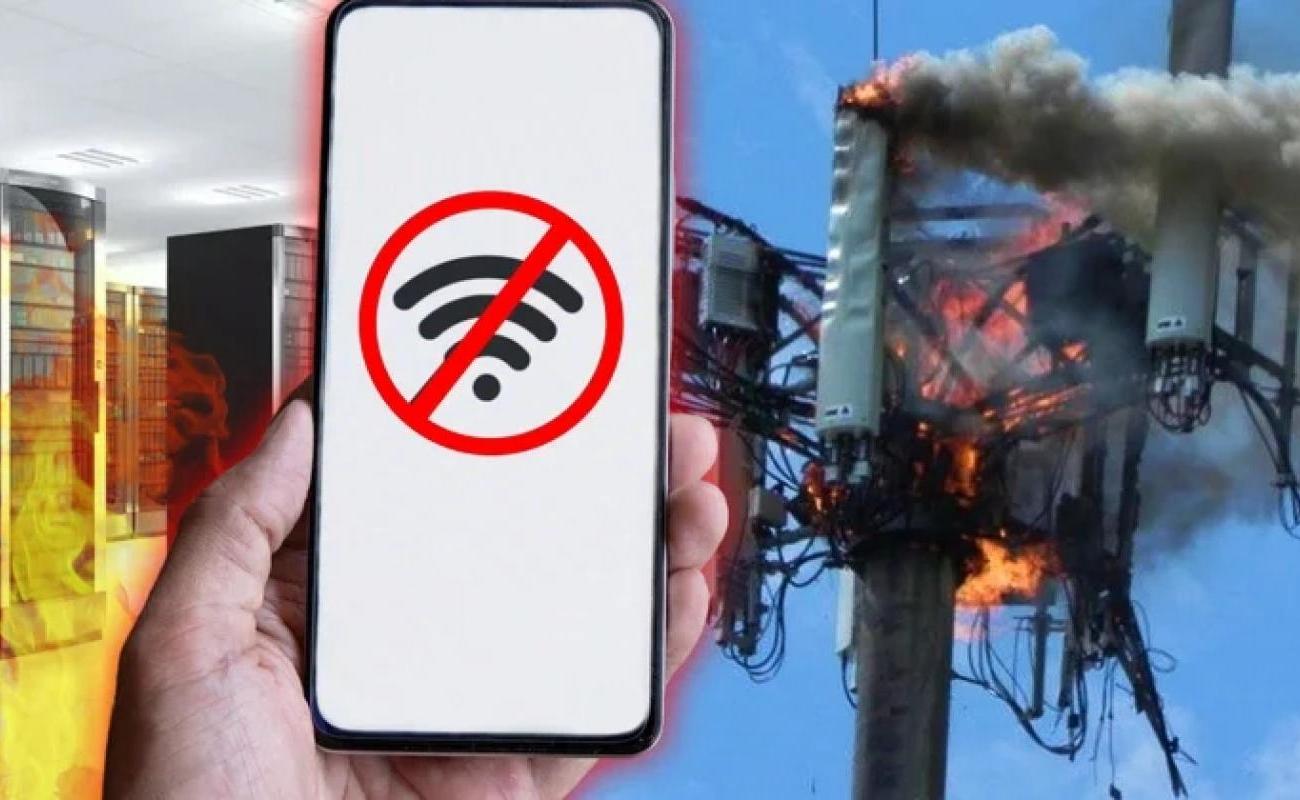
A missile strike on a data center could leave thousands without connectivity, yet "shutting down" the entire Ukrainian internet would be far more difficult. Following recent attacks, providers are already relocating equipment, but networks face another critical dependency: power supply. *Focus* has identified where the true vulnerability lies in Ukraine. The consequences of such strikes could also include rising service costs.
Russia is increasingly targeting data centers and communication hubs in Ukraine. After an overnight strike on Kyiv on September 24, the provider Etherlink reported damage to a key network node, leaving some subscribers in the city center without internet access. The company announced plans to relocate its network core to a different site. As *Focus* previously reported, MiroHost and Cityhost were also hit: the Ukrainian data center housing MiroHost’s facilities was destroyed, while Cityhost lost some of its equipment and began moving backups to servers abroad.
This is not the first such incident. A day earlier, on September 23, damage to data centers left some Kyiv subscribers without internet, prompting providers "Pavutina" and UTELS to carry out emergency repairs. Anatoliy Frolenkov, a representative of an internet exchange point, warned that Russia has been systematically targeting data centers and communication hubs for several weeks. Focus spoke with Oleksandr Fedienko, a member of the Ukrainian parliament and head of the subcommittee on cybersecurity and government communications, as well as telecommunications expert Roman Khimich, to determine whether the Russian Federation is capable of cutting off entire cities or regions from communications, how decentralized the Ukrainian internet is, and what would happen if attacks on data centers were combined with attacks on the energy sector.
Is it possible to cut off a region's internet with a single blow?
According to Fedienko, a key characteristic of the Ukrainian telecommunications system is the large number of independent operators and providers. This makes the network more resilient against attempts to simultaneously "shut down" the internet across the entire country.
"We have a huge number of internet providers. In effect, we are already decentralized when it comes to internet usage. The issue here is different. For instance, it is impossible to block all 3,000 operators at once. Naturally, some operators might be knocked offline, while others would remain," Fedienko explains to *Focus*.
He notes that large businesses and government agencies have long worked with multiple operators simultaneously so that the loss of a single channel does not result in a total blackout.
"Businesses have long used two or three telecommunications operators. The state does the same," says Fedienko.
Fedienko emphasizes that he does not consider a scenario where the internet goes down nationwide for an extended period to be realistic.
"From a critical infrastructure perspective, I don't think everything could simply grind to a halt," the MP notes.
"There will be no collapse": what the internet really depends on
Telecommunications expert Roman Khimich also believes it is practically impossible to completely destroy Ukrainian networks through physical attacks.
"It is difficult to completely destroy the networks. Significantly degrading service quality and availability—yes, that is possible. Especially if the enemy manages to disable the power grid," Khimich tells *Focus*.
According to the expert, there will be no collapse under any circumstances. However, the quality of service could once again deteriorate significantly—provided, of course, that the electricity supply remains intact.
In other words, we are not talking about a total internet blackout across the country, but rather a sharp decline in the quality and availability of communications. At the same time, a stable power supply remains a crucial prerequisite for network operations: servers, switches, routers, base stations, and other equipment require power, while backup batteries and generators have limited runtimes.
Therefore, the greatest danger may not lie in a single strike against a data center, but rather in a combined scenario where both telecommunications hubs and energy infrastructure are damaged simultaneously.
Operators have already begun relocating equipment.
Following the initial strikes on data centers, providers began reevaluating their equipment deployment strategies and are now distributing hardware more actively across various locations.
"After the first shelling of providers, work began on redistributing the equipment housed in those data centers to minimize potential downtime and the like," says Fedienko.
In his view, the attacks could backfire on Russia: operators will be less likely to publicly disclose infrastructure locations and will instead move equipment to secret backup sites.
"Operators choose how to protect themselves, and these sites effectively become classified. In fact, it seems to me that the Russians have created a problem for themselves; by attacking data centers, they have forced communications operators to stash their equipment in undisclosed directions and at unknown locations. And no one will know about it—neither the state nor anyone else," the MP notes.
This trend is already evident in practice. Following the September 24 attack, Etherlink announced plans to relocate its network core due to damage sustained by the main node.
Can Russia systematically "disable" the internet?
Fedienko stops short of predicting whether the Russian Federation will attempt to make attacks on telecommunications infrastructure a distinct, systemic tactic following months of attacks on the energy sector.
At the same time, the MP is skeptical about the effectiveness of physical attacks on telecommunications infrastructure.
"Generally speaking, it’s a waste of money. Why a waste? Because while a house—for instance—might be difficult to restore, the process takes a long time. But when we talk about energy, gas, or telecommunications infrastructure, it is simply a matter of money and time," Fedienko explains.
According to him, following one of the attacks, Russian sources announced that two operators in Kyiv had ceased operations, yet service was restored by evening.
"Yesterday, the Russians were celebrating the fact that they had halted the operations of two carriers in the city of Kyiv. But by 7 p.m., everything was up and running again. I think they spent millions of dollars on that attack," says Fedienko.
Since it is difficult to completely disable the Ukrainian internet through physical attacks alone, Russia might attempt to amplify their impact using other methods.
Fedienko points out that telecommunications infrastructure can be targeted by means other than just missiles or drones.
"I believe attacks on such infrastructure can also be carried out via cyberattacks," he notes.
A Data Center Does Not Equate to Critical Infrastructure
The legal status of telecommunications facilities presents a particular issue. Fedienko explains that the concepts of a "critically important enterprise" and a "critical infrastructure facility" are not the same thing.
"Critical infrastructure must be recognized as such by the owner. In other words, the business owner must acknowledge that their infrastructure is critical. It then becomes subject to state regulation, government rules, and so on. Then we have communications operators—or, in modern terminology, electronic communications operators. They do not constitute critical infrastructure. They are critically important enterprises, but the two concepts are distinct," he says.
This distinction has practical implications: state requirements regarding protection, data backups, and regulation depend on the facility's official status.
Will the internet become more expensive?
*Fokus* specifically asked Fedienko whether providers might exploit the current situation to raise rates.
In his view, the issue of raising internet prices is long overdue and is not linked solely to the recent attacks.
"I think they should have done this a long time ago. Because, frankly, people in our society believe the internet should be free. Yet, we have some of the highest-quality fixed-line internet services compared to the rest of Europe. It seems to me that operators will be forced to raise service prices," the MP says.
He cites purely economic reasons for this.
"Why? Because electricity costs have risen. They are upgrading their networks. They are spending money on staff. Do you understand? This is a business," the MP explains.
In his opinion, the problem lies not only in potential price hikes but also in market dumping.
"On the contrary, there are regulators who ought to deal with those who engage in dumping—driving down costs and underpricing services—which results in the budget receiving insufficient revenue. Do you see? It is not just about raising rates or increasing budget revenues," says Fedienko.
You won't be left without internet, but connectivity might weaken
Experts consider it unlikely that the internet in Ukraine will be completely "shut down" by a series of attacks on several data centers. The Ukrainian network remains decentralized; operators have backup channels and are already more actively distributing equipment across various locations. However, the primary risk is not a nationwide collapse, but rather local and inter-regional outages, a decline in communication quality, and prolonged emergency operations—especially if attacks on data centers and communication hubs are combined with extensive damage to power grids.
It is precisely this new reality that could impact users not only through service disruptions but also through costs; as Fedienko warns, the additional expenses operators incur for equipment redundancy, restoration, and relocation could ultimately affect service rates.
As a reminder, a Russian attack on the Kyiv region on September 17 once again struck the telecommunications company Kyivstar, which serves approximately 22 million subscribers. At the time, the consequences of the attack for residents of the capital and the surrounding region were highlighted.