
No Power, No Money: Months-Long Wait for Energy Crisis Compensation in Crimea
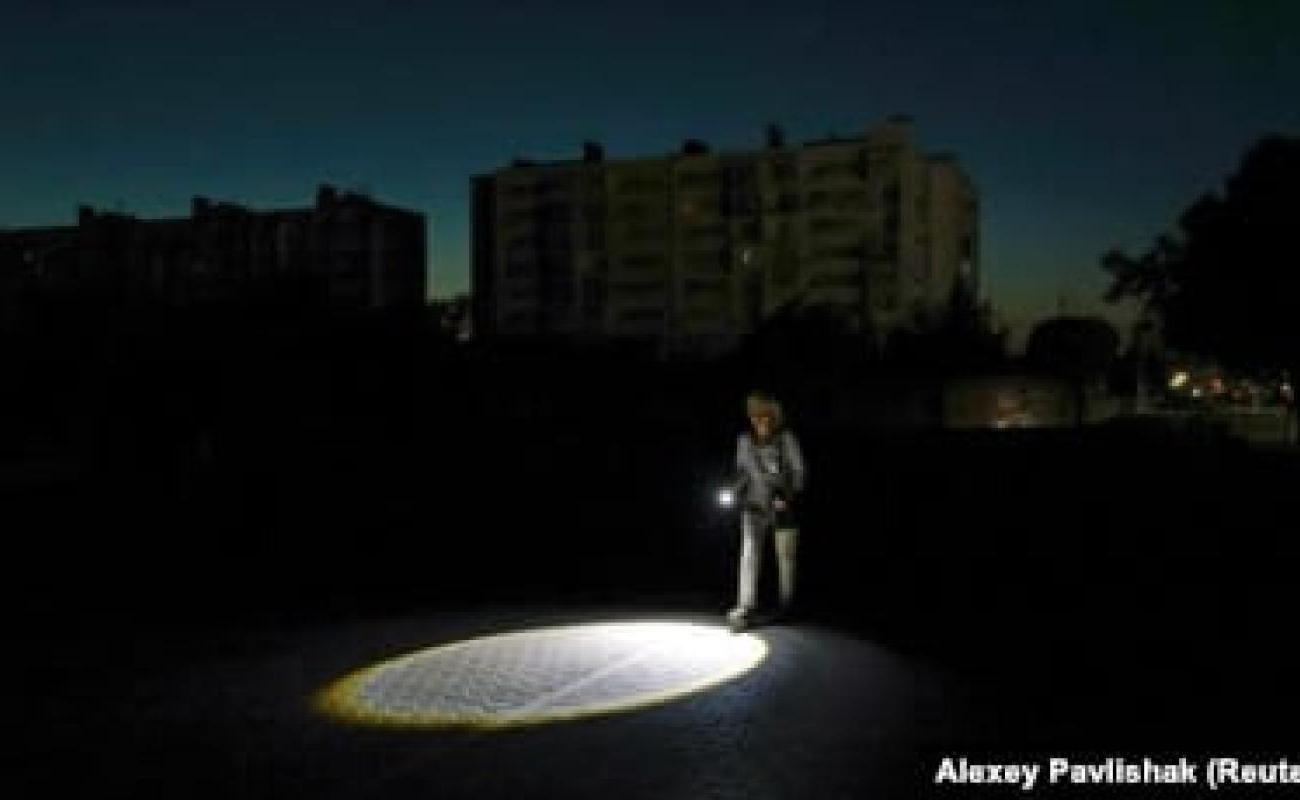
In Crimea—annexed by the Russian Federation—residents affected by power shortages are complaining in large numbers that they have not received compensation for the prolonged lack of electricity. Back in July, local Russian authorities promised a payment of 15,000 rubles to anyone whose home had been without power for more than two days. The application process concluded in early September, yet many have still not received any payment. Is there any prospect of them ever receiving it?
Since July, the Crimean Peninsula has been grappling with a severe energy deficit. The power outages are a consequence of systematic strikes by the Armed Forces of Ukraine against Russian energy infrastructure—a response to Russia’s actions during its full-scale invasion of Ukraine. Consequently, a state of emergency was declared in the region. Local Russian authorities promised a one-time compensation payment to Crimean residents affected by the extended power shortages. Now, months later, many in Crimea complain that the promised compensation has failed to materialize.
Half a Million Claims Filed
Crimean officials pledged compensation to all those affected who submitted their applications on time.
"All residents who have submitted applications can rest assured that their claims will be reviewed. If it is determined that the applicant was located within the emergency zone, the payment will be issued. We ask for your patience," stated Elena Romanovskaya, Deputy Prime Minister of the Russian-installed government in Crimea, back in the summer. The exact number of people who were in the emergency zone—a region that has experienced prolonged power outages for several months—is not known. There is no official data on this.
According to Elena Romanovskaya, social security authorities had received over half a million applications for compensation by the end of August. The Russian authorities in Crimea promised to cover these claims using five billion rubles from the federal budget.
However, if this total is divided by the individual compensation amount—15,000 rubles—the math suggests the funds will only suffice for slightly more than 300,000 affected individuals. Officials have not specified where the funds for the remaining 200,000 applicants will come from.
This issue has surfaced nearly three months after compensation was promised to the residents of Crimea. It turns out that many have yet to receive their payments, and some have even had their applications rejected.
"How much longer must they wait—until the New Year, or perhaps until the 'Direct Line' with the President?"
As Krym.Realii has learned, some residents of the Crimean Peninsula did manage to receive compensation between August and September. However, the rationale behind how these funds were distributed raises questions.
Often, not all family members living at the same address—where a power outage lasting longer than 48 hours was recorded—received the payments. Many were advised to simply wait for a notification regarding the receipt of funds—a notification that has failed to arrive for months.
According to Serhiy Danilov, deputy director of the Ukrainian Center for Middle Eastern Studies, the Russian authorities in Crimea may be deliberately creating obstacles to the payment of this compensation in order to save money.
"They try to provide low-voltage electricity bit by bit. This makes it possible, among other things, to avoid paying Crimean residents the promised compensation for living without power for more than 48 hours. The scheme works like this: people go without electricity for days, and then it is turned back on for a short while. Consequently, officials are no longer formally obligated to pay compensation," he said in an interview with Krym.Realia.
Residents of Crimea are publicly asking the Russian head of Crimea, Sergey Aksyonov, how much longer they must wait for the promised payments. "Dear Sergey Valeryevich, please explain when the 15,000 [ruble] emergency relief payment will be issued. It has already been three months since the Belogorsky District has been without electricity or water. Not only did it take the longest time to restore lighting, but while the power supply has finally been restored, the payments have not arrived. Some people have received them, of course, but the majority of the population is still waiting. At this rate, that 15,000 will probably only be enough to buy a loaf of bread. People have lost so much food, their household appliances have burned out, and yet this meager 15,000 still hasn't arrived," writes Olga Timoshenko from Crimea on Sergey Aksyonov’s VKontakte page.
Some are specifically asking whether the speed of these payouts depends on the "Direct Line" with the President of the Russian Federation, Vladimir Putin—an event traditionally held at the end of the year, during which questions and requests from Russian citizens are collected.
"My application for compensation has been 'under review' for three months now. But there’s just silence—or rather, the explanation is that there are too many people, so one has to wait... But for how long? Until the New Year, until next summer, or until the 'Direct Line' with the President? Given the situation, why not just go ahead and raise utility rates for Crimeans? For some reason, there’s no waiting around when it comes to that!" they write to Sergey Aksyonov.
The Russian head of Crimea has not publicly responded to these questions. In response, Russian officials in Crimea claim that "work on allocating funds" for payments to those affected is currently ongoing. According to them, these payments are processed within three business days of the decision being made; in the event of a shortage of budgetary funds, they are to be made no later than three business days "from the date that funding is confirmed."
"Expectations create social tension"
Local human rights activist Oksana Kravchenko-Stigoresco reports widespread complaints from residents of Greater Yalta regarding the non-payment of compensation promised by officials. She notes that many individuals who submitted their applications for payment in a timely manner have yet to receive the funds.
"Of particular concern are reports from citizens that some applicants are being denied payment—even though, according to them, the power outages in their homes lasted not just 48 hours, but 10, 18 days, or even longer. These circumstances warrant careful investigation. <...> A lack of information regarding the status of an application, long waits for funds, or rejections issued without clear and specific justification create social tension and undermine public trust in the established procedures for providing state assistance," stated Oksana Kravchenko-Stigoresco.
In this regard, she addressed the Social Policy Department of the Russian administration in Yalta, requesting that "measures be taken to ensure the legality, transparency, and timely processing of these complaints." She also requested information on the status of complaints filed by those affected by the energy shortage, as well as a review of the validity of any denied payments.
The Russian authorities in Yalta have not publicly responded to this appeal.
Payments "in two or three weeks"?
Amid a surge in complaints, the Russian head of Crimea promised that residents would be compensated for the energy crisis experienced in October.
"We will receive payments of 15,000 rubles, as agreed—there is a decision by the President (Vladimir Putin) on this matter, and everyone will receive their funds. Processing is underway, and some of the funds have already arrived. I believe that within the next two or three weeks, we will fully complete this procedure," promised Sergey Aksyonov during a meeting of the Russian-installed government of Crimea on October 6.
Residents of Crimea have reported on social media that they received a notification from the "Gosuslugy" (State Services) portal back in September stating that the "payment has gone through"; however, they claim that the money is still nowhere to be found.
Many also point out that by the time the promised payments arrive, the 15,000 rubles will be "worthless" due to the sharp rise in the prices of goods and products in Crimea—a consequence of the ongoing hostilities. In the autumn, the Defense Forces of Ukraine continue their attacks on energy facilities in Crimea. Power outages in the region persist. Local Russian authorities acknowledge that electricity shortages will continue in the near future. However, no likely scenarios for how the situation might unfold have been presented.