
Putin's Regime Recruits University Students for War Against Ukraine
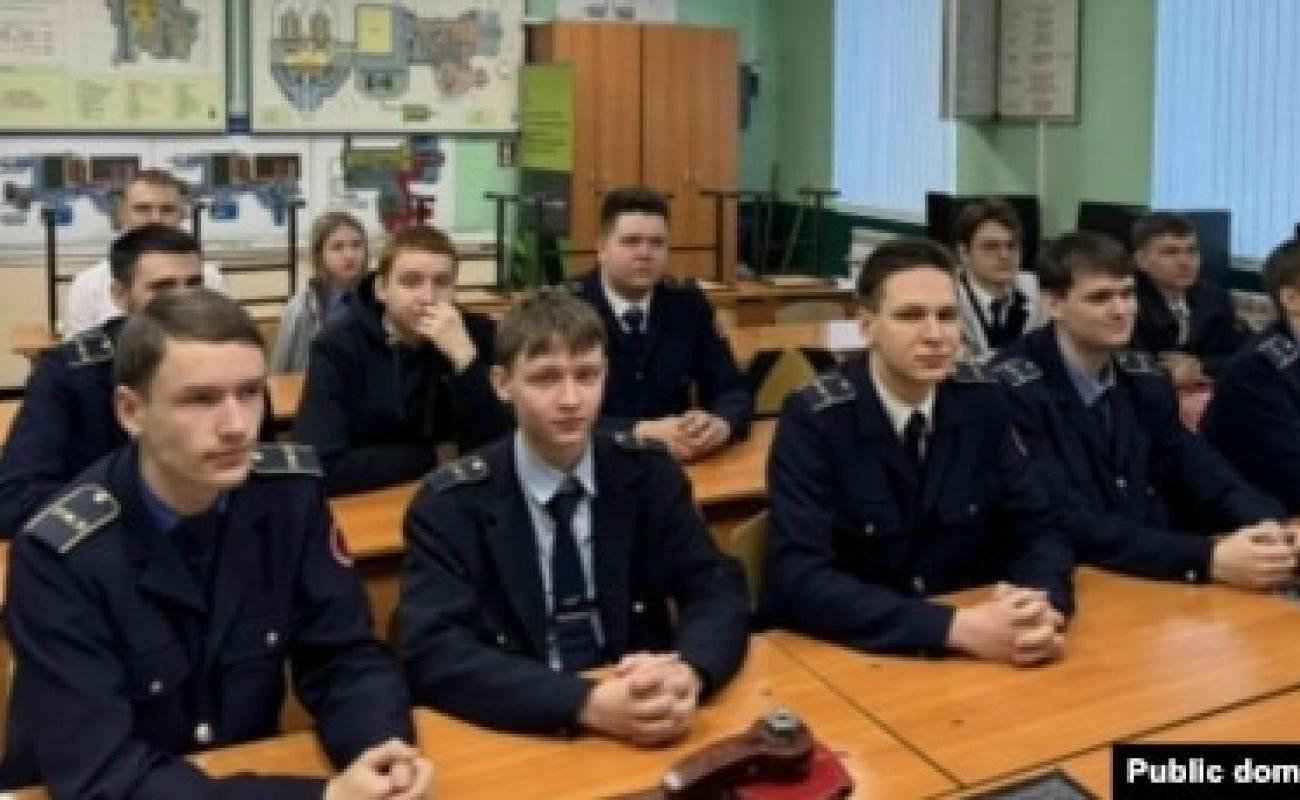
In Russia, the recruitment of students for military service under contract has reached a new level of scale and coercion. Russian human rights activists are already calling it a second mobilization - this time among students of colleges and universities (VŠU). It all started with persistent agitation, when students were literally locked in rooms, where they watched patriotic films. Now, after the university administration lowered the "recruitment quotas", students are threatened with expulsion for refusing contracts, and in addition, they are deceived, promising that they will not have to fight. Some of those who signed contracts under pressure were supposed to be sent to the war against Ukraine in late February, as the "Current Time" television and online network, created by Radio Liberty for the Russian-speaking audience, draws attention to, citing information from the Radio Liberty project "Sibir.Realii".
“We’ll be kicked out of college for ‘failure’ if we don’t sign the contract”
A 19-year-old second-year student from Vladivostok, Artem (all interviewees’ names have been changed for security reasons), signed a contract with the Russian Ministry of Defense under the threat of being kicked out of college. He was promised service in a local military unit, but there was no mention of a transfer to another region, let alone the war in Ukraine.
“We were supposed to attend some strange events throughout January. Meetings with SVOshniks (participants of the so-called “Special Military Operation” (“SVO”) – that’s what Russia calls the war against Ukraine – ed.), movies (fantasy and patriotic). At first, they focused on students studying “instrument engineering” and “computer science”. Then they included other technical majors. And then they started “searching” everyone,” Artem recalls. “They said they were forming a special “university company” of “drone pilots.” At first, they assured us that “we wouldn’t even cross the border.” At the third gathering, they said we would stay in Vladivostok, serve in a local company – just test drones that would then be transferred to the front. When there were no candidates for that, they started threatening us. My classmate and I, who had failed one subject in the winter semester, were told that we would not be allowed to retake the exams until the end of the academic year (as promised in January). That is, we would be expelled from the university for “failure” if we did not sign the contract. They promised to issue an academic leave for this year of the contract, saying that then we would return and study. “And if you don’t sign, no one will let you back to study later.” I signed, because I was afraid that my parents would beat me when they found out about the expulsion.
In early February, Artem told his mother that he had signed the contract.
“My mother found a lawyer. He said that he would not leave me here as a ‘drone pilot’, that I should write a letter of refusal, even considering that it was late. We filed a refusal of the contract on the website of the Ministry of Defense, and now they are calling me to the military registry office on Uborevich. I am afraid to go there. The lawyer thinks that they can take me directly from there - at least to the unit. He will go alone with my mother,” says Artem. “Now I am really scared. And I can’t even leave - I don’t have a passport.”
Students of Petrovsky College in St. Petersburg say that they signed the contract under pressure at about the same time and that they were threatened with being sent to the front at the end of February.
“I am studying to be a programmer at Petrovsky College. In January, agitators from the military registry office on Fontanka started coming to us,” says 18-year-old student Sergey, originally from Vyborg. – They said, “You can get a job with a salary of 200,000 - repairing and testing drones... Consider your internship paid for.” They said that we would be engaged in security remotely and only in St. Petersburg. That no sending to the front threatens students, because “they are not animals.” I pay for my education, my mother barely finds the money to pay for my studies. I thought I would help her, and at the same time - yes, there will be internship. Now they are telling us to prepare to be sent “to the assembly line” as drone operators. My mother found out and now she is not allowing me to go to university.”
According to Sergei, no fewer than 10 students from Petrovsky College signed the contract. The “Go to the Forest” project, which helps people leave Russia, especially those who want to avoid participation in the war, said that in early February several students from this educational institution turned to them for help... They sent a panicked message to human rights activists that they were threatened with being “sent to the front” at the end of February.
It is said that the student will be granted academic leave for the duration of the contract
“The letter offers the young man an “alternative to expulsion” – to conclude a “special contract” with the Russian Ministry of Defense for a period of one year “on a voluntary basis.” The text states that the student will be granted academic leave for the duration of the contract, and after its completion he will be able to continue his studies,” says one of the coordinators.
According to human rights activists, the letters to the HSE students were sent by a specialist in educational and methodological work of the department for supporting the educational process at the undergraduate program of the Faculty of Computer Science of the National State University of Higher Education.
“We received information about similar deceptions and coercion from students from different regions. At the M. Bauman Moscow State Technical University, agitation appears in the official student application. In Nizhny Novgorod, students were forcibly gathered to meet with people in uniform. In Yessentuki, they agitated at the technical school, and at RUT MIIT they sent an offer to conclude a contract to both boys and girls, - they say in “Go through the forest”. - At the Moscow College named after M. Godovikov, students were assigned mandatory meetings in connection with the contract for the drone troops. This is an absolute lie - there will be no sending specifically by the "drone operator", of course. Signing the contract means that the Ministry of Defense will send an employee anywhere and with anyone. Most often - as an attack aircraft.
“The country believes in you”
Those college students at the Kazan Innovation University who refused to sign the contract are also being threatened with expulsion.
Without explaining the reason, students who had debts due to failed tests and exams were summoned to a meeting, “Groza” reports, where director Yulia Khadiullina stated that they would all be expelled, but that “military commissars” would talk to them first.
“The conversation will be about the fact that at the moment our country is in a “Special Military Operation”. At the moment the country needs soldiers. Guys who are 18 years old are allowed to be among the soldiers. And therefore, a new army will be created from those students who can no longer be considered students - that’s you -,” Khadiullina declared.
According to her, they “can no longer stay at the university”, and the lists of people who “do not attend classes and do not master the curriculum as much as possible” from the military registry and the draft board “can no longer be hidden”.
"None of you cared about what we warned you about. And I'm not at all sorry that each of you will be kicked out. But each of you has opportunities. "The country believes in you," said the headmistress of the college.
When the students said they still had time to retake the exams, Hadiulina replied that she "said what she said." She also promised to speak "to guys who don't have debt, in a different tone."
"We will talk to them about their duty to their homeland, about their voluntary consent or non-consent. We will talk to you differently, because for you student life is over," Hadiulina remarked.
After the director, the representative of the 12th main administration of the Russian Ministry of Defense spoke, who introduced himself to the students as Andrei. According to him, he came from Jejsk, Krasnodar Krai, to "open someone's eyes, to convince someone".
He spoke about the "favorable conditions" of the Ministry of Defense, according to which the former students will allegedly not serve "on the territory of the SVO", but in the unit in Jejsk. At the same time, the soldier called such a contract “alternative service.” And then he explained that he could not mention the “k-word” (contract) so as not to scare. For this reason, the soldier explained, he called the service for students “alternative.”
“Don’t think that we travel around cities, regions, republics and suggest that young men go to war and die there <...> For some reason, every parent thinks that if their son goes to the army – not for compulsory, but alternative service – they think that their son will go and die, that we have taken their son away, that we are such scoundrels. But that is not true,” said a representative of the Russian Ministry of Defense.
Another soldier told the students about the troops of unmanned systems and offered to join the “drone pilots.” He explained that such troops “should be assembled as soon as possible” from students “who know how to use computers.” In return, he promised the students that he would not send them “to the ends of the earth.”
During the entire meeting, which lasted an hour and a half, students were not allowed to leave their classrooms.
Quotas for the number of student contracts
According to students interviewed by Sibir.Realii, the "biggest scandal" of forced conscription began when the Russian Ministry of Defense and Science imposed quotas on the number of student contracts on university administrations. Information about the restrictions that teachers must adhere to when recruiting their students for war was publicly confirmed by a former employee of the Far Eastern Federal University (FSFU).
A former advisor to the university's rector, Marina Barinova, posted a table on her Facebook page, according to which 32 students were to sign contracts with the Russian Ministry of Defense in February. Another 267 people, according to the document, "fall into the eligibility category." The quota was supported by the university's rector and 13 vice-rectors, Barinova noted.
"And you, 1+13, if you are so eager for such a "perspective", why aren't you there yet - aren't you at war? After all, nine of you absolutely fit the "readiness category" - I'm talking about the unfortunate rector of DSFU and his vice-rectors - people," Barinova wrote.
The university did not respond to the editorial office’s inquiry about the quotas. However, on February 23, a post appeared on the DSFU’s VKontakte page congratulating students on Defender of the Fatherland Day and then advertising their contract service.
This week, signs were placed in the main building of the State Federal University of Science and Technology inviting students to sign a contract with the Russian Ministry of Defense. At the consultation point for recruiting for the unmanned systems troops, students are told about the possibility of participating in combat operations as part of the unmanned aircraft troops.
“Students who express a desire will receive a referral for a medical commission, and after that - study in Chita and a contract with the Ministry of Defense for a year,” the ad says.
Human rights activists warn that during recruitment, they do not explain that any student who has signed a contract with the Ministry of Defense can be transferred to the infantry. The recruiter will no longer be able to prevent this.
“We studied the terms of the contract with the Ministry of Defense, which they offer to students – they do not offer any “exclusive conditions” outside the combat zone,” says Russian human rights activist Alexei Vyunov. “The document states that students who have signed a contract in the ‘unmanned forces’ can be transferred to the regular infantry. The selection for a specific military unit will be carried out only three months after signing the contract. Even if a student is assigned to an attack aircraft, he will not be able to terminate such a contract. And the clause stating that the contract is valid for a year means nothing, because the Russian president has not yet signed a decree on the end of mobilization.”
Total annual salary – from 5.5 million rubles, one-time payment – from three million
St. Petersburg State University (SPbSU) sent letters to students offering to sign a contract with the Ministry of Defense and receive a one-time payment of 50,000 rubles. This was reported by the publication “Bumaga” and the project “Go through the Forest” with reference to students.
The published documents state that students who have signed the contract will be sent to the “troops of unmanned systems.” In addition to the payment of 50,000 rubles, 5.5 million rubles per year will be added from the Ministry of Defense.
Students will be granted academic leave for the duration of their service, and then offered a “flexible schedule” after the contract expires, which, according to the authors of the letter, will be for only one year. Despite the fact that it is currently impossible to terminate a contract with the Ministry of Defense until the end of the war in Russia.
According to estimates by the publication “Bumaga”, as many as 16 universities in St. Petersburg have placed advertisements in their buildings or on official public forums for recruiting students for special contracts with the Ministry of Defense.
To conduct a campaign, universities publish advertisements for contracts on their social networks, hang leaflets in the halls and organize thematic meetings in assembly halls. Recruiters even came to the Maritime Technical University (SPbDMTU) to give some students a break.
Most of the advertisements in the advertising campaign addressed to students offer approximately the same conditions: you must serve in the “SVO zone” as an unmanned aerial vehicle operator or technical engineer. The total salary for the year is from 5.5 million rubles, a one-time payment of three million. Students are promised a “special fixed-term contract” for a year, after which they can allegedly be discharged from the army. In exchange for the contract, students are promised not only money and a year of academic leave, but also a transfer to the budget for students of commercial education, admission without exams to master's and postgraduate studies, and “other benefits for military personnel”.
Human rights activists have noticed a large-scale campaign by the Russian Ministry of Defense to recruit contract workers to the troops of unmanned systems at universities in late 2025. But in January-February 2026, it became most active. It was during this period that the Ministry of Defense sent a manual on student agitation to Russian universities. The document obliged the leadership of educational institutions to inform the Main Personnel Directorate of the Ministry of Defense “about the work done”.
“What, all you cowards sitting here, are you scared?”
The face of the “second mobilization” among students on the Internet is called the head of the Novosibirsk College of Transport Technologies, Maria Kirsanova. Students recorded her speech about the reluctance of 18-year-olds to leave school for indentured service and posted it online.
The director of the faculty "scolded" the students for the fact that none of them wanted to sign a contract after meetings with Ministry of Defense recruiters.
"Guys, the motherland demands it. We have to. Some kind of fear. 'What if we arrive in a galvanized box or something?' Where did that fear come from? Who instilled that fear in you? And who will protect us?" - Kirsanova put pressure on the students.
She accused the students of lack of patriotism and cowardice. At the same time, the director admitted that she promised someone that "her children [students] will be the first to go" to the army.
"But it turns out I threw my words to the wind. Are you all cowards sitting here, scared? You have to somehow protect your life... cherish it," commented the head of the college.
After the footage was posted online, Kirsanova complained to the FSB about threats on social media and closed her VKontakte page.
After that, the students were forced to watch the film “Treason” for three days. The faculty’s website reports that this was done in order to “increase the effectiveness of preventive work.”
Before each screening of the film, the class teachers conducted preparatory discussions with the students.
From the report of the Faculty of Transport Technologies
The film “Treason” by VDTRK employee Andrei Medvedev tells about Russians convicted in cases of terrorist acts and sabotage. During the years of the war in Ukraine, these serious articles of the Russian Criminal Code began to be used to prosecute acts that were previously classified differently, for example, as “Damage to vehicles or communication routes.” This is Article 267 of the Criminal Code, and it provides for a much milder punishment compared to “Sabotage” and “Terrorist act.”
“To ensure the most effective perception of the material, the class teachers conducted preparatory discussions with the students before each screening,” the Faculty of Transport Technologies reported. "During these meetings, the context of the film was explained to the students, the viewing goals were highlighted, and the importance of a responsible and thoughtful attitude towards the information presented was emphasized."
For Kirsanova, most often on the Internet they asked her to be fired. However, she is still the director of Novosibirsk College.
"Let her go there herself and take her family with her, we have to drive such people away from the students with a bad broom".
"Not with a broom, but to be shot".
"I hope they drive her away with shame and send her there alone."
"Get rid of the boys, we're all going to die out soon, it's great to raise the demographics by letting young people be the meat for the crisps".