
"Ukrainian volunteers" in the Russian Federation: propaganda or a wartime resource?
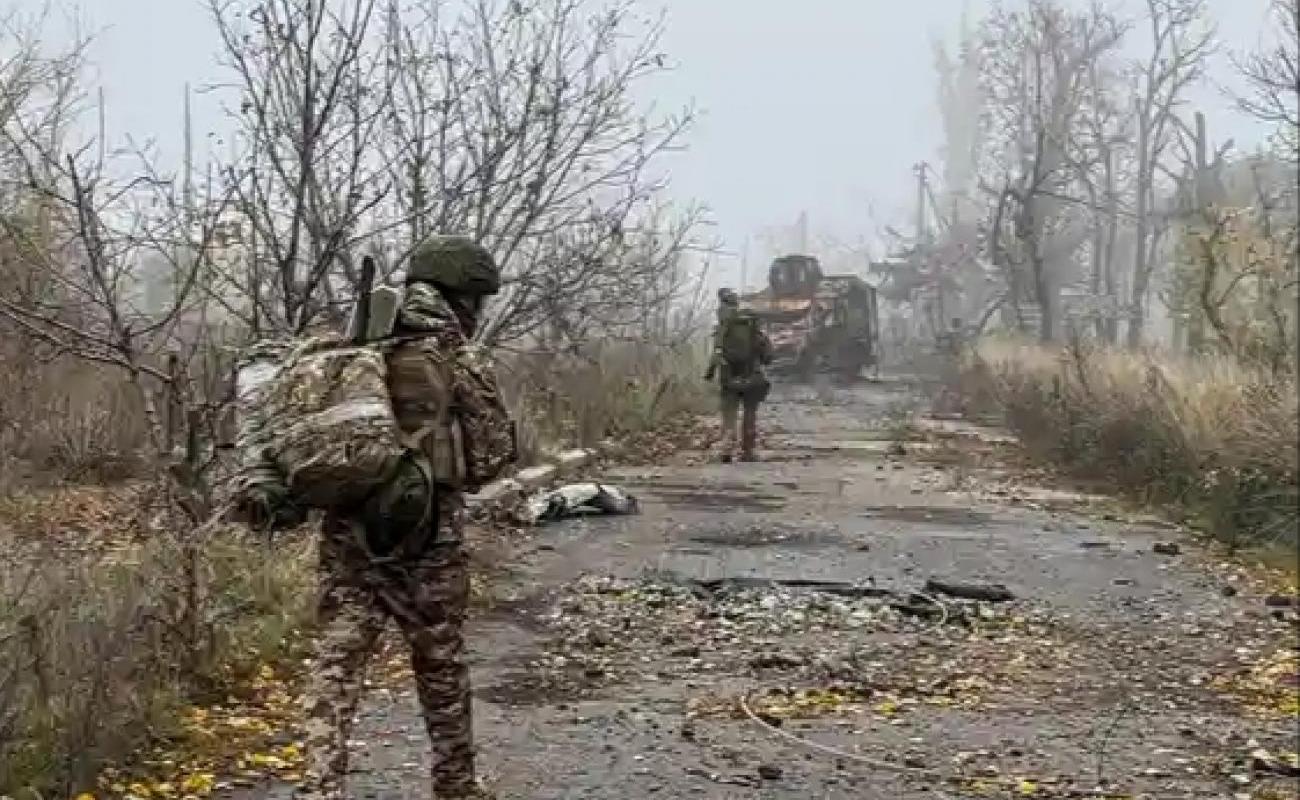
Russia is creating units composed of Ukrainians, labeling them "volunteers." The ranks include prisoners of war. How are they recruited, are there indications of war crimes, and what role do these formations play in the war?
Joining the enemy army to escape Russian captivity—this is how 25-year-old Senior Lieutenant Pavlo Oliinyk from Volyn explains his actions; prior to his capture by the Russian Federation on the Pokrovsk axis on October 1, 2024, he had served in the 101st Separate Guard Brigade of the General Staff of the Armed Forces of Ukraine.
After enduring electric shocks, beatings, and psychological abuse, the graduate of the Military Institute of the Taras Shevchenko National University of Kyiv decided to accept the Russians' repeated offer to join the so-called "Separate Battalion Named After Maksym Kryvonis." According to Oliinyk, he seized the first opportunity—while deployed to the combat contact line—to escape to Ukrainian-controlled territory.
"Ukrainian volunteers" in the Russian army
Russian propaganda first began reporting on units formed from former soldiers of the Armed Forces of Ukraine in early 2023. These reports concerned the "Bohdan Khmelnytsky Volunteer Battalion" (DBKh), which was incorporated into the "Kaskad" operational-combat tactical formation within the so-called "DPR." "Former Ukrainian prisoners of war" subsequently swore an oath to Russia, according to Russian state media reports. The designation "battalion" hardly reflects the unit's actual size; even its command spoke of only 70 members in interviews. Several dozen individuals were also visible in propaganda videos.
Despite interest from Ukrainian and independent Russian media in this formation, only about ten people who stated in the video that they wished to join could be identified over the entire period. These were indeed Ukrainian citizens who had been captured or had deserted. By 2024, the formation had virtually disappeared from the public eye. It is unknown whether it ceased to exist following the disbanding of the "Kaskad" unit.
What does the new Ukrainian "brigade" consist of?
In the following years, the Russian Federation announced the creation of five more such units, and in August 2026, they announced their merger into the so-called "Ukrainian Special Forces Volunteer Brigade." This brigade incorporated the aforementioned Kryvonos Battalion, the "Oleksiy Berest Ukrainian Volunteer Battalion," the "Hero of the Soviet Union Alexander Matrosov Detachment," the "Martin Pushkar Separate Detachment," and the "Voin Selifontov Special Sloboda Detachment."
There is no public information regarding the latter; he was never mentioned prior to the news about the formation of the "brigade." Information is also scarce regarding the Berest Battalion and the Matrosov and Pushkar detachments. Their social media channels primarily feature roundups of Ukrainian news criticizing the authorities, with a focus on forced mobilization and the activities of the TCC (Territorial Recruitment Centers). Posts also feature up to a dozen individuals identifying themselves as former Armed Forces of Ukraine soldiers who were either captured or deserted; for the most part, they do not reveal their identities or faces. There is no evidence confirming their participation in combat operations.
DW managed to verify the identities of four fighters appearing in a video on the Pushkar detachment's Telegram channel—they had indeed ended up in captivity. Although they claim on camera that they voluntarily joined the Russian formation, it is impossible to verify this assertion. A video released by the Russian state agency TASS is telling: in May 2025, a beaten young man—identified as a captured Ukrainian soldier—"greets" the Russian people on the occasion of May 9th. A month later, a series of interviews with him appeared on Pushkar’s channels—this time portraying him as a recruit of the detachment. Yet, the initial videos create the impression that the young man remains in captivity, just as before.
The "Krivonosivtsi": Signs of Combat Involvement
The situation regarding the so-called "Separate Battalion Named After Maksym Kryvonis," formed three years ago, is somewhat different. It is the most media-friendly of the formations that were part of the "brigade." Unlike other units, there are indications that it has participated in combat. This is confirmed not only by Pavlo Oliynyk’s entry into the combat zone but also by an SBU statement regarding the matter. In December 2024, while announcing treason charges against one of the battalion's fighters—Kyiv resident Oleksiy Pidhoretsky—security services noted that the unit had participated in fighting along the Pokrovsk axis. Prior to that, judging by the unit's social media posts, the "Krivonosivtsi" had taken part in battles in the Serebryansky Forest (Luhansk region) and along the Avdiivka axis.
The exact number of personnel in the unit is unknown: media reports have cited estimates of around 200 people, whereas published videos show only a few dozen. The Ukrainian outlet *Suspilne* identified more than 30 individuals from the "battalion," confirming that they are Ukrainians who were captured by Russian forces between 2023 and 2024.
The unit is reportedly led by Vyacheslav Gubin, a former member of the Derhachi District Council who defected to the Russian Federation in 2014. His son, Svyatoslav, serves as the unit's deputy political officer. In an interview with Russian media, Svyatoslav claimed that the unit was not a Russian army unit, but rather a "Ukrainian volunteer formation."
Why does Russia need "Ukrainian volunteers"?
However, defense policy expert Pavel Luzin from the Fletcher School at Tufts University states that volunteer formations which are "not sanctioned from the very beginning and not under the control of the central government" are impossible in Russia. They are all part of the Russian Ministry of Defense's "Dobrokor" (Volunteer Corps), managed by the Main Directorate of the General Staff of the Russian Armed Forces (GRU). It comprises 26 "brigades," though, according to Luzin, the designations of these formations do not reflect their actual numbers.
The expert views such Ukrainian formations as an "imitation designed to divert attention from the story of the 'Russian Volunteer Corps' and the 'Freedom of Russia Legion,' which are fighting on Ukraine's side against Moscow." The Ukrainian intelligence community has repeatedly offered the same assessment.
Ukrainian veteran Yevhen Shibalov, whom the Russian Federation held in captivity from May until the end of 2022, echoes this view. "They [Russian soldiers] very often mentioned the RDK and made no secret of the fact that it was the main trigger for why they got involved in this in the first place. They were misled into believing that there were Russians fighting on Ukraine's side, while no Ukrainians were fighting on Russia's side," Shibalov said in an interview with DW.
Is the formation of units from Ukrainian prisoners of war a war crime?
In itself, the recruitment of a prisoner of war by the enemy into its armed forces is not a war crime if carried out without coercion, William Wiley, Executive Director of the non-governmental organization Commission for International Justice and Accountability (CIJA), noted in an interview with DW. However, pressure, threats, or violence constitute a clear violation of the Third Geneva Convention and the Rome Statute of the International Criminal Court (ICC), the lawyer says.
According to data from the UN Office of the High Commissioner for Human Rights, more than 95 percent of Ukrainian prisoners interviewed after their release had been subjected to torture or ill-treatment while in Russian custody. Given the physical and mental condition of those returned from Russian captivity, any instance of "voluntary" recruitment "is likely to raise serious doubts," says Wiley.
At the same time, political scientist Mykhailo Savva, an expert with the Center for Civil Liberties, draws attention to criminal proceedings in Ukraine against individual members of these formations. In his view, the very fact that they are being prosecuted also points to signs of voluntary defection to the Russian Federation. In such a case, the expert notes, there are no grounds to speak of a war crime committed by Russia.
So, where exactly is the line drawn between a decision made under pressure and a free expression of will? According to the Ukrainian human rights activist and veteran Maksim Butkevich, who was in Russian captivity from June 2022 to October 2024, drawing such a border in the conditions of Russian captivity is extremely difficult. On the one hand, says Butkevich, imprisonment in the Russian Federation is an "atmosphere of continuous coercion, constant pressure", and on the other hand, he does not exclude the possibility of cases of voluntary transfer to the Russian side of prisoners who are ideologically closer to the ideology of the occupier.
Under what conditions does the recruitment of prisoners take place?
As Butkevich said, 2022-2023. year, the offer to switch to the Russian side was "more or less intrusively" made to all prisoners, including him. In his case, it happened after the first serious beating and the demonstration that "we can do anything, so we have to agree to everything".
Evgenij Šibalov had to go through something similar. Various structures work with prisoners, he told DW in an interview. Some, according to him, are trying to extract confessions for war crimes, others - to recruit them into their intelligence services, specifically identifying "valuable" people who can be used for exchange, and "recruiters of these groups" are also involved. In his experience, such an offer from the Russians at a certain stage of captivity was made to everyone after interrogation with the use of force, "when the person seems to them sufficiently shaken as a result of pressure".
"But (in case of refusal. - Editorial board) that's exactly what they don't insist on - it's the case when they convince, not break. Because you can torture to get consent, but then an awkward moment will come when that person needs to be given a weapon. Therefore, it was more about psychological pressure, tricks, pranks to force him to give voluntary consent," says Šibalov.
Butkevich confirms this from his own experience. Neither Butkevich nor Shibalov know anyone who has agreed to join the Russian military formations, because, as they say, for most people it is crossing red lines.
Šibalov received the offer to join the Khmeljnica Battalion from people who had tortured him before. He says that it was said as a joke - so that in case of rejection, it could be pretended that nothing serious was offered. As the veteran admits, there was a fear that his "no" would mean torture and coercion. However, in both cases, of Šibalov and Butkevič, the rejection was understood "simply as a fact", and attempts to re-recruit, according to them, were not made.
What happens after agreeing
At the same time, soldier Pavlo Oliinyk, who is in Ukrainian captivity after deserting the Kryvonos Battalion, recounts a different experience. DW managed to establish contact with him in writing via his lawyer. According to Oliinyk, he received the offer to join the battalion four times. After refusing three times, he decided to accept it—"solely to escape." Prior to that, the soldier says, he had been held captive alone in occupied parts of the Donbas, where he was interrogated about the status of his positions and brigade, as well as his personal details.
"I don't speak Russian well, so I didn't answer questions clearly enough (...) Then they used physical force and electric shocks on me, and when they demanded I sign a document agreeing to cooperate with the special services of the 'LPR' and 'DPR,' they locked me—completely naked—inside a small metal safe for eight hours," states the account of his captivity that Oliinyk provided to DW through his lawyer.
He claims he did not sign any documents from the Russian Ministry of Defense; instead, the contract offered to him was "with a private individual providing military services." After agreeing, the soldier continues, a process known as "flashing" followed: propaganda lectures were held in windowless rooms, and photos and videos were shown, the content of which he was then required to recount.
Control and Cruel Treatment within the "Krivonos" Ranks
According to Oliynyk, the prisoners recruited into "Krivonos" included both volunteers and those who had consented under duress. In a video leaked online—likely from an interrogation in Ukraine—he states that the recruits (of whom there were about 50 in the unit, by his account) were guarded by fighters from the private military company Redut, who closely monitored their every move. He was issued a phone within the unit, but it was subject to surveillance, he told DW. For this reason, Oliynyk was afraid to contact his connections in Ukraine. In the video of the alleged interrogation, he also spoke of instances of beatings and torture occurring within the unit's ranks. According to Oliynyk, a representative of the Russian GRU distributed monthly wages to the former prisoners in envelopes.
Although he stated that the unit gradually began participating in hostilities—with all members involved by February 2025—he himself denies taking part in combat against Ukraine. He claims he fled during his first deployment to the front line on March 9, 2025, when he and another battalion member were sent to Andriivka, in the Donetsk region, as part of an eight-man Russian special forces group. After being split into pairs, Oliynyk was sent to relieve fighters stationed in a basement. However, before the area-clearing mission began, he left and walked across the fields. Hiding from drones in basements and houses, he said he walked for two days before encountering Ukrainian soldiers. Oliynyk was held in Ukraine as a Russian prisoner for a year and a half. Concurrently, Ukrainian law enforcement agencies are conducting a preliminary investigation into his possible involvement in high treason committed under martial law. However, he has not yet been formally notified of suspicion regarding this charge.