
A Coordinated Trans-Eurasian Threat: The Deepening China-Russia Strategic Partnership
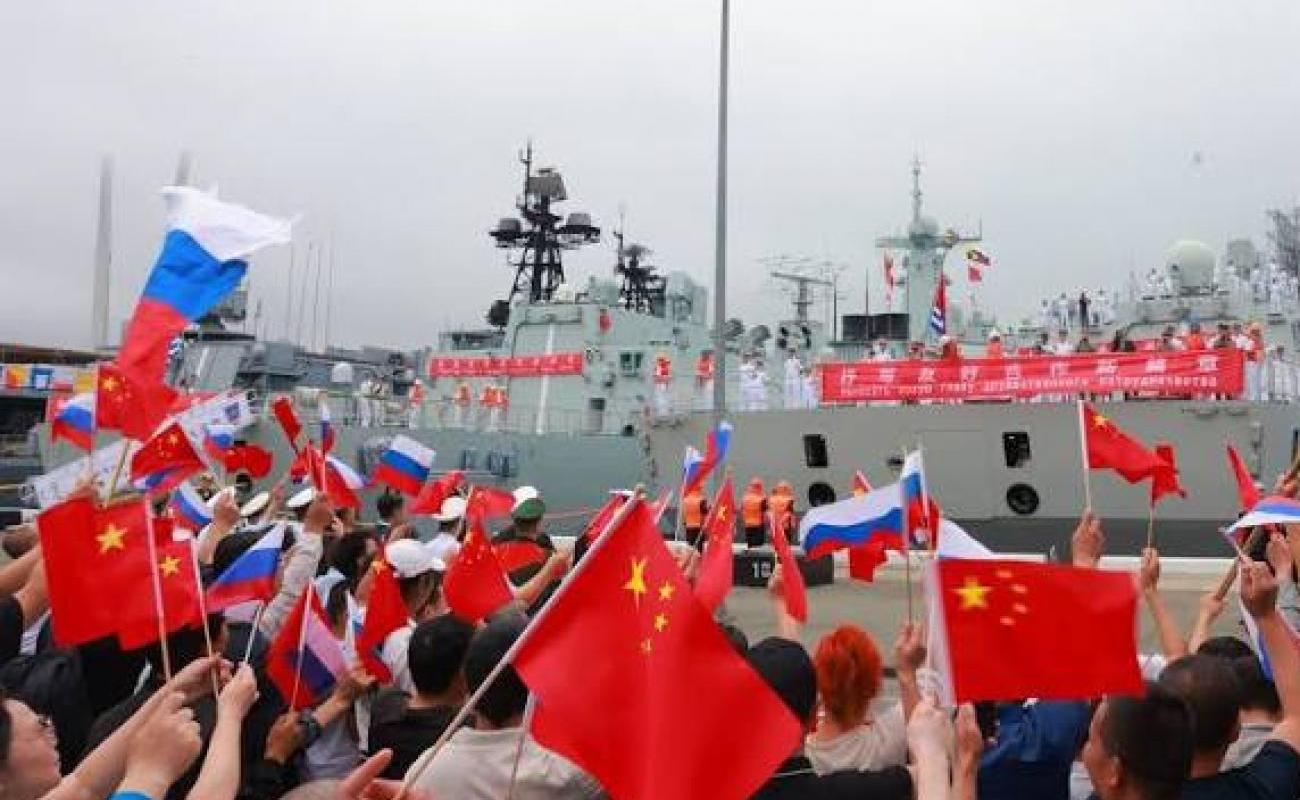
The Sino-Russian no-limits partnership is the driver of an anti-Western axis that seeks to weaken and reshape the global order that has underpinned Australia’s post-1945 prosperity and sovereignty. Naysayers may claim it isn’t an alliance, but it certainly is a deepening partnership that challenges decision makers seeking to safeguard Australian interests in a contested world.
Economic coercion, defense cooperation, and joint propaganda by China and Russia are directly shaping Canberra’s strategic thinking, including in the upcoming National Defense Strategy (NDS). This should lead to increased funding through the NDS, and not just for the four years of the budget’s forward estimates.
Sino-Russian cooperation and antagonism to the Western-led order is hardly new. For authoritarian regimes, the threat of liberal democratic ideas is just as threatening as military power. Indeed, it was the former, not the latter, that drove Russian President Vladimir Putin’s disastrous decision to invade Ukraine in 2022 and has driven Beijing’s support of Moscow’s aggression since.
But, as set out in a new report by ASPI today, the depth of the Sino-Russian partnership is new. While the West concentrated on delinking economic prosperity from national security considerations after winning the Cold War – harnessing a supposed peace dividend – Moscow and Beijing set about putting aside their differences. Western strategic success against the Soviet Union and the dazzling military success of the First Iraq War were enough to convince the authoritarians in Beijing and Moscow that they needed to work together to preserve their systems. Their declaration of a “no-limits partnership” in 2022 only acknowledged what had been three decades in the making.
The West must now recognize it is facing a coordinated transcontinental Eurasian threat not seen in at least half a century. The partnership has even graver implications as the United States limits its traditional role in upholding the global order.
Beijing and Moscow are working together on advancing geoeconomic fragmentation, building alternative economic blocs and financial systems and increasingly complicating trade and economic security considerations. Further, their increasingly complex joint military exercises, together with diplomatic coordination and strategic signaling, serve Beijing’s interest in altering the regional balance and signaling Western decline. Russian defense technology (not always provided voluntarily), operational experience, and military cooperation have accelerated China’s military modernization, the key challenge for Australian defense planners over the coming decade.
In return, China has become a key political and economic supporter of Russia, helping it mitigate effects of Western sanctions in the wake of the Ukraine invasion. While Russia may fret about falling to junior partner status, the mortgaging of its long-term sovereignty and status to China is now integral in buttressing Putin’s kleptocratic regime.
Still, some analysts and policymakers question the durability of the partnership, arguing it lacks long-term strategic glue. Such optimism is unwarranted: the partnership need only be mutually beneficial, and it is. As analysts have noted, Russia and China may not agree on what they stand for, but they are united on what they oppose: the Western liberal international order. And, even if the partnership does eventually deteriorate, it will greatly damage Australian interests in the meantime.
Rightly, Australia’s growing network of security partnerships is in part a response to this Sino-Russian challenge. Just last week saw the Australia-European Union Security and Defense Partnership. Such efforts do not replace the U.S., which will remain Australia’s most significant security ally. But this international network, together with a credible defense capability and diversified economic partnerships, are essential to maintaining deterrence and regional stability amid a rapidly deteriorating security environment.
Australia and its friends need to hold multiple truths simultaneously: China is an important economic power but also a strategic adversary. China and Russia are aligned across defense, trade and ideology and are working together in Europe and the Indo-Pacific. Beijing has served as the main enabler that keeps Moscow going in the war on Ukraine. Both seek to impose their authoritarian values globally.
The Sino-Russian partnership has also been the anchor for a larger authoritarian grouping, including Iran and North Korea. Certainly the weakening of aligned regimes in Syria, Venezuela, and Iran in the past 12 months has caught Russia and China off guard, and they have proven unable to provide meaningful support for those regimes, at least in the short term. But the axis remains a multi-nuclear nation group with China as its strongest element and Russia its most disruptive.
Just as China learned from the end of the Cold War and First Iraq War, we will need to understand what Moscow and Beijing are learning from recent axis degradation, exhibitions of U.S. military and technological power, Western redlines, and instances of regime survival. The NDS should demonstrate that Australia understands these challenges and is responding to them. If we keep misjudging the importance of the Sino-Russian partnership, we will have learned the wrong lessons.
This article was originally published in ASPI’s The Strategist.