
China’s hacking of Russia reveals the boundaries of their partnership
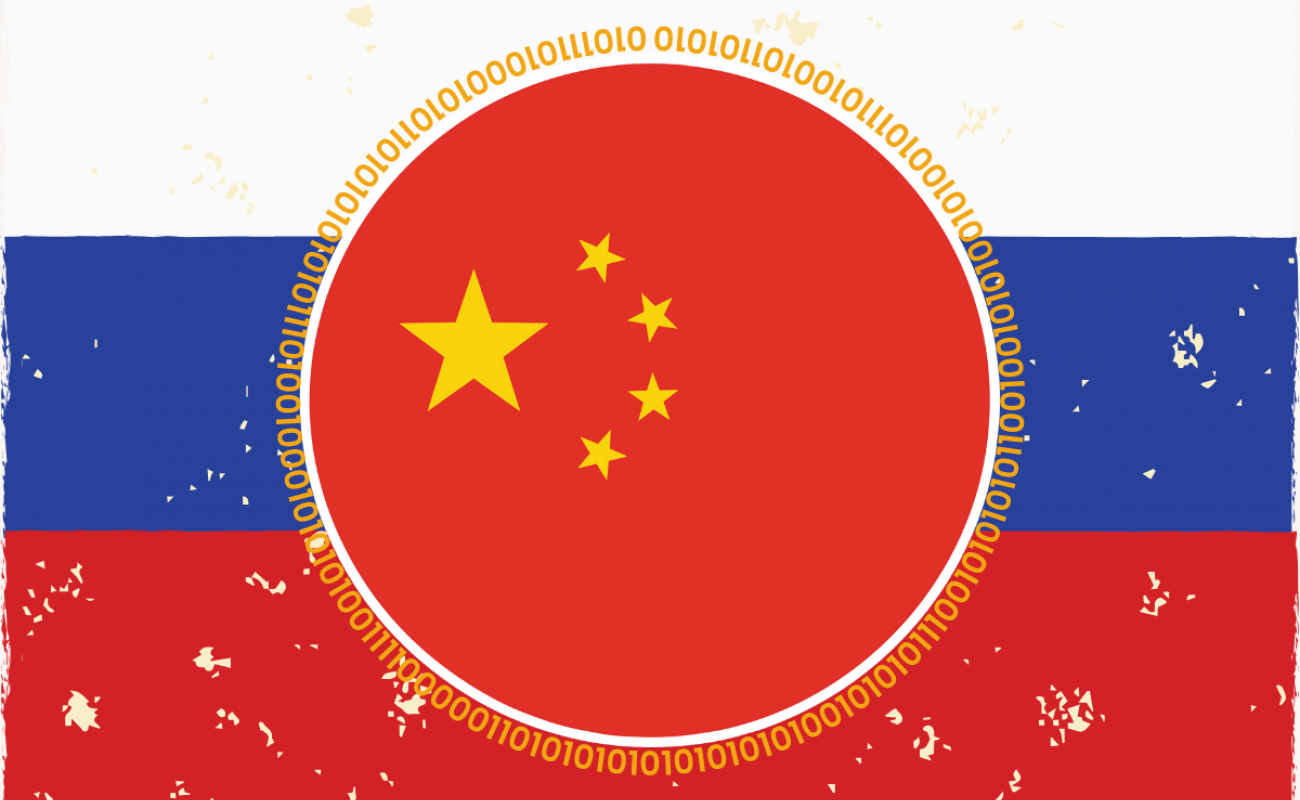
Recent disclosures that a Chinese cyber-espionage group known as APT31 has quietly penetrated Russian technology firms for years should reshape how Europe understands the China–Russia relationship.
The reporting on this hacking is striking. Chinese actors reportedly gained deep access to Russia’s defence-adjacent technology sector, but Moscow appears unwilling to confront Beijing publicly. That silence says more about the state of the partnership than any official communiqué.
For years, Beijing and Moscow have cultivated the narrative of a ‘no-limits’ strategic alignment. But this curated image obscures a more complex reality. Viewed through the longer lens of territorial disputes, competition in Central Asia, and resentment over historical ‘unequal treaties’, the relationship looks less like an alliance and more like a temporary convergence of interests sitting atop a mountain of mistrust.
The APT31 hacking case fits squarely into this pattern. Chinese actors reportedly maintained long-term access to Russian companies involved in government contracting and systems integration, precisely those closest to Russia’s critical infrastructure and defence industry. Beijing did not hesitate to target sensitive sectors, yet Russia avoided naming China directly in its public disclosure. This illustrates the stark asymmetry in their partnership. China is confident enough to probe Moscow’s technological ecosystem, while Russia is cowed enough to downplay the intrusion rather than risk a diplomatic rupture.
None of this contradicts the reality of expanding China–Russia cooperation. Beijing has increased exports of dual-use components critical to Russia’s war effort, deepened defence-industrial ties and expanded joint military activity. But visible cooperation should not be mistaken for strategic trust. As China’s involvement grows, so too does its incentive to monitor and hedge against Russia’s weakness. The APT31 intrusions do not signal a crack in the relationship so much as they shine a light on the hierarchy within it.
This matters directly for Europe’s approach to Russia’s war in Ukraine. Beijing’s support for Moscow is often perceived as unwavering, but in practice it is highly conditional. China backs Russia to the extent that the war distracts the West, drains NATO stockpiles and increases Moscow’s reliance on Chinese industrial and technological outputs. At the same time, Beijing has been careful to avoid provoking secondary sanctions that could damage its own economy, while remaining wary of moves that could destabilise Eurasia or Russia’s internal cohesion. Both scenarios would impact China’s long-term strategic interests, including in Russia’s far east.
Against this backdrop, the APT31 revelations point to China tracking Russia’s capabilities and weaknesses in real time. Espionage functions not only as intelligence collection but as a tool for alliance management. China wants to keep Russia strong enough to challenge the West, but not so strong that it escapes Beijing’s orbit.
The historical record reinforces this interpretation. Russian strategists worry about demographic and economic imbalance along the shared border. Chinese analysts view Russia’s defence sector as both a competitor and source of technology. Central Asia remains a zone of competition, not mutual deference. These tensions predate the war in Ukraine and will outlast it.
For Europe, the lesson is clear. The China–Russia axis is neither seamless nor permanent. It is a pragmatic alignment between two powers pursuing different long-term goals. China’s support for Russia is calibrated, and its risk tolerance is lower than its rhetoric suggests. The more Moscow weakens, the more leverage Beijing gains – and the more carefully it will manage that leverage.
Europe should not treat the Sino-Russian relationship as an unbreakable bloc. Nor should it assume that China’s support for Russia’s war effort is guaranteed. Instead, Europe should focus on the pressure points that shape Beijing’s calculus: economic stability, access to global markets, technological security and the risks posed by an overextended or unstable Russia. These are the levers that matter.
This hacking episode is a reminder that the China–Russia partnership is uneven and constantly renegotiated. That gives Europe more room to manoeuvre than it often assumes. To use that space, European leaders must identify where China’s interests are most vulnerable and where the seams in the relationship can be found. China’s willingness to sustain Russia while simultaneously surveilling and constraining it underscores a partnership that is conditional, asymmetric and less durable than rhetoric suggests.
The more clearly European leaders understand those pressure points, the more strategically they can support Ukraine, build Europe’s own defence and resilience, and shape policy for the world as it is – not as Beijing and Moscow would like it to appear.
Chris Kremidas-Courtney is a Senior Visiting Fellow at the European Policy Centre.
The support the European Policy Centre receives for its ongoing operations, or specifically for its publications, does not constitute an endorsement of their contents, which reflect the views of the authors only. Supporters and partners cannot be held responsible for any use that may be made of the information contained therein.