
‘He’s a man, after all — he’ll manage’
How the Russian military sends wounded soldiers back to die on the front lines
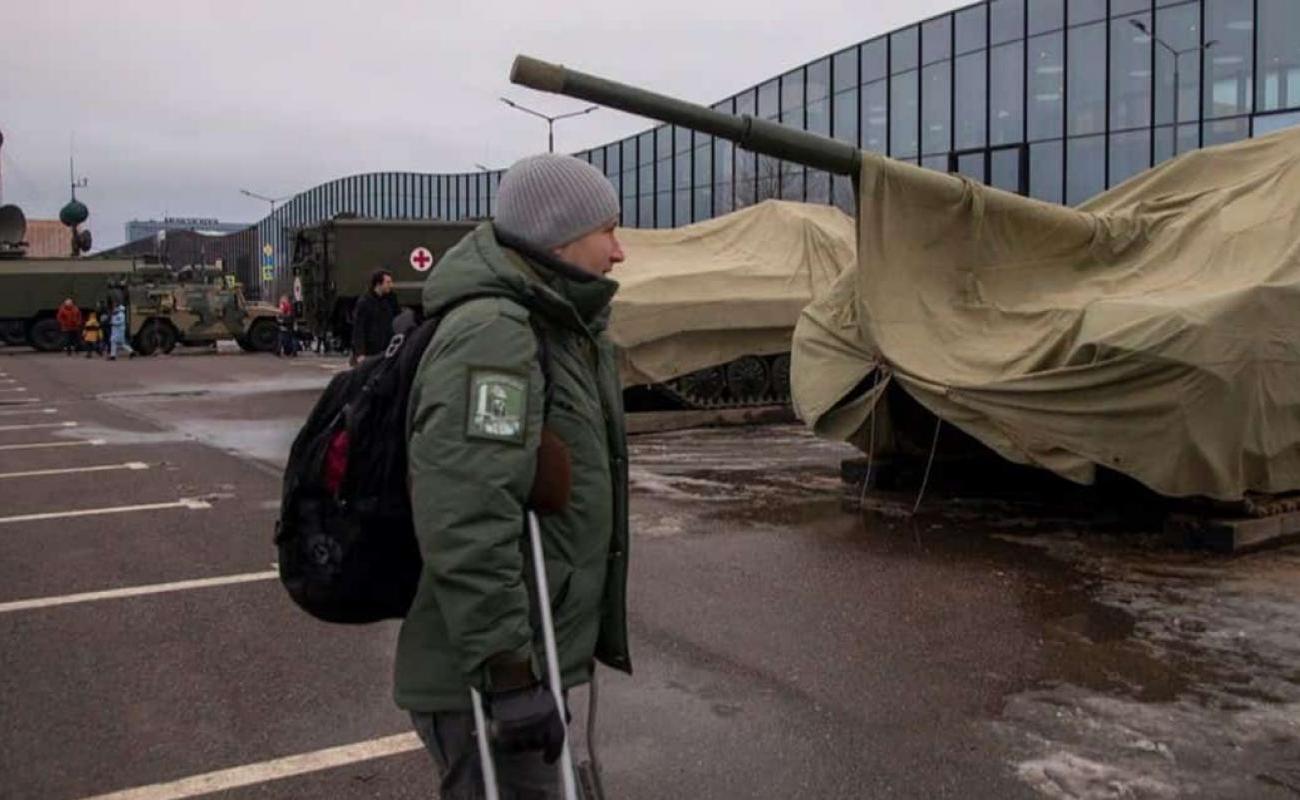
Since the start of Russia’s full-scale invasion of Ukraine, hundreds of thousands of Russian soldiers have been wounded on the front lines. Under normal circumstances, this would mean they’re no longer considered fit for combat. But according to Russian media outlet Veter, the military’s personnel situation is so dire that injured soldiers are often forcibly sent back into combat before completing treatment. In many cases, they’re never heard from again.
'How’s he going to outrun the drones?’
In May 2023, Ivan D. decided to sign a contract with the Russian Defence Ministry, eager to join the army and “fight for the motherland”. The next year, he was hospitalised for the first time with a shrapnel fragment lodged in his right leg. Ivan had surgery, but could only walk with crutches and was referred for further treatment. Instead, the Russian military sent him back into combat.
In March 2025, Ivan was wounded again. This time, shrapnel pierced his abdomen, damaging his left kidney and small intestine, which forced doctors to remove part of his bowel. He was declared temporarily unfit for combat and sent for treatment in Krasnodar.
Ivan didn’t want to continue fighting, his wife Karina recalls. His family got in touch with a lawyer, who reassured them that it was all but certain Ivan would be discharged.
But the reality turned out quite different. Ivan would have to go through a second round of military medical exams to confirm the necessary legal grounds for discharge.
“It’s all up to the doctors,” explains Sergey Krivenko, the director of human rights group Citizen. Army. Law. “How a patient feels and what the doctor determines may not always align.” Then there’s the fact that hospitals are overflowing with patients. “The goal is to patch [people] up as quickly as possible, free up a bed, and send them back to the front,” says Krivenko.
What’s more, a soldier could have been granted leave for medical treatment and still be branded a draft dodger. If he doesn’t return to his unit on time, he would then be held criminally responsible and receive an arrest warrant. Abandoning one’s post carries a sentence of 10 years in prison.
"The longer the absence, the more severe the charge,” notes Artem Klyga, head of the legal department of the Movement of Conscientious Objectors. Soldiers on medical leave must immediately contact a lawyer if they’re looking to be discharged in order to minimise the charge, Klyga explains. And it’s actually necessary to keep the criminal case open — that’s the only way to access a medical board that can provide a legitimate discharge. That said, the chances of actually receiving a medical discharge remain low.
In December 2025, the police came for Ivan in Krasnodar. “I was at work, while he was home with the kids. He messaged saying that someone had knocked on the door and yanked the doorknob. I told him not to open for anyone,” recalls Ivan’s wife, Karina. “When I got home that night, two police officers were standing in the entrance holding a composite sketch of Ivan.” They told her he was on their wanted list.
Ivan had been officially classified as AWOL. He was taken back to his unit in Yenakiieve in the Russian-occupied Donetsk region, where he was meant to undergo another medical exam. But within a few days, he was sent back to the front.
It seemed obvious Ivan was unfit for combat. “He developed three hernias along his scar line [on his abdomen.] He needs another surgery on his leg,” says Karina. “He can’t walk without crutches, how’s he going to outrun the drones? The deputy commander for political affairs just told me: ‘He’s a man, after all — he’ll manage.’”
“He messaged me saying they were moving him somewhere. He didn’t know where. They wouldn’t let him call. About an hour and a half later, he called me from some other number. The only words I remember are ‘assault unit,’” says Viktoria. “That was the last time I heard from him.”