
How has Russian aggression reshaped the security architecture in Central Europe?
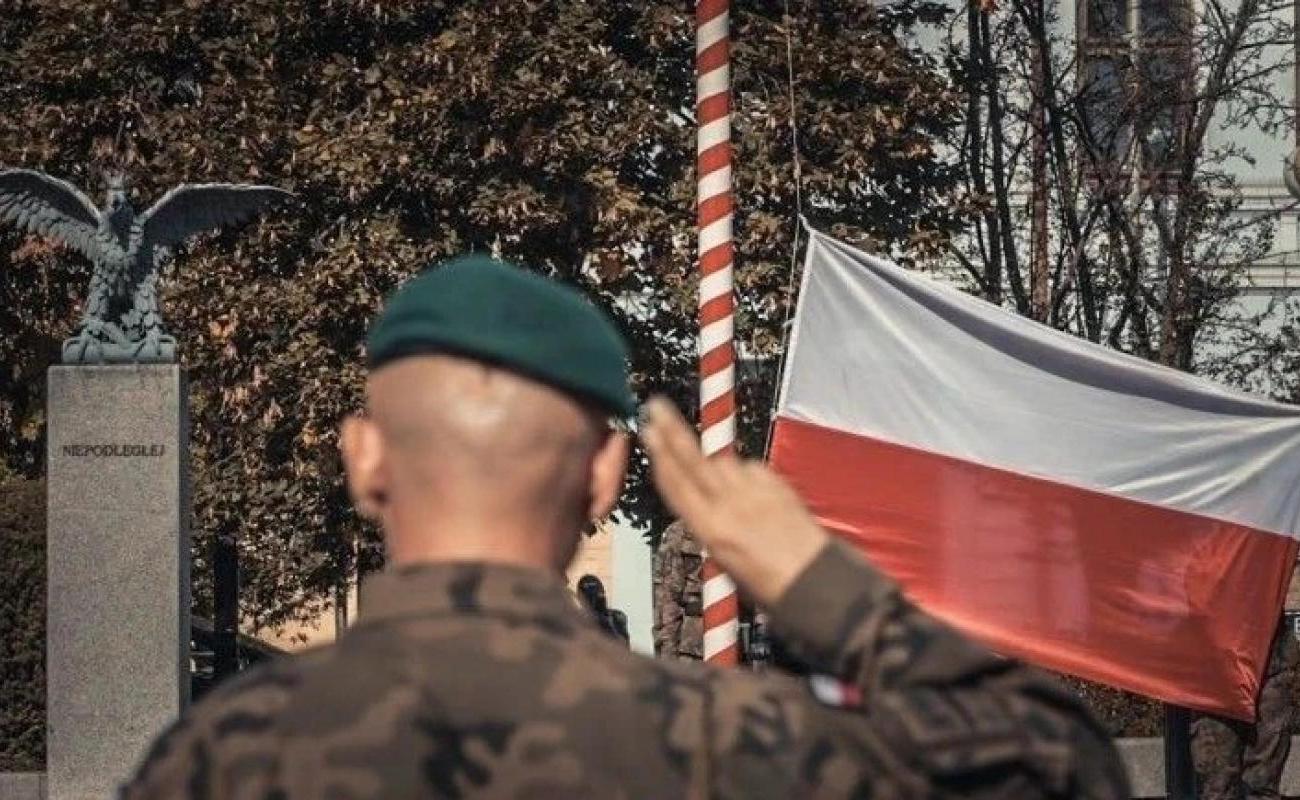
National geostrategic interests are essential for determining a state's foreign and security policy. Each state, in pursuing its interests, must take into account both long-term goals and current priorities.
A country's geopolitical position, as well as its natural resources and economic potential, shape the objectives of a given policy.
The annexation of Crimea by the Russian Federation in 2014, the destabilization of eastern Ukraine, the militarization of the Kaliningrad Oblast, and the Russian invasion of Ukraine in 2022 became unprecedented security challenges for Europe, and especially for its Central and Eastern parts. The security of the region reached its lowest level since the Cold War, especially in the countries directly bordering Russia. Internal and external threats, such as disinformation, cyberattacks, economic blockades, unannounced military maneuvers, or cultural tensions, further intensify the religious security crisis (Rogozińska 2021, 61). Problems related to mass migration and border incidents demonstrate the increasingly complex nature of contemporary threats.
The mutual interactions between military and non-military threats indicate the integration of instruments of action, characteristic of the hybrid war strategy carried out by Russia (Banasik 2018, 10). Security development forecasts suggest a further deterioration of the situation in the region due to the long-term and unpredictable nature of the threats. The dominant destabilizing factor remains the imperial policy of the Russian Federation, aimed at revising the international order formed after the end of the Cold War and rebuilding its sphere of influence.
Divergences in threat perception and difficulties in interpreting actions below the threshold of open armed conflict cause growing tensions around collective defense mechanisms. The Russian Federation, escalating its dominance in the international strategic environment, seeks to hinder the activity of international organizations such as NATO and the EU and strengthen its influence in the former Soviet republics. The war in Ukraine revealed difficulties in the rapid and adequate response of international organizations, which forced the states of the region to reconsider their defense policies. Many of them accelerated the modernization of their armed forces, increased defense spending, purchased modern weapons systems, including missile defense, and even declared readiness to deploy tactical nuclear weapons on their territories.
The Kremlin’s expansionist ambitions pose a serious threat to the stability of the Central and Eastern European region, particularly the former USSR states. Ukraine and Poland are considered by Russian elites as strategic outposts, essential for the implementation of imperial policy. Faced with this situation, the states of the region must redefine their approach to security, focusing on regional cooperation and effective defense mechanisms. However, efforts to create a common zone of stability, democracy, and the rule of law in Central and Eastern Europe encounter strong opposition from Russia. The Kremlin pursues an offensive policy towards the West, seeking to gain a strategic advantage in the Euro-Atlantic political space. At the same time, these actions stabilize Putin’s regime at the domestic level by strengthening nationalist sentiments.
Fears of a resurgent Russian sphere of influence prompted Central and Eastern European states to intensify regional cooperation and create defensive structures against Kremlin aggression. Following Russia’s aggression against Ukraine, the annexation of Crimea, and the outbreak of war in 2022, the perception of threats changed, both globally and regionally. These actions encouraged states in the region to participate more actively in international organizations such as NATO and the EU and to engage in coalitions that enable the implementation of common goals.
Russia seeks to create a buffer zone in the post-Soviet area, separating the countries of the region from NATO structures. Such actions are aimed at strengthening the Kremlin's influence and limiting the West's ability to respond to Russia's aggressive steps. In response, the countries of Central and Eastern Europe are intensifying actions aimed at ensuring stability, strengthening cooperation and developing deterrence mechanisms, which are of key importance for the security of the region.
Poland between Heartland and Rimland
Poland is located in a strategic geographical position, being part of the so-called zone of oppression, that is, the area between Germany and Russia (Lach 2020, 131). Although in the twentieth century this location was often the cause of numerous conflicts, the changing global situation is beginning to change the way this position is perceived. Poland is becoming a geopolitical “pivot”, where two spheres of influence – land and sea – meet. Understanding this location requires an analysis of two major geopolitical theories that shaped thinking about the dominant powers of the twentieth century. One of them is the Heartland concept by Halford John Mackinder. According to him, strategic advantage is achieved by a state that takes control of the central area of Eurasia, known as the Heartland. Although this area is economically poor, its importance stems from the fact that it constitutes the heart of the terrestrial part of the world, controlling the routes of communication and trade, which ensures dominance over the rest of the terrestrial world.
Mackinder, in his classic work “The Geographical Pivot of History”, argued that control over Eurasia gives a state the ability to influence other areas, and therefore to dominate global rivalry (Mackinder 1904, 421-437). His theory was based on the belief that if a state were to control the Heart of the Earth, it would gain access to unlimited natural resources and gain an advantage in competition with other powers. However, from the perspective of contemporary geopolitics, where the dynamics of technological development are changing the face of conflicts, Mackinder’s classic theory takes on a new significance. The importance of this field lies not only in the dominance of land, but in understanding the mechanisms that enable global integration and interdependence. Such changes in the perception of the role of the Heart of the Earth are particularly evident in analyses of the influence of naval and land powers, which compete for geostrategic space in the face of new challenges (Spyra 2016, 223-236).
On the other hand, Nicholas Spykman, who developed and modified Mackinder’s concept, introduced the Rimland theory, in which he draws attention to the importance of coastal and maritime areas, especially those that control important sea routes. In his concept, maritime powers gain dominance through control of these routes, which provides them with access to global trade and influence in world politics. According to Spykman, the Rimland is a region that includes all states bordering the world’s major oceans, as well as those that control strategic waterways. Spykman believed that control over the Rimland offers the opportunity to block any land dominance in Eurasia. Since the Rimland is also a place with the greatest political tensions, his analysis allows for a better understanding of contemporary geopolitical conflicts, including rivalry for influence in regions such as the South China Sea or the Middle East (Eberhardt 2014, 261-280).
In the context of Poland, its location within these theories – both in the Heartland and the Rimland – places it in a unique position in global geopolitics. Situated at the crossroads of Central and Eastern Europe, between land and sea powers, Poland has a key role to play in shaping the politics of the region. This location has repeatedly caused conflict, but has also constituted the country’s strategic strength.
Ukraine's geopolitical role and strategic importance for Poland
Ukraine, as a neighbor of Poland, is also a state located in the geopolitical collision zone between Russia and the West. Ukraine's position on the border of land and sea influences means that the country is at the center of the rivalry for control over Eastern Europe. Since Ukraine is located in an area that is not only strategic, but also has great economic potential, it is becoming one of the most important elements of contemporary geopolitics. The Ukrainian conflict, which began in 2014, revealed problems related to the political and economic instability of the region, as well as the growing threat from Russia. The war in Ukraine became a new stage in the geopolitical rivalry between the West and the East, where the interests of the great powers began to extend beyond the borders of the region.
Ukraine is of key importance in the security policy of the Russian Federation. In the environment of Russian elites and society, the location of Ukraine has a strategic character; historical experiences, cultural and civilizational ties, and the professed Orthodox faith usually play a major role. Ukraine was part of the Russian and Soviet empires. According to Moscow, Russians and Ukrainians are one Slavic nation. According to the Kremlin, Ukraine is part of Russia and gained independence as a result of a historical accident.
One of the fundamental problems in bilateral Ukrainian-Russian relations was the separatism of the areas inhabited by the Russian-speaking population. This concerned in particular Crimea, Donbass and the former Little Russia, the modern administrative and political center of which is Odessa. A persistent demand of the representatives of these areas was that Ukraine recognize the status of autonomous republics. The status of Crimea was particularly sensitive, since a powerful Soviet naval base was located in Sevastopol.
The seriousness of the military threat to Ukraine was demonstrated by Russia’s actions in eastern Ukraine. After failing to implement the concept of “Novorossiya” in the southern and eastern regions of Ukraine, the Russian Federation consolidated the conflict in the Donbas with the aim of destabilizing Ukraine and undermining the government in Kiev, which was intended to reduce Ukraine’s chances for European and Euro-Atlantic integration. Paradoxically, Russia’s aggressive actions were the reason for an unprecedented increase in support for membership in the European Union and NATO in Ukraine at that time.
The fundamental objective of Ukraine in the new geopolitical order is to develop a policy that will allow it not only to overcome internal problems, but also to strengthen its position in the international arena. Ukraine faces the challenge of building a new national identity based on the idea of democracy and integration with the West. For this reason, an important step in Ukraine's geopolitics will be cooperation with the countries of the region, as well as with the European Union, which can help achieve political and economic stability. Ukraine's development is associated with the need to modernize state institutions, improve the quality of life of citizens, and stabilize the political situation.
In the case of Ukraine, one of the main objectives is integration with international organizations and strengthening ties with neighboring countries, which contributes to the stabilization of the region. Ukraine, like other countries in the region, needs international support, especially in the context of infrastructure development, access to global markets, and integration with the political system of the European Union.
Contemporary geopolitics, as well as regional integration processes, can become the foundation of future changes in Ukraine. The process of political and economic transformation of this country requires not only international support, but also a strong internal foundation based on political stability and sustainable development. Ukraine, like other states in the region, should cooperate with the European Union in various areas – energy, transport, ecology and security. The main objective is to stabilize the internal and external situation, which will allow strengthening Ukraine’s role in the region (Piechowska 2023, 24-27).
The Black Sea region, in which Ukraine plays a key role, is of great geopolitical importance. Occupying a place on the border between Europe, Asia, Russia and the Middle East, this region is an extremely important point connecting different cultures and civilizations. Ukraine, as a state in this region, has the ability to influence not only the political and economic situation in this part of the world, but also the development of international cooperation in the areas of infrastructure, trade and security. The Black Sea region, although facing numerous challenges, has great potential for further development.
For Poland, the main conclusion is the need to actively monitor these changes and adapt national economic and strategic policy in order to make the most of the opportunities arising from global trends, such as the development of trade routes and new alliances. It is particularly important to strengthen the domestic transport and logistics sector, which can become an important element of global supply chains.
In conclusion, it should be said that the geopolitical analysis of Poland and Ukraine shows their key role in the Central and Eastern European region. The geographical location of both states makes them important players in the rivalry for influence between the East and the West. Poland, thanks to its membership in the European Union and NATO, plays a stabilizing role in the region, while also engaging in building stronger international relations. Ukraine, despite the difficulties associated with the conflict with Russia, has a chance for development if it manages to carry out the necessary reforms and integrate with the West. In addition to its stabilizing role, Poland also serves as a strategic buffer between Russia and the rest of Europe.