
In the war on the side of Russia, suspicions of crime in Bosnia and Herzegovina: What does the arrest of Danijel Grubač reveal?
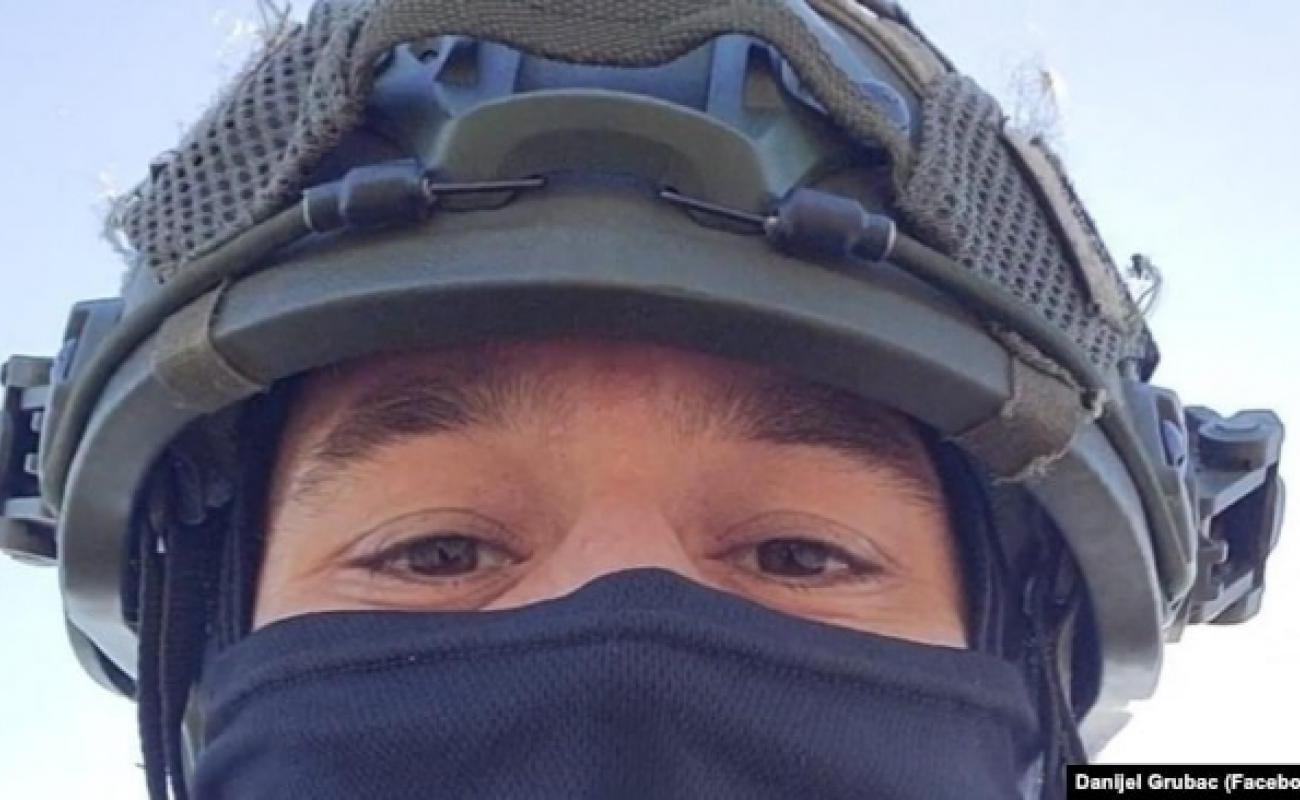
Information about the war on the side of Russia in Ukraine, and then the arrest for drugs and weapons, as well as for threats to kill, are linked to the case of Danijel Grubač from Kneževo, near Banja Luka.
After he was arrested on July 21 in Kneževo, for threats, drugs and weapons, the District Prosecutor's Office in Banja Luka requested detention, which will be decided by the Basic Court in Kotor-Varoš.
What is not known is whether the Prosecutor's Office of BiH will proceed further in the case related to Grubač's departure to the Ukrainian battlefield, which Radio Free Europe (RFE) wrote about in 2025.
Joining foreign military formations is a criminal offense under BiH law.
BiH Prosecutor's Office had a case due to the war in Ukraine
Although, according to unofficial information from RFE/RL, the BiH Prosecutor's Office previously had information related to his departure to the Ukrainian battlefield, it is not known whether this led to an investigation or other procedural actions.
The BiH Prosecutor's Office did not respond to RFE/RL's inquiry as to whether the case related to Grubač is still active, whether it has ever developed into an investigation, and whether his new arrest will affect further proceedings.
The State Investigation and Protection Agency (SIPA) also did not respond to Grubač's joining foreign military formations.
RFE/RL previously announced, citing official data from the Ukrainian project "I Want to Live", which operates with the support of the Ministry of Defense of Ukraine, that Grubač is among about 20 people of BiH origin who fought or are fighting in the ranks of the Russian army in the war against Ukraine.
In those records, he is listed as a junior sergeant in the Russian army.
According to previous information from RFE/RL, confirmed by intelligence sources in Bosnia and Herzegovina, Grubač joined Russian forces after the start of the Russian invasion of Ukraine.
Why was Grubač arrested?
It is not known when Grubač arrived in Bosnia and Herzegovina. Police from Republika Srpska arrested him after he threatened his uncle with a gun on July 21 in the village of Imljani near Kneževo that he would kill him, the Banja Luka District Prosecutor's Office said.
After the report, a police investigation and search of his property followed, during which 177 flower pots with marijuana plants were found.
The police said that an automatic rifle, a pistol, 182 rounds of ammunition and land prepared for further cannabis cultivation were also found.
Three Serbian citizens were arrested with Grubač on suspicion of unauthorized production and trafficking of narcotics. They were questioned as witnesses and released, was confirmed to RFE/RL.
The Banja Luka District Prosecutor's Office requested detention for Grubač due to "the fear that the suspect will repeat the criminal offense," the institution said.
How worrying are the data on the links between war experience and the criminal milieu?
Although there is still no official confirmation of the possibility of prosecuting Grubač for the war in Ukraine, security analyst Safet Mušić tells RFE/RL that the fact that some of these individuals have war experience and connections to the criminal milieu is particularly worrying.
"Most of them come from the criminal milieu. Some of them have previously participated in the wars in Bosnia and Herzegovina or Kosovo, but at the same time were directly or indirectly connected to criminal structures in BiH and the region," says Mušić.
He believes that cases like Grubač's represent a pattern that should be under special attention by security agencies.
"When participation in a foreign battlefield, possession of weapons, violent behavior and possible connections to criminal groups overlap in one case, this should represent a special risk and priority for security services in their work," assesses Mušić.
He adds that European security services have been monitoring returnees from foreign battlefields for years precisely because of their potential connections to arms smuggling, organized crime and other forms of violence.
"They are particularly interested in the combat training these individuals received on the battlefields, their connections to transnational organized crime, arms and explosives smuggling, but also the possibility of their involvement in other conflicts," says Mušić.
He points out that an additional problem is the fact that the security system in BiH is fragmented and that in previous cases there has often been a lack of coordination between institutions.
"We have several agencies that share responsibilities, and in many cases there has been a lack of cooperation between them, as well as preventive and operational work. That is why we have witnessed certain omissions when it comes to the entry and movement of such individuals," says Mušić.
RFE/RL previously wrote about two BiH citizens who joined the Russian army and who previously had problems with the law in BiH.
These are Aleksandar Velimirović, who was previously arrested and convicted of kidnapping, as well as Andjelko Milićević, who escaped a final, almost five-year prison sentence for drugs in BiH.
Problems with prosecution in BiH
According to data obtained by RFE/RL, since the beginning of the Russian invasion of Ukraine, more than 20 people with BiH citizenship have joined the Russian army.
Some of them have also obtained Russian citizenship, which poses a difficulty in prosecuting in BiH because the Criminal Code does not provide for the prosecution of people who legally obtained citizenship of another country and then joined the army.
In addition to Gavrilo Stević, who was finally acquitted of charges that he fought in Ukraine in 2015, the state judiciary has also dealt with the case of Dario Ristić.
The BiH court dismissed the indictment against Ristić because he also obtained Russian citizenship in addition to signing a contract with the army, thus avoiding a trial in BiH, where he voluntarily returned after being wounded and was ready to plead guilty.
The BiH Prosecutor's Office announced the possibility of changing the law with the aim of preventing trips to foreign battlefields, said chief prosecutor Milanko Kajganić, but legal experts explained to RSE that the process could be complicated and long-lasting.
The laws in Bosnia and Herzegovina, in addition to prison sentences, also provide for the possibility of revocation of citizenship of persons who voluntarily serve in foreign military forces, but this measure has not been applied so far.