
Lukashenko faces Ukrainian strike threat: what Zelenskyy’s ultimatum really means for Belarus
Ukrainian President Volodymyr Zelenskyy’s public ultimatum to Belarusian dictator Alexander Lukashenko has dramatically escalated tensions on Ukraine’s northern border. Kyiv has given Minsk one week to dismantle Russian-operated drone signal repeaters near the border – or Ukraine will destroy them itself.
This move comes at a sensitive moment, just days before the deadline expires, and places Lukashenko in an extremely difficult position between Kyiv and Moscow.
Why the ultimatum?
According to Zelenskyy, four relay stations located in Belarus’s Gomel and Brest regions are being used by Russia to guide Iranian-designed Shahed drones targeting Ukrainian civilians, energy infrastructure, railways, and towns in Zhytomyr, Rivne, and Volyn oblasts.
On 19 June, Zelenskyy stated clearly: “He can remove this equipment? Why say he doesn’t want to be in the war? Let him remove it… A week will be enough. If he doesn’t do it, we will.”
He repeated the demand in subsequent statements, emphasising that private warnings had already been ignored. Ukraine also signalled broader demands, including an end to Belarusian supplies of fuel and components for Russian weapons.
Lukashenko caught between two fires
Complying with the ultimatum would seriously damage Lukashenko’s relations with the Kremlin, which has been pushing hard to draw Belarus more deeply into the war. Refusing, however, risks direct Ukrainian military strikes on Belarusian territory a step Kyiv has so far avoided, allowing Lukashenko to maintain the fiction that he is keeping Belarus out of the conflict.
In recent weeks, Minsk had tried to soften its rhetoric toward Ukraine, even offering a meeting between Lukashenko and Zelenskyy. This shift coincided with Ukraine’s increased long-range strikes on Russian territory and growing doubts in Minsk about Russia’s ability to protect Belarus in a direct clash with Ukraine.
Some analysts see the 17 June drone attack on a Belarusian children’s football team bus in Russia’s Bryansk region (which the SBU claims was a Russian false-flag operation) as an attempt by Moscow to force Lukashenko into escalation.
What happens if Lukashenko refuses?
If Belarus does not comply, Ukraine has two main options:
- “Kinetic sanctions” — direct strikes by Ukrainian forces on the relay stations.
- Broader pressure on Belarusian enterprises supplying Russia with fuel and military components.
Previous Ukrainian actions on Belarusian soil (such as the 2023 attack on the Machulishchi airfield) were carried out through proxies or in a deniable manner. A public ultimatum now makes deniability impossible, meaning any future strike would be an overt operation by the Ukrainian Armed Forces.
This would significantly expand the active front line and mark a major escalation. Nevertheless, Zelenskyy’s repeated public statements suggest Kyiv is confident in its capabilities and prepared to raise the stakes.
Minsk’s response so far
Belarusian state propaganda has responded with a barrage of insults, but Lukashenko himself has avoided sharp public statements – a sign that the regime is nervous about directly rejecting Kyiv’s demands.
For Putin, any move by Lukashenko toward distancing himself from Russia would be a dangerous precedent for other allies. Moscow is therefore expected to exert maximum pressure to prevent such a scenario.
Strategic significance
Zelenskyy’s ultimatum is not just about four relay towers. It demands that Belarus effectively cease military cooperation with Russia – a step that would amount to a serious rift between the two dictators. By making the demand public and repeated, Ukraine has deliberately narrowed Lukashenko’s room for manoeuvre.
The coming days will show whether Lukashenko is more afraid of Ukrainian strikes or of Putin’s wrath – and whether Kyiv is truly ready to follow through on its threat.
The analysis in Ukrainian by EUalive’s partner European Pravda can be found here.
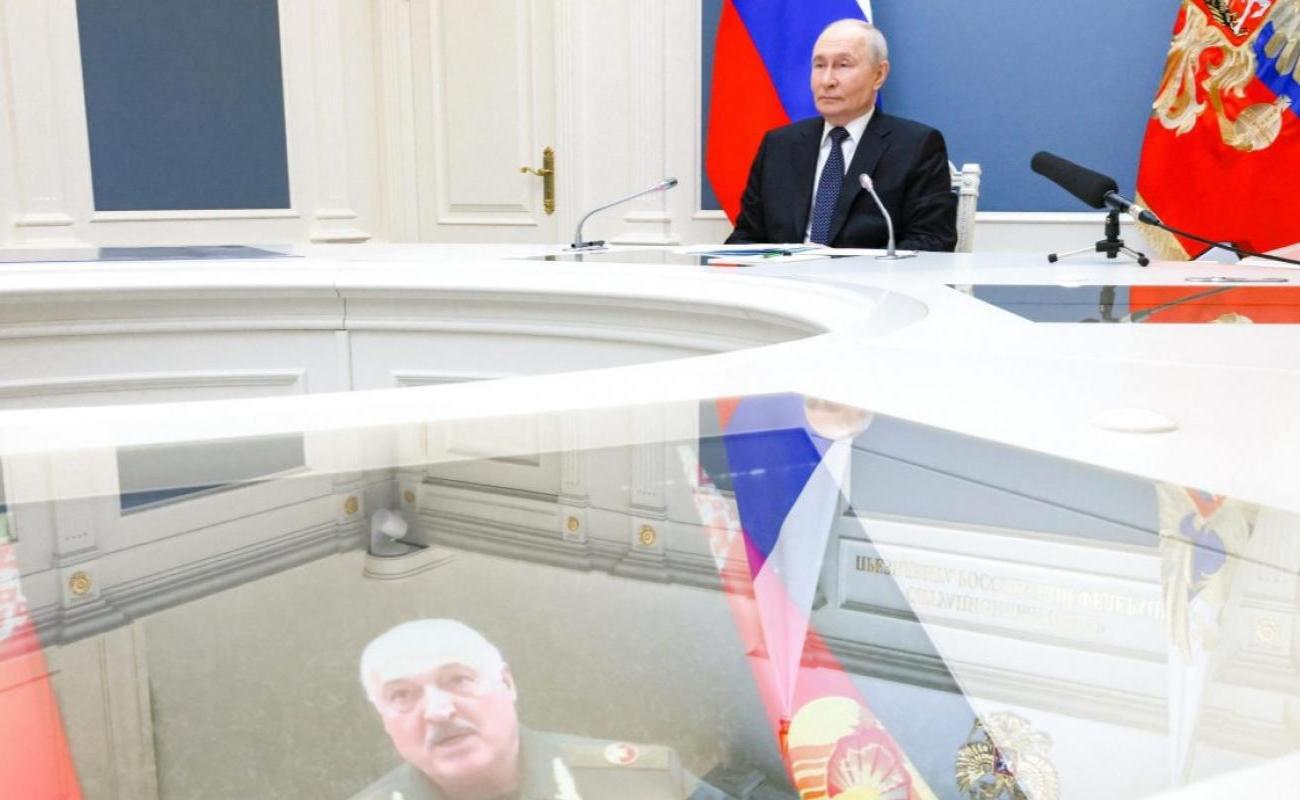
Caption: Russian President Vladimir Putin attends a meeting with Belarusian President Alexander Lukashenko on Russia’s nuclear forces drills via videoconference in Moscow, Russia, 21 May 2026. EPA/MIKHAIL METZEL/SPUTNIK/KREMLIN POOL