
Russia, Israel, and the Trade in Stolen Ukrainian Grain: A Legal Analysis
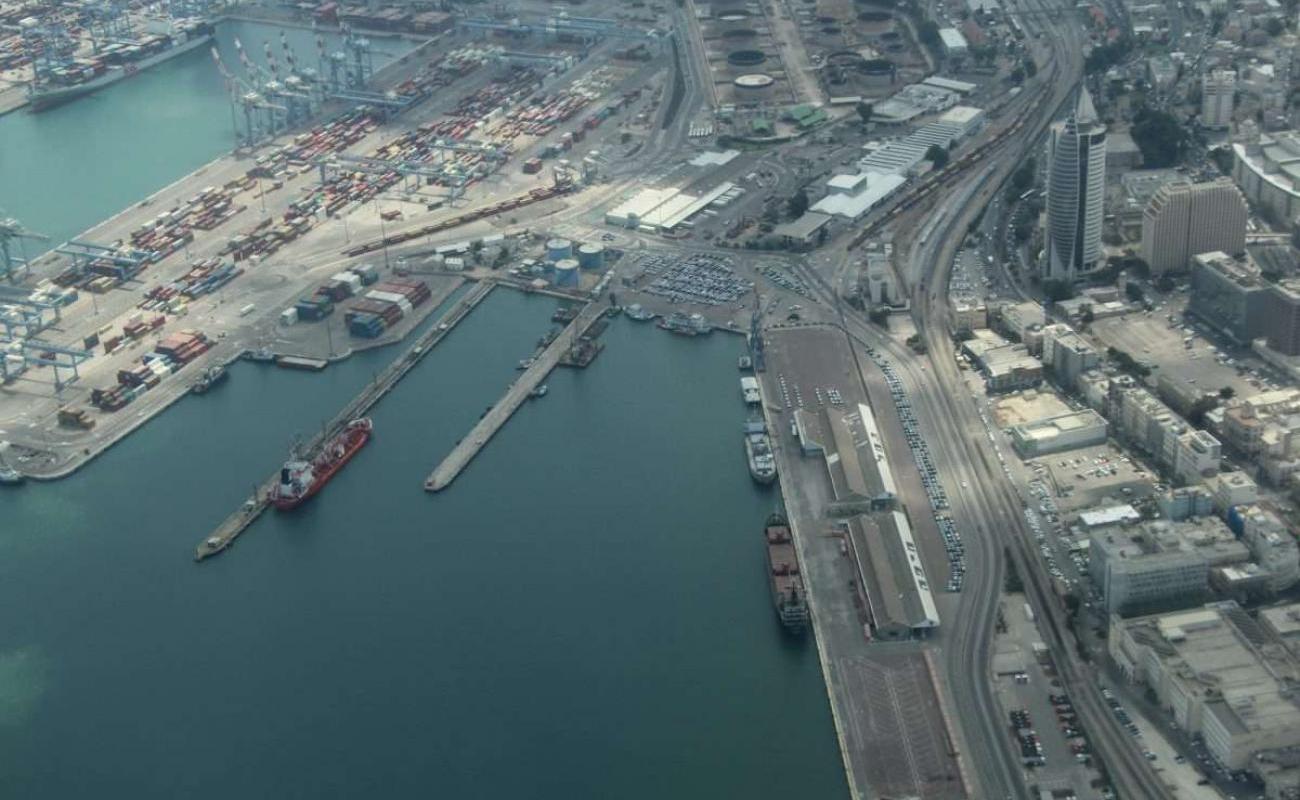
In April 2026, relations between Ukraine and Israel were shaken by a considerable diplomatic crisis. In contrast to Ukraine’s recent quarrel with Hungary over the (likely illegal) interception and seizure of a Ukrainian money transport by Hungarian authorities, this dispute was not preceded by years of deteriorating bilateral relations. Since the beginning of Russia’s full-scale invasion of Ukraine in 2022, the relationship between Israel and Ukraine has mostly been pragmatic and cooperative—despite some tensions due to Israel’s decision not to impose sanctions on Russia or directly supply Ukraine with weapons. However, this began to change on April 12, when the Russian-flagged bulk carrier Abinsk docked at the Israeli port of Haifa and unloaded up to 44,000 tons of wheat. According to Ukrainian investigative journalist Kateryna Yaresko, this grain at least partially originated in the occupied Eastern Ukrainian territories. The import of this grain into Israel drew sharp protest from Ukraine, which led to another vessel allegedly carrying grain from the occupied areas being turned away at Haifa port on April 30.
This blog post provides an analysis of the ongoing dispute between Israel and Ukraine and the underlying legal issues. To this end, it will first give an overview of the systematic practice by Russian authorities to harvest grain in the occupied Ukrainian territories and sell it on international markets. Then, it will examine the diplomatic dispute between the countries more closely before offering a legal analysis.
The systematic appropriation of Ukrainian grain by Russia
During their initial assault in the spring of 2022, Russian forces occupied significant swaths of territory in the east and southeast of Ukraine. Shortly thereafter, Russian authorities began to take control of the agricultural sector in those areas. To this end, the property of major Ukrainian agricultural companies such as Nibulon or Agroton was confiscated and transferred either to Russian private businesses or to public entities like the newly established “State Grain Operator” in Zaporizhzhia oblast. Small-scale farmers who did not flee were mostly allowed to keep their properties but are now being forced to sell their produce below market value to Russian state-owned distributors. The crops farmed on this land are then exported by Russian trade and logistics companies via the occupied ports in Mariupol, Berdiyansk, and Sevastopol. A detailed report on these schemes has been compiled by the International Partnership for Human Rights (IPHR). The IPHR report also points out that the Ukrainian grain so exported is frequently shipped to Türkiye, Syria, Lebanon, Iran, and various African countries.
The (alleged) import of grain from occupied Ukraine into Israel
Unlike the countries mentioned above, Israel was, up until recently, not known to be an importer of grain from occupied Ukraine. While the IPHR report mentions a purported shipment to Israel via a grain terminal in Sevastopol in 2023, it is not entirely clear whether that shipment actually arrived in Israel or was rerouted to Türkiye (see p. 34 of the report). This changed, however, when the Abinsk docked at the port of Haifa on April 12. After the information about the arrival of the Russian bulk-carrier in Israel was made public, the Ukrainian government formally protested.
The dispute escalated when another vessel allegedly carrying grain from the occupied areas, the Panamanian-flagged Panoramitis, arrived in Haifa in late April. Ukrainian Foreign Minister Andrii Sybiha criticized Israel’s lack of measures against the vessels, claiming that Ukraine had requested legal assistance from Israel in this regard as early as April 15. This led to both sides trading diplomatic barbs over the issue, with Israeli Foreign Minister Gideon Saar claiming that Israel had received no formal request for assistance and no supporting evidence from the Ukrainian side. For its part, Ukraine summoned the Israeli ambassador and threatened economic sanctions against those involved in the grain trade. The Panoramitis ultimately departed without unloading the grain after Israeli importer Zenziper, apparently spooked by the diplomatic quarrel in which it was unexpectedly caught, refused to accept the shipment (the affair has been covered extensively by Deutsche Welle).
The legal situation with respect to the occupied territories
As is not unusual in a diplomatic dispute, both Ukraine and Israel have couched their arguments in legal terminology, apparently attempting to bolster their respective positions in doing so. This includes Ukrainian President Zelensky, who contended on X that “[i]n any normal country, purchasing stolen goods is an act that entails legal liability. This applies, in particular, to grain stolen by Russia.” To determine the validity of this statement, we must first examine Russia’s actions in Ukraine through the lens of international law.
Russia’s ongoing full-scale invasion of Ukraine constitutes an act of aggression in violation of Article 2(4) of the UN Charter. Its assertion of sovereignty over the Donetsk, Luhansk, Zaporizhzhia, and Kherson oblasts, which is based on sham referendums conducted in September of 2022, amounts to an illegal annexation. The same is true for Crimea, where the port of Sevastopol is located. The peninsula was annexed by Russia as early as 2014, following a similar sham referendum. Nothing about these assessments is controversial. They have been confirmed by the UN General Assembly on multiple occasions (regarding the annexation of Crimea, see A/RES/68/262 of 27 March 2014; regarding the characterization of the Russian full-scale invasion as aggression, see A/RES/ES-11/1 of 2 March 2022; regarding the annexation of the Eastern Ukrainian oblasts, see A/RES/ES-11/4 of 12 October 2022).
Furthermore, the territories in question are subject to the law of belligerent occupation as enshrined in the 1907 Hague Regulations and the Fourth Geneva Convention. The ICJ has repeatedly acknowledged that the rules on occupation contained in Articles 42 et seq. of the Hague Regulations reflect customary international law (see Construction of a Wall in the Occupied Palestinian Territory, Advisory Opinion (2004), paras 78, 89; Armed Activities (DR Congo v. Uganda), Merits (2005), para 172). The confiscation of private property in occupied territory is explicitly prohibited by Article 46 of the Hague Regulations. Moreover, insofar as the Russian measures affect Ukrainian state-owned property, they violate the duty of the occupying state to conduct itself merely as the administrator and usufructuary of public agricultural estates, as enshrined in Article 55. The large-scale harvesting and export of crops farmed on such lands for profit clearly exceeds the boundaries of what a reasonable usufructuary would be allowed to do under this provision. Additionally, the IPHR report concludes that the widespread appropriation of agricultural properties in the territories concerned amounts to pillage, which is prohibited under Article 47 of the Hague Regulations and, under Article 8(2)(b)(xvi) of the Rome Statute, constitutes a war crime (see IPHR report, p. 39).
Legal consequences for grain-importing states, including Israel
Having found that both Russia’s assertion of sovereignty over the occupied Ukrainian territories and its measures to take control of the agricultural sector there are illegal under public international law, we can now proceed to examine the consequences of these actions for states that import or have imported grain from the occupied territories, including Israel.
The characterization of Russia’s takeovers of Crimea and the Eastern Ukrainian oblasts as illegal annexations matters. Under the customary principle widely known as the Stimson Doctrine, which is enshrined in Article 41(2) of the Articles on the Responsibility of States for Internationally Wrongful Acts (ARSIWA), all states are obligated not to recognize annexations and other serious breaches of peremptory norms of international law. This obligation does not exhaust itself in a duty to abstain from formally acknowledging Russia’s claim to sovereignty over the territories concerned. Rather, it entails a comprehensive duty not to recognize official acts performed by the aggressor on the occupied territory (see ICJ, Continued Presence of South Africa in Namibia, Advisory Opinion (1971), para 125) and to prevent trade and investment relations that would assist the aggressor in maintaining control over the territory (see ICJ, Policies and Practices of Israel in the Occupied Palestinian Territory, Advisory Opinion (2024), para 278). These duties arising from the non-recognition principle are meant to protect Ukraine’s sovereignty and territorial integrity. They would continue to bind the international community even in the event that Ukraine is eventually forced to sign a “bad peace” that allows Russia to maintain a presence in the areas concerned (as I explained here).
The trade in stolen grain helps Russia to raise revenue and continue both its war of aggression and the illegal occupation. Moreover, the appropriation of this grain by Russia was itself illegal, as it was carried out in violation of international humanitarian law as laid down in the Hague Regulations. Hence, it cannot be argued that purchasing such grain from Russia benefits the population of the occupied territories, which would exempt the trade from the non-recognition principle under the so-called Namibia Exception. Therefore, the non-recognition principle is best understood as requiring other states not to import this grain. This duty applies automatically, regardless of whether the state that has fallen victim to the annexation or occupation in question has formally requested legal assistance. Any violation amounts to an internationally wrongful act that gives the injured state the right to take proportionate countermeasures—including economic sanctions—as laid down in Articles 22 and 49 et seq. of the ARSIWA. Thus, President Zelensky’s claim that “purchasing stolen goods is an act that entails legal liability” is correct even in international law—at least as far as those goods originate in annexed or illegally occupied areas.
However, with respect to the grain delivered to Haifa by the Abinsk, there might be a catch. In the Advisory Opinions that elaborate on the non-recognition principle, the ICJ did not specify whether the duties arising thereunder constitute obligations of result or obligations of conduct (a distinction that the Court has recognized repeatedly, most recently in its Advisory Opinion on the Obligations of States in respect of Climate Change (2025), para 175). However, the language the Court used in the 2024 Advisory Opinion on the Occupied Palestinian Territory indicates that at least the duty to prevent trade and investment relations is a mere obligation of conduct (see para 278, “take steps to prevent […]”). Therefore, if it is true that Israel was not supplied with sufficient information about the grain carried by the Abinsk, its failure to prevent the import of this grain likely does not amount to a violation of the non-recognition principle. Thus, to give teeth to the non-recognition principle, Ukraine may be required to distribute relevant information and draw other states’ attention to such illicit trade.
Legal consequences for third parties
The non-recognition principle is not only relevant to grain-importing states. International trade is an affair that requires a multitude of different services, including shipping, financing, insurance, and sometimes transshipment. In other words, such trade is not merely a bilateral affair between the exporting and the importing state, and service providers from a large number of countries may be involved. The fact that the Panoramitis was sailing under the flag of Panama when it made port in Haifa highlights this. If the duty to prevent trade relations that would assist an aggressor in maintaining control over an illegally occupied territory requires states to abstain from importing grain from that territory, the duty must also require states not to facilitate such illicit trade by allowing shipping lines, insurance agencies, banks, etc. within their jurisdiction to participate in it.
Alternatively, a duty to prevent such participation in trade that violates the non-recognition principle could arise from the customary obligation not to aid or assist another state in the commission of an internationally wrongful act, as reflected in Article 16 ARSIWA (see ICJ, Application of the Genocide Convention (Bosnia v. Serbia), Merits, para.420). However, Article 16(a) ARSIWA explicitly provides that rendering such aid or assistance to another state only entails liability when the aiding state acted with knowledge of the circumstances of the wrongful act. Thus, the availability of information about the origin of the traded grain would again be of crucial significance.
Conclusions
It is not clear from the public exchange between the governments of Ukraine and Israel whether Israel or any other state had received information on the freight carried by the Abinsk before the vessel was unloaded in the port of Haifa. If it did not, Israel’s failure to prevent the unloading and the further transport of the grain likely did not violate the non-recognition principle. Neither did the potential failure of third states to prevent the participation of their nationals in the conduct of this trade. However, with respect to possible future shipments of illegally harvested Ukrainian grain, the situation would be different if Ukraine supplies adequate information in advance. This is highly relevant, as the main reason why the Panoramitis ultimately left Israel with business unfinished seems to be the reluctance of its trading partner. Therefore, to avoid incurring international liability and exposing itself to Ukrainian sanctions in the future, Israel—just as any other state—would be well advised to exercise due diligence in its trade relations with Russia.