
‘This isn’t our war’
In October 2024, Artur Gadelshin, a musician from Russia’s Republic of Bashkortostan, died in the full-scale war in Ukraine. Soon after, his song “Sons of Bashkortostan” became an anthem among soldiers from the republic. A regional social media group posted a video obituary showing Artur standing in uniform, rifle in hand, as the song plays.
While the post itself is in Russian, almost all the comments underneath it are in Bashkir. For example:
- •“Such a shame. Decent guys dying for nothing. May their souls be in heaven.”
- •“We’re running out of men. The generation of 20-year-olds has started laying down their lives in a needless war, and nobody will say a word against it.”
- •“Oh, when will this bloodshed end?”
- •“This cursed war is taking our noblest boys… Artur was a man born, heart and soul, to work with children… And the love he had for his homeland!”
- •“We’ve lost a son, a hero, in this cursed war.”
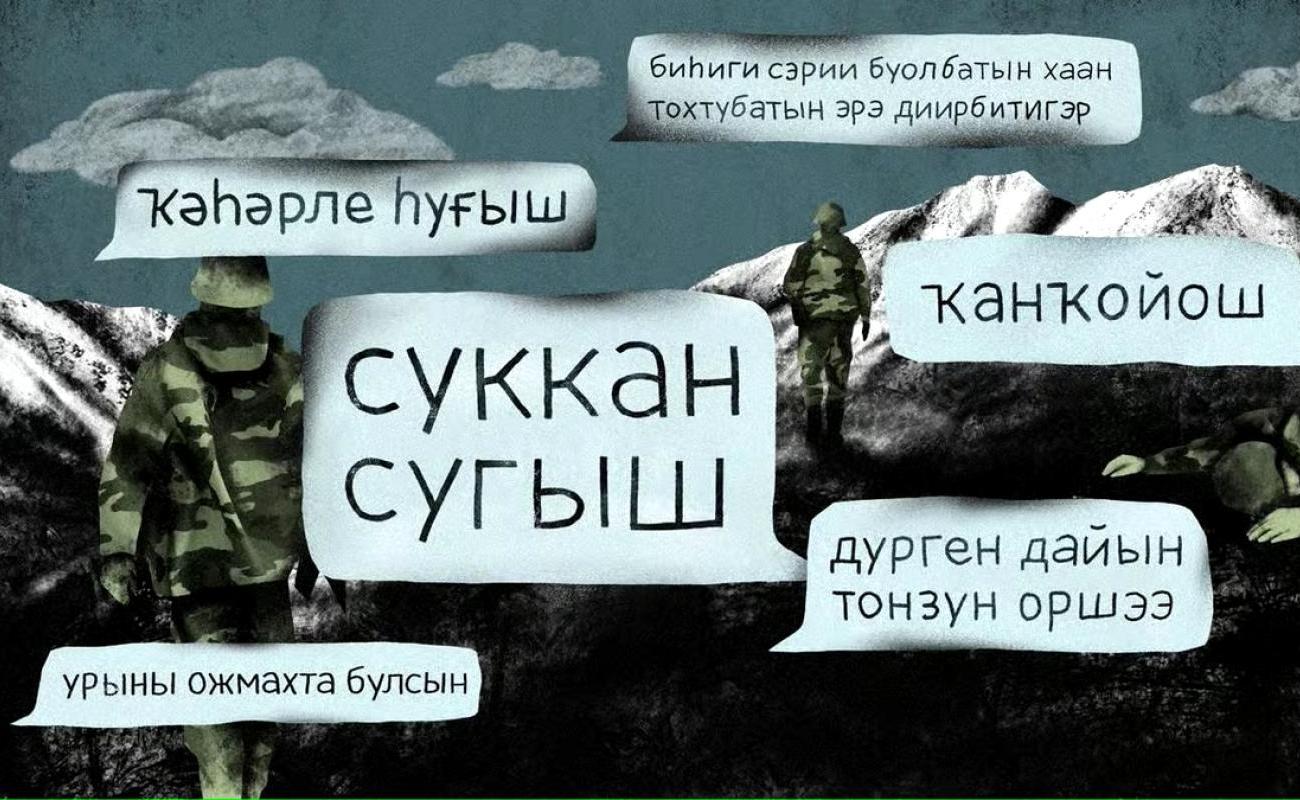
Russia’s minority languages have given their speakers a way to talk about the war free of officialese. Users of VKontakte and Telegram in Bashkortostan, Tatarstan, Tuva, Yakutia, and Buryatia — regions where people actively use their national languages — use the word “war”, wish for it to end soon, pray for their neighbours to return, and grieve their deaths.
Novaya Europe analysed comments from over 21,700 groups and channels in the republics where minority languages are most widely used. These include public pages for classified ads, news and dating; pages run by state agencies; and the channels of regional governors. Although 98% of the 53.2 million comments are in Russian, non-Russian comments makes up more than 10% in some regions (Chechnya and Tuva) and between 2.4% and 3% in others (North Ossetia, Yakutia, Bashkortostan, and Tatarstan).
The theme of coming home alive runs through both Tatar and Tuvan comment threads. In Bashkir, waiting for soldiers to return is the single most common topic, making up 8% of comments.
The toll of the war is felt more acutely in Russia’s ethnic republics than in other regions. According to calculations by Mediazona and the BBC, Tuva has had the highest death rate per capita of any region, followed by Buryatia.
In the Buryatian village of Chika, near the Mongolian border, 10 people have died out of 525 residents, almost 2% of the population. In Komsomolskoye, also in Buryatia, the figure is 9 out of 525. Ethnic Buryats make up 2.3% of Russia’s dead, even though they are just 0.34% of Russia’s population, while ethnic Russians account for 70.6% of the dead against 80.9% of the population. The republics also lead in absolute losses, with Bashkortostan and Tatarstan at the top. A Muscovite is 25 times less likely to die in the war in Ukraine than a resident of Chukotka or Tuva. According to economic media outlet The Bell, a region’s death toll correlates directly with its poverty rate.