
Ukrainian civilians in Russian captivity and their stories
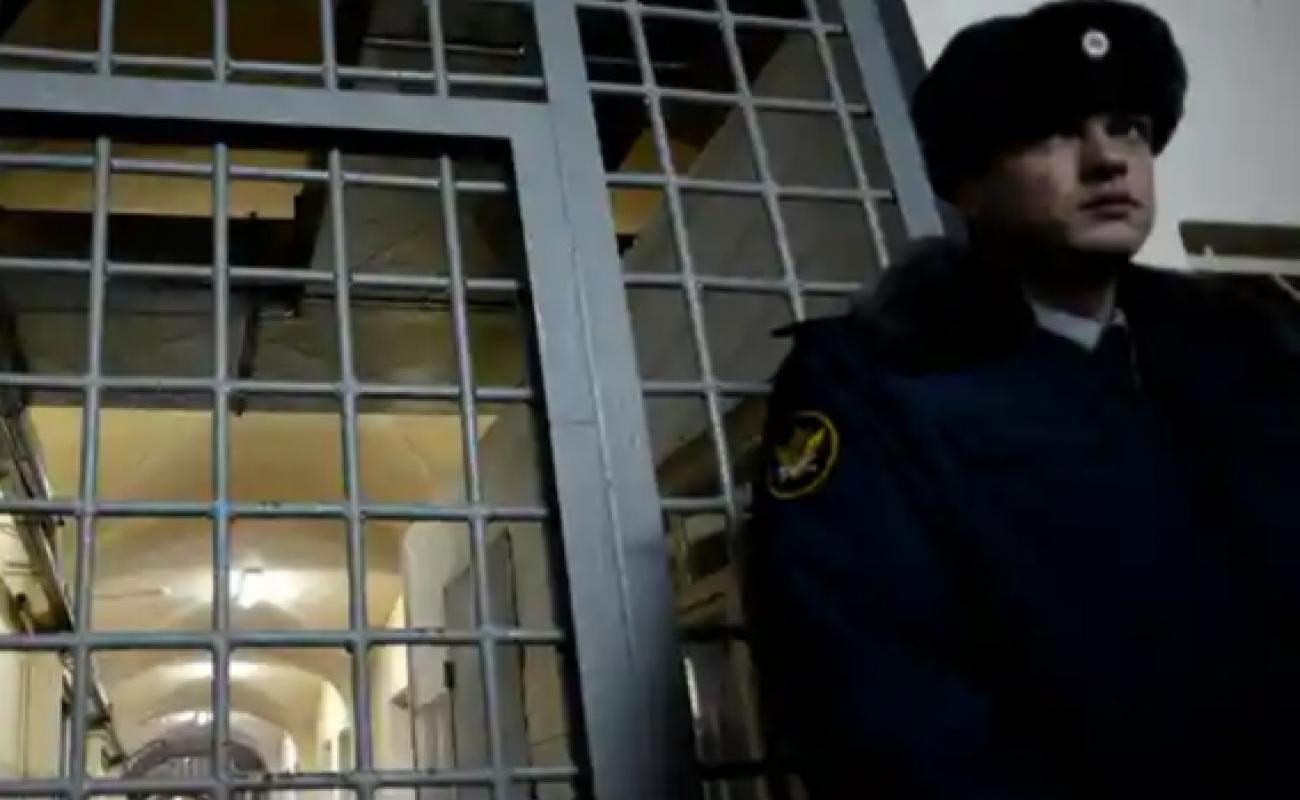
Thousands of Ukrainian civilians remain in Russian captivity, often without a defined status or contact with their families. Their detentions are a violation of international law, and their families have been demanding their release for years.
Since the beginning of the full-scale Russian invasion of Ukraine, thousands of civilians have disappeared on its Ukrainian territory. According to human rights activists, this is at least 16,000 Ukrainian civilians - people who did not take part in hostilities, but nevertheless ended up in Russian captivity. These arbitrary detentions are in direct violation of international humanitarian law: civilians are not participants in the war, and their protection is, in particular, established in the Fourth Geneva Convention.
"The Geneva Convention does not even logically foresee that any state, having entered the territory of another, can afford (...) to abduct a civilian and simply detain him without any grounds," says Yuriy Kovbasa, representative of the Ukrainian Parliament's Commissioner for Human Rights. Accordingly, the category of "civilian prisoner" itself is not provided for by law, but such people exist.
The "incommunicado" regime: prisoners outside the legal system
Larisa Shevandina has not seen her husband, a famous Ukrainian athlete and president of the Wushu Federation in the Donetsk region, Oleg Shevandina, for 11 years. In May 2015, he was kidnapped in his native Debaltseve, and since then the couple have communicated only twice - both times on the first day after their detention. According to eyewitnesses with whom Shevandina spoke, her husband was stopped by armed men in masks, dragged out of his car, put a bag over his head and taken away in an unknown direction.
Since her husband's abduction, she has conducted her own investigation into his disappearance and founded the public organization Ukrainian Movement. Restore Freedom. In addition, Shevandina says that the UN is also involved in her husband's case and that her case has been considered several times by the Commission on Enforced Disappearances
"But, unfortunately, the UN does not have direct mechanisms (of influence - ed. note), and even with such attention, a person still remains in captivity. 11 years in Russian captivity is a lot. And when they say that every day is hell, it is hell multiplied by 365, and then by another 11," Shevandina emphasizes.
The case of Oleg Shevandina was one of the first known episodes of civilian detention in the occupied territories. From a legal point of view, his status is described as "incommunicado" - complete isolation without access to communication, lawyers and no formal charges. This is the status of most civilians in Russian captivity - and most of them were detained after the start of the large-scale invasion.
"This is the category that the Russian regime calls 'detainees for opposing a special military operation'. In other words, these are people (...) who have no legal status at all, since such detention contradicts not only international law, but also Russian legislation," explains Mikhail Savva, an expert at the Center for Civil Liberties.
According to Kovbasa, the second category of prisoners are those whose detention has been officially formalized by Russia, providing the International Committee of the Red Cross (ICRC) with information about their detention. "This is another part of citizens who may already have some kind of convictions - fabricated, for example, for alleged terrorism," explains Kovbasa.
Accused of espionage, but recognized as a political prisoner
Journalist and activist Serhiy Tsihipa belongs to this category. In 2021, he retired and began writing fairy tales about his hometown - Novaya Kakhovka. He spent his days in the library, working with archives, so that the fictional world would correspond as closely as possible to the real one. The heroes of his stories were also not accidental: some characters were created on the model of friends, others - on the model of himself and his wife. So, in one of the fairy tales, Vodianik kidnaps the hero, who personifies Cihipa himself, and he can be returned only by collecting seven hidden keys.
When Russian troops occupied Novaya Kahovka in early 2022, Cihipa stayed to help local residents: he organized humanitarian aid and talked about the events on social networks. On March 12, he was kidnapped - as if repeating the plot of his own fairy tale. From then until the end of December, he was in custody without official procedural status, Memorial reports. Criminal proceedings against him were initiated only on December 26 - he was accused of espionage. Memorial considers Cihipa a political prisoner.
His wife, Olena Cihipa, who, according to her, became a "free human rights activist" during this period, is looking for "keys" for his release. He participates in the "Civilians in Detention" initiative and regularly attends protests dedicated to the problem of civilian prisoners.
"I am turning this whole situation into my public activity," says Olena. "I understand that just sitting, suffering and crying will not make his fate any easier."
She finds it very difficult to maintain contact with her husband. She received his last letter in February, although she writes to him every week and sends him reply forms.
"The fact that there are no letters may indicate that my letters simply do not reach him," says Tsihipa. In addition, Serhiy's health is deteriorating in captivity.
"Since they are kept in cold and damp rooms, the health of every Ukrainian prisoner of war and civilian prisoner is deteriorating every day, not just Serhiy's," she notes.
Systematic torture of Ukrainian prisoners in Russia
According to human rights activists and the UN, the Russian authorities are systematically subjecting Ukrainian prisoners of war and civilians held in detention centers both in Russia and in the occupied territories to torture and ill-treatment.
"Torture, abuse - this is constantly confirmed after our veterans, men and women, and even civilians return from captivity - everyone confirms this," says Kovbasa.
Who and why ends up in Russian captivity
According to Savva, socially active people are most often captured. For example, participants in protests in support of civilian prisoners say that before their detention, their loved ones were volunteers, activists, drivers who helped evacuate people from the occupied territories, or simply openly expressed a pro-Ukrainian position.
"They are detained because, in the opinion of the occupying authorities, a person poses a threat: he can become a center of resistance unity," explains Savva, adding that such mass detentions are also necessary to intimidate the population. "They literally show everyone that the same thing can happen to you - you will simply disappear without a trace."
Retired officer Serhiy Likhomanov disappeared for almost two months after armed men broke into his apartment in Sevastopol in late 2023 and took him to an unknown location. The Russian side later accused Likhomanov of treason and preparation of a terrorist attack. According to the Memorial, his persecution is very likely politically motivated and accompanied by serious violations of the law.
"I want my brother to have the opportunity to live on, to live normally, and not in prison, because he doesn't deserve it, he didn't do anything wrong," says his sister, Tatjana Zelena. "I think he was arrested only because he is a former Ukrainian soldier," he adds.
Zelena quit her job to devote herself fully to the fight for her brother's release. At the same time, she does not think that his return will end her activism. "My daughter asked me: 'Mom, Serhij will return, will you continue to do this?' And I said I don't know. And she replied: 'Mom, I know you!'" Zelena laughs and adds that her daughter is right: she won't stop until at least those she met over the years also see their relatives back from captivity.