
Putin admitted the real reason for the war against Ukraine
The Kremlin is no longer hiding: the war begins where neighbors choose Europe.
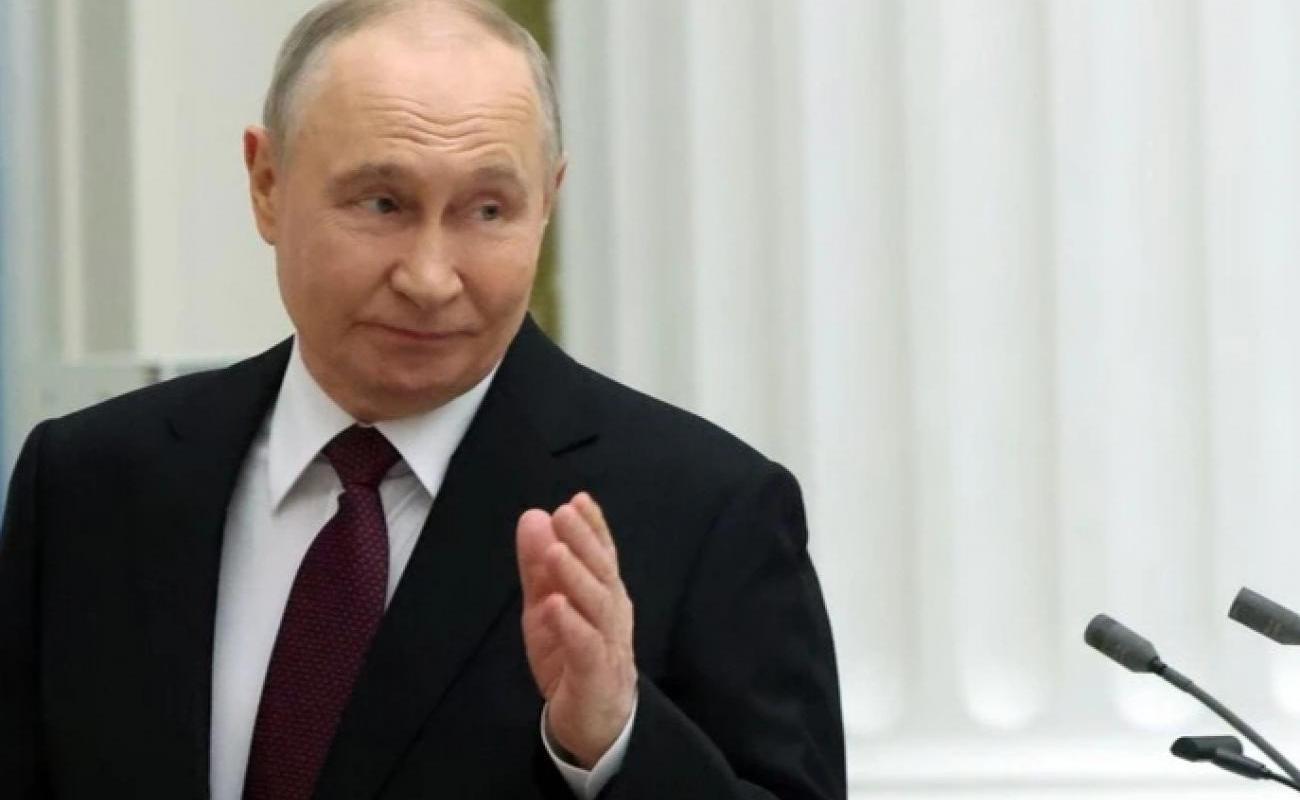
The Kremlin master suddenly spoke about Armenia in a very familiar tone.
The formula is simple. European integration without coordination with Moscow is "unacceptable". In order for everything to go "smoothly and intelligently", Yerevan should hold a referendum. And if not, then it will continue "the Ukrainian way". Putin directly reminded that the war against Ukraine, in his opinion, began precisely with Ukraine's "accession or attempt to join the EU" and that this led to the "coup, the Crimean history, the Southeast and hostilities". That is, the Kremlin publicly admitted what it had previously concealed with rhetoric about NATO: the problem is not in the alliance, the problem is in the independent choice of neighbors.
Why now and in this way. On May 4 and 5, Yerevan hosted the summit of the European Political Community and a separate Armenia-EU summit. Volodymyr Zelensky (the first visit of the Ukrainian president to Armenia in 24 years), Macron and Von der Leyen arrived there. They signed a joint declaration of 44 points, agreed on the liberalization of the visa regime, the first 30 million euros of aid to the Armenian armed forces through the European Fund for Peace and Infrastructure Partnership within the framework of the "Crossroads of Peace" initiative. The Russian Ministry of Foreign Affairs summoned the Armenian ambassador, saying that it was "unacceptable" to give Zelensky a "tribune". And four days later, Putin was already talking about the referendum and "divorce" in front of the cameras.
And after all these events – June 7, parliamentary elections in Armenia. And this is the key to understanding the timing. The Kremlin does not choose the form of “caring for citizens” by chance: the referendum proposal is an attempt to shift the political front from elections to a plebiscite, where money, media and subversive methods can be injected. The goal is not the referendum itself. The goal is to influence Pashinyan before the vote and bring pro-Russian players like Robert Kocharyan back into the game. Moscow understands well: if Pashinyan’s “Civil Contract” retains power, the next step will be an official application for EU membership, then a constitutional referendum with the removal of the Artsakh clause, then a peace treaty with Azerbaijan and the opening of the Turkish border. This entire structure eliminates Russia from the South Caucasus as an influential player. Because the Kremlin has already effectively lost the Caucasus. The peace treaty between Armenia and Azerbaijan was signed in the White House on August 8, 2025, with the mediation of Trump – without Russia. The TRIPP route (“Trump’s route for international peace and prosperity”) will pass through Syunik under American management – also without Russia. Yerevan froze the CSTO back in 2024, and in April of this year Pashinyan called the “thawing” unrealistic. In addition, in April an ultimatum was sent to Moscow: Armenia will withdraw from the CSTO and the EAEU if Russia raises gas prices. This is not a diplomatic note – it is a public “we are no longer afraid”. So, the threat of the “Ukrainian scenario” is essentially an admission that there are no other tools to keep Yerevan in its pocket.
Now for the most pressing question: can Russia really attack Armenia? Realism here suggests looking at capabilities, not escalating rhetoric. Russia and Armenia do not share a common border – between them is either Georgia, which is not a NATO member, but Russia will not get a military corridor through its territory, or Azerbaijan, which has just signed a peace treaty with Yerevan and has a strategic partnership with Turkey, a NATO member. Armenia has the 102nd Russian base in Gyumri – some 4,000 to 5,000 troops, partially manned, plus the Erebuni air base with MiG-29s and helicopters. This is critically insufficient for a large-scale invasion, especially when Armenian forces are already receiving aid through the European Peace Facility, and Turkey has clear interests in the region. Russian expeditionary resources are resting on the Ukrainian front, where the Kremlin has already lost more than a million people killed and wounded, and there are simply no spare reserves for a second front.
Therefore, Moscow’s real weapon is not tanks, but hybrid interference in the elections, sabotage, pressure through the Armenian Apostolic Church, information operations, coup attempts by pro-Russian oligarchs. The base in Gyumri is more of a risk point for Armenia itself from within than a springboard for an attack from without. The “direct invasion” scenario is technically almost impossible without a corridor through Georgia or Azerbaijan, which neither of them will provide. But the “destabilize so that our people win” scenario is exactly what the Kremlin is now launching with its declaration on the referendum.
What does this have to do with Ukraine? First, Putin’s statement is the best evidence that official Moscow is no longer hiding the real reason for the war against Ukraine: not NATO, not the “Russian world”, but Ukraine’s sovereign right to choose its alliances. This is a working argument for talks with Western partners who still like the formulas “be careful with provocations”. Second, the more Armenia moves towards Europe, the thinner Russia’s southern flank becomes - and the less resources and attention the Kremlin has for the Ukrainian direction. Zelensky’s support for Armenia in Yerevan was not a gesture of courtesy, but an element of the same logic: we are useful to each other precisely as countries that have left or are leaving the Russian orbit. Third, June 7 is a date worth paying attention to. If Pashinyan retains the majority, the Russian project of “holding the Caucasus” will completely collapse. And it will be another stone taken out of the foundation of a quasi-empire that relies on the ability to intimidate its neighbors.