
Russia's long-overdue greeting: What's behind the delay in the sale of Serbia's NIS?
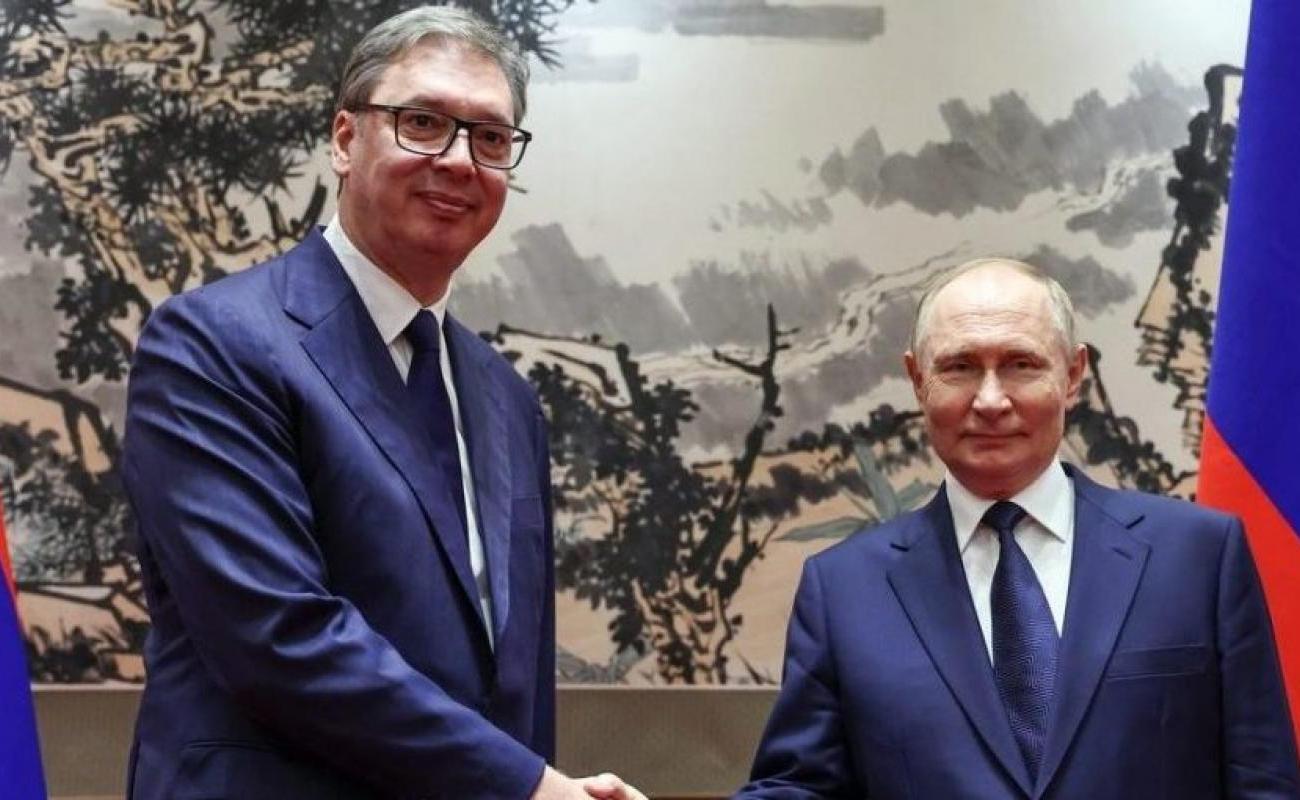
Negotiations on the sale of Russia's majority stake in the Serbian Oil Industry (NIS) have been ongoing for months, fueling allegations that Moscow is just buying time and has no intention of giving up one of its most important instruments of influence in the region, the sale of which will significantly change control over the fuel market in Bosnia and Herzegovina.
In early July, the United States extended for another month the license that allows NIS to continue operating, again postponing the application of sanctions stemming from Russian ownership of the company.
The U.S. Treasury Department’s Office of Foreign Assets Control (OFAC) also extended the deadline for Hungarian company MOL to negotiate the purchase of a controlling stake in NIS from Russia’s Gazprom Neft until the end of July.
This is the seventh postponement since the beginning of the year, when MOL announced that it had reached a framework agreement with Gazprom Neft to purchase its 56.15 percent stake.
Six months later, the public in the region still does not know the fate of one of the largest energy companies in Serbia, which also has a significant network in Republika Srpska. Detektor previously wrote that by purchasing a controlling stake in NIS from Russia's Gazprom Neft, Hungary's MOL will take over the retail network of about 40 gas stations in Bosnia and Herzegovina, where it already has a strong presence through INA and Energopetrol, thus becoming absolutely dominant on the market. According to experts, MOL can use such a position to close the market to competition and control prices.
The lack of transparency, lengthy negotiations and Moscow's decision to negotiate the sale without prior consultations with Serbia, which is a minority owner of NIS, have led analysts to conclude that Gazprom is just buying time or has no intention of selling its stake at all.
"The Russians are not dragging this out - they simply do not want to sell," says Vladan Pavlović, a financial analyst at the Polish brokerage house Ipopema Securities.
“I don’t see any other explanation for such long negotiations. They are just buying time… If they wanted to sell, they would sell to the highest bidder. In this case, that would be Serbia, which has a clear interest in resolving this issue,” he added.
Russian control over NIS, which before US sanctions held almost 80 percent of the Serbian fuel market, gives Moscow significant political influence in a country that imports more than 80 percent of its natural gas from Russia.
Pavlović believes that Russia has no motive to sell.
“The logic is simple – why sell if you can’t get the money?” he told BIRN.
“The money from the sale of NIS would probably be blocked in a special account, and Moscow would only be able to access it after the sanctions are lifted. I don’t see any reason why Russia would sell now. The only question is how long OFAC will continue to extend the deadlines,” he believes.
Why is Serbia excluded from the process?
One of the biggest mysteries in the whole story is why Moscow ignored multiple public statements by Serbian officials that Belgrade was willing to offer more money for a majority stake in NIS.
Serbian President Aleksandar Vučić first said this in November last year, when he announced that potential European and Asian investors would enter negotiations to buy the company.
It soon became clear that Hungary’s MOL and Abu Dhabi’s state-owned oil company ADNOC, which has hardly been mentioned in public in recent months, were interested.
After MOL announced in January that it had reached an agreement with Gazprom, Vučić said that Serbia was willing to pay Russia “twice that 900 million euros” to avoid nationalization or seizure of foreign assets, but that Moscow had decided to negotiate with another buyer.
“We respected their decision and we do not want to damage relations with an important world power,” Vučić said at the time, adding that he did not want to reveal why Serbia was excluded from the process because it could harm the country’s interests.
Branislav Đorđić of the brokerage house Jorgić believes that Serbia should have used its own Law on the Takeover of Joint Stock Companies, which allows for the submission of bids to all shareholders.
“Then every shareholder, including Gazprom and minority owners, would have had to officially respond. If Gazprom had rejected the bid, we would have had a final answer,” says Đorđić.
However, even if Serbia had gone that route, the room for maneuver would be limited.
If MOL and Gazprom fail to reach an agreement or OFAC loses patience, Serbia has practically no alternatives.
In that case, the only option would be to take control of NIS without Russia's consent.
Unlike Pavlović, Đorđić believes that the latest extension of the deadline does indicate some progress in the negotiations.
“MOL and Gazprom must submit to OFAC documentation showing that they have taken additional steps towards concluding the contract. Otherwise, the deadline would not be extended.”
Serbian Minister of Mining and Energy Dubravka Đedović Handanović also interpreted the extension as a positive signal.
“I remind you that the previous extension was for only two weeks, and now it has been approved for 30 days. This means that there have been positive developments in communication and information exchange,” she told Radio Belgrade on July 6.
Nationalization in play again
The long-running negotiations have reopened the issue of a possible nationalization of NIS.
Although Vučić has repeatedly stressed that he is against nationalization, at the end of last year, after sanctions were imposed and the work of the Pančevo Refinery was temporarily suspended, he admitted that Serbia could be forced to take over the Russian share without Moscow's consent unless another solution is found to preserve energy security.
Pavlović believes that such a scenario is unlikely, at least until the elections, which Vučić has announced for this year.
"This is not only an economic issue, but also a political and security issue. I do not believe that nationalization would benefit the current government," he says.
Đorđić warns that such a move could come at a high price.
Serbia recently contracted with Gazprom only for short-term gas supplies, which could mean that Russia is linking the issue of future supplies to the ownership dispute over NIS.
"One answer could be to increase gas prices or reduce deliveries," Đorđić says.
Both options would have serious consequences for the Serbian economy, which is heavily dependent on Russian gas, while finding alternative suppliers in the short term would be both difficult and significantly more expensive.
The public received the most detailed information about the negotiations on June 11, when Minister Đedović Handanović stated that Serbia and MOL had reached an agreement that the Pančevo Refinery would continue to operate under the existing business model if the Hungarian company took over NIS.
She added that Serbian representatives on the NIS Board of Directors would be given broader powers, including the possibility of more active participation in decision-making, but also of blocking decisions that would be contrary to Serbia's interests.
According to her, it was also agreed that Serbia, if MOL takes over NIS, would purchase an additional five percent of shares, thereby increasing its ownership stake to 35 percent. She did not specify from whom these shares would be purchased.
Djordjevic believes that the Serbian government could instead try to buy back shares from minority shareholders, who number about two million and who together own approximately 14 percent of the company.
Serbian officials have not confirmed whether direct talks have been held with the Russian side about NIS, but in late June, Kremlin spokesman Dmitry Peskov confirmed that such talks exist.
According to the Russian state news agency TASS, Peskov said that the negotiations concern commercial issues, but did not want to reveal more details.